Reposted with permission from NC Policy Watch
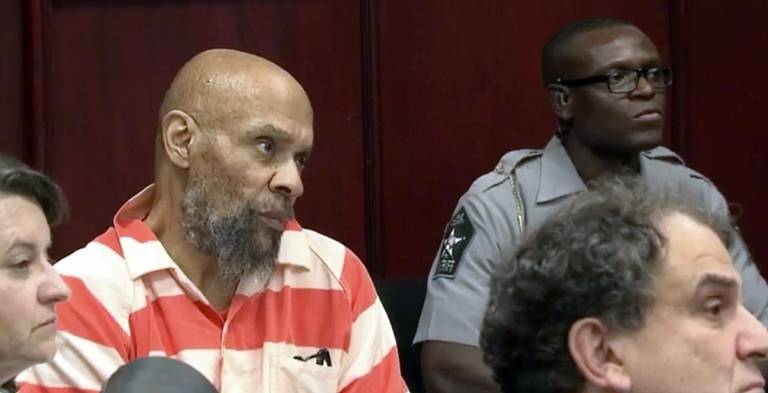
I recently got some sad news. My former client, James Blackmon, died earlier this month from complications from COVID. He was 68. Mr. Blackmon was arrested for murder and, in 1988, pled guilty and received a life sentence. The problem was he had absolutely nothing to do with the crime.
Evidence uncovered by the North Carolina Innocence Inquiry Commission demonstrated that Mr. Blackmon was not even in North Carolina when the murder took place on St. Augustine’s campus in 1979. And that the police covered up evidence that an eyewitness had looked at a lineup and positively and strongly said that Mr. Blackmon was not the killer. And that while there was absolutely no forensic evidence that connected Mr. Blackmon to the crime or the crime scene, fingerprints suggested another suspect with a history of violence.
But Mr. Blackmon suffered from serious mental illness, a combination of schizophrenia and bipolar disorder. So, when the police got a tip from Dorothea Dix mental hospital that a patient was saying he had murdered people, the cops decided they had a chance to “solve” the case and clear it from their workload. They used Mr. Blackmon’s mental illness to coerce and manipulate him into “confessing” to a crime that he knew nothing about and had no involvement in. They tricked this man who was at the time wearing a Superman cape into saying that, while he was never present at St. Augustine’s, maybe he had transported the victim’s body to the campus while his mind remained elsewhere. He admitted to killing the victim — and to causing earthquakes and hurricanes.
The Wake County criminal justice system further coerced Mr. Blackmon by threatening him with the death penalty. He entered an Alford plea to second-degree murder and was given life imprisonment. But when he wasn’t being manipulated by the Raleigh Police Department, Mr. Blackmon always maintained his innocence. And when he wrote to N.C. Prisoner Legal Services, staff there recognized how terrible his interrogation had been. They referred the case to the Innocence Inquiry Commission, where staff tracked down every lead and proved that there was no way Mr. Blackmon had anything to do with the murder.
In 2018, after the Innocence Commission unanimously sent the case to a three-judge panel, Beth McNeill and I, both attorneys at Prisoner Legal Services, were appointed to represent Mr. Blackmon at the hearing. Under the statute, Wake County District Attorney Lorrin Freeman could have consented that Mr. Blackmon was innocent and there would have been no need for a hearing. But Ms. Freeman said she wanted the system to play out, that she had a duty to protect the system that had convicted Mr. Blackmon and, besides, we didn’t have DNA evidence that he was innocent.
Also, (but this part was left unsaid) people with mental illness like Mr. Blackmon are scary and they make us all feel uncomfortable and maybe he would be better off in prison. Fortunately, my co-counsel and I were able to convince the panel that Mr. Blackmon’s clear innocence should overcome our lack of DNA and bigotry against poor persons of color with severe mental illness.
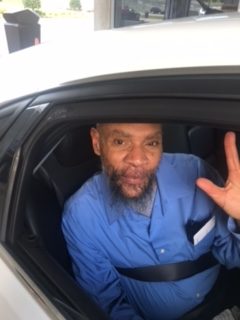
Being part of the team that freed Mr. Blackmon in 2019 after he spent 36 years wrongfully incarcerated was one of the proudest moments of my career. Mr. Blackmon was arrested during my first semester in college. The hearing that freed him happened in the first few days my daughter was in college. I am so sorry that Mr. Blackmon only got to spend two and a half years in freedom. But I guess I am grateful that at least he got those two and a half years.
Shortly after the hearing, a judge congratulated me and said it was example of the system working. I am not sure how we can possibly say that a system that let an innocent man spend 36 years in prison because he suffered from mental illness can ever be called working.
I also did not see the case as a sign that things had changed. Lorrin Freeman’s attempt to stop the conviction from being overturned shows that prosecutors still do not understand mental illness and do not truly care if individuals with mental illness are wrongfully convicted. We still use the death penalty and life without parole to coerce people into taking pleas. And I discovered in working on Mr. Blackmon’s case, as well as other cases of people with mental illness, that our society does not adequately treat and care for people with severe mental illness, particularly when they are poor people of color.
I have both fear and confidence that people with severe mental illness are being convicted of serious crimes today. Thirty years from now, someone who is currently a freshman in college will be a middle-aged lawyer trying to get them out, arguing that people in the 2020s simply didn’t understand mental illness. Maybe in the 2050s, there will finally be progress in how we treat individuals with mental illness in the criminal justice system. Maybe.