Subscribe to Our Newsletter

This field is for validation purposes and should be left unchanged.
Name(Required)
Email(Required)
Address(Required)
Check all that apply:

  • Skip to main content
  • Skip to footer

NC Coalition for Alternatives to the Death Penalty

Committed to ending the death penalty and creating a new vision of justice

  • Who We Are
    • Mission & History
    • Our Values
    • People Most Proximate
    • Coalition Members
    • Staff, Board, & Advisory Council
    • Our Funders
  • What We Do
  • Why End the Death Penalty?
    • Column 1
      • Racism
      • Innocence
      • Intellectual Disability & Mental Illness
    • Column 2
      • Public Safety
      • High Cost of Death
      • Waning Support
    • Column 3
      • Lethal Injection
      • Antiquated Sentences
      • Unfair Trials
  • Events
  • The Pledge
  • Blog
  • Commutations Campaign
  • Get Involved
  • Donate

Search NC Coalition for Alternatives to the Death Penalty

Why end the death penalty?

Many death sentences result from egregiously unfair trials

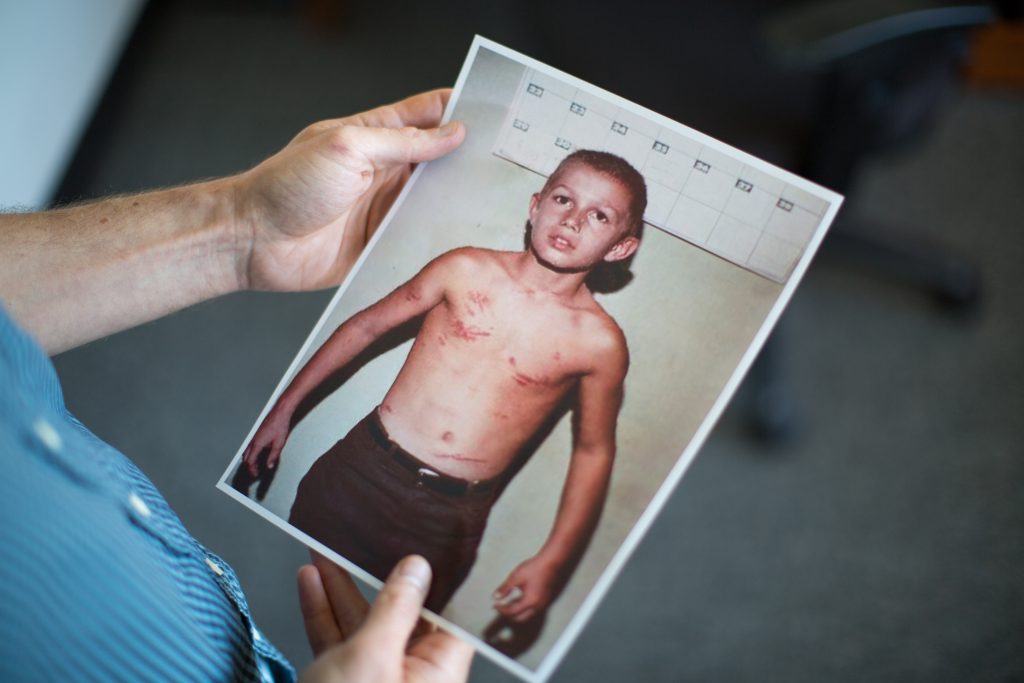
Ronnie Frye was severely abused as a child, but thanks to an alcoholic lawyer, his jury never heard about it.

The most serious job our criminal legal system undertakes is to decide whether a person lives or dies. Yet, death penalty trials in North Carolina are littered with errors, misconduct, and questionable evidence.

The right to an adequate defense is guaranteed by the Constitution, but vulnerable people who cannot afford to fund their own legal teams haven’t always benefited from that promise. Many of those on NC’s death row were tried before the creation of a public defense agency, leaving them with overwhelmed or inexperienced lawyers. Some were so overburdened with cases that they didn’t have time to read the evidence, request key records, or interview witnesses before going to trial. Many failed to present any mitigating evidence about their clients’ life stories. 

Falsified or discredited forensic evidence has also been used to sentence people to death. North Carolina’s State Crime Lab has admitted that, over a 16-year period, analysts systematically withheld or distorted blood evidence in an attempt to secure convictions. Ballistics and hair analysis methods that were routinely used in death penalty cases have also been called into question.

Death penalty convictions also frequently rely on evidence that has been proven unreliable, such as eyewitness identifications, coerced confessions, and the testimony of informants, jailhouse snitches, and co-defendants. In some cases, witnesses have received relief from criminal charges or even cash payments for their testimony.

In trial after trial, the death penalty proves itself unworthy of our nation’s promise of equal justice.

Right now in North Carolina:

  • In one NC capital case, the defense team begged the judge to postpone the trial, saying they had not even begun to prepare. The judge refused, and the trial began the next day.
  • One NC attorney, several of whose clients were sentenced to death, later admitted to drinking more than a dozen shots of liquor each night and coming to court drunk.
  • One review found that junk science (unreliable forensic evidence) contributed to one-third of wrongful convictions.
  • Nationally, eyewitness misidentification has played a role in three-quarters of wrongful convictions overturned through DNA testing in the US.

Stories of Unfair Trials
Case File: Ronald Frye

A drunken lawyer failed to tell the jury about Ronnie Frye’s severe childhood abuse

Ronnie Frye was so severely abused that police used his childhood photo at training seminars, but his alcoholic lawyer never bothered to investigate his horrific past. With a different lawyer, he likely would never have been executed.
Learn More
Case File: Kenneth Neal

His court-appointed defense attorney was a notorious convicted child pornographer
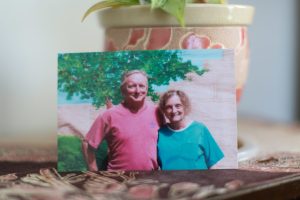
One juror said the attorney’s conviction was “the most disgusting type of crime there is” and that Kenneth Neal “could not have done worse” than to have a criminal as his attorney. He received the death penalty despite having an intellectual disability.
Learn More
Case File: Patricia Jennings

Five witnesses testified about blood evidence that never existed

The presence of blood on a ceiling and wall was used to prove that Pat Jennings’ crime was “especially heinous, atrocious or cruel.” Without the false evidence, she would not have received the death penalty.
Learn More
Case File: Johnny Burr

Days before the trial began, his lawyers had not even begun to prepare

Johnny Burr’s case, which involved the death of a baby, hinged on hundreds of pages of medical records that his attorneys never read. They begged a judge to postpone the trial so they could prepare, but the judge refused. Burr’s conviction relied on incorrect testimony about the baby’s injuries, but his lawyers didn’t know enough to challenge it.
Learn More
Last Updated: February 16, 2022

Footer

Contact

NCCADP Alternate Logo
NCCADP
3326 Durham-Chapel Hill Blvd.
Building D, Suite 201
Durham, NC 27707
noel@nccadp.org
919-404-7409

Follow Us on Instagram

Join us in Raleigh on May 18 for a film screening Join us in Raleigh on May 18 for a film screening & discussion with Ed Chapman, a death row exoneree 🎥

You're invited to a screening of "Racist Roots," a 25-minute documentary that uncovers the deep entanglement between white supremacy, racial terror lynching, and NC's death penalty.

After the film, hear from Ed Chapman, who was exonerated in 2008 after spending 14 years wrongfully convicted on NC's death row. This conversation will be moderated by NCCADP's director, Noel Nickle, and will include time for Q&A. 

Hosted by Raleigh Mennonite Church (@raleighmennonite), this event is free and open to the public. Light refreshments will be provided.

📍  Raleigh Mennonite Church, 121 Hillsborough St, 3rd Floor, Raleigh, NC
📆  Monday, May 18, 6:30-8 PM
🔗  RSVP at bit.ly/RMCRR2026
Today we honor every mother among us, including th Today we honor every mother among us, including those behind bars and those carrying love across impossible distances. Happy Mother's Day from all of us at NCCADP. 🩵
On April 25, NCCADP gathered with impacted communi On April 25, NCCADP gathered with impacted community members in Winston-Salem for Returning to the Circle, a restorative gathering for collective healing. Unlike many of our public-facing programs, this day was not centered on advocacy or education for others. Instead, it was centered on the people who so often carry that work themselves.

Throughout the day, participants ate and sang together, created art, joined restorative Circles, and spent time with one another. 

This work matters because movements cannot survive on urgency alone. Restorative justice reminds us that taking care of our community is intrinsic to the work of ending the death penalty. It is how we build a different future.

Special thanks to so many people who helped to make this gathering possible – Lynda Simmons, Leah Wilson-Hartgrove, Jodi McLaren, Shannon Gigliotti, Brenda Hooks, the Hartgrove family, each and every volunteer who made the event happen, Rev. Nathan Parrish and Peace Haven Baptist Church, and of course, everyone who joined us for this special day.
Follow on Instagram

Stay Connected

  • Facebook
  • Instagram
  • Twitter

Copyright © 2026 · NC Coalition for Alternatives to the Death Penalty · All Rights Reserved · Website by Tomatillo Design