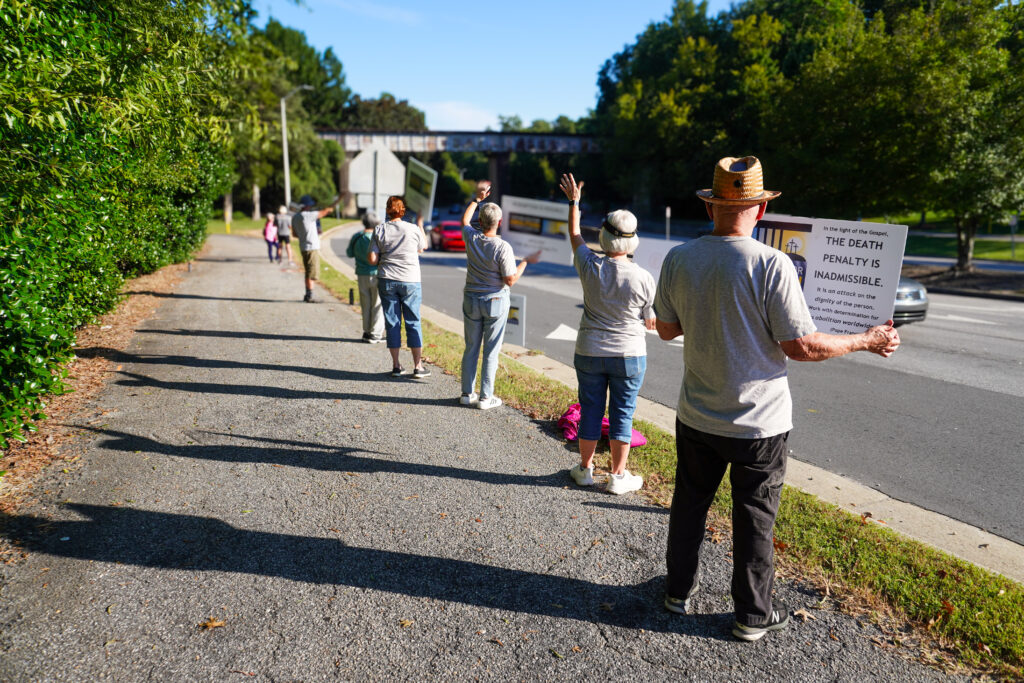
Every Monday evening, advocates gather at the gates of Central Prison in Raleigh to deliver the same message: North Carolina does not need the death penalty.
They’ve been saying it for over 20 years.
For an hour each week, these protestors hold signs, wave at cars, and stand witness for those on death row. There is power in the vigil’s consistency. As Margaret Toman, who has been coming for more than a decade, put it: “You show up, week after week, year after year. And people start to notice. They start to change.”
On September 8, 10 people came to stand at the gates, 7 of them representing Catholics for Abolition in North Carolina. In just an hour, passing trucks, cars, mopeds, and even city buses honked 87 times in support.
Only 1 driver yelled something negative – a sharp contrast, Margaret says, to the early years. “Now, for every 1 person who disagrees, there are 20 who honk or wave or roll down their windows to say they’re with us.”
The Man Who Stands in Permanent Protest
Among the long-time vigil-goers, one name surfaces again and again: Duane Adkinson.
Duane was a labor organizer from Detroit, who believed change comes from ordinary people showing up, standing together, and refusing to back down. When he retired to Raleigh, he brought that conviction with him. Every Monday, no matter the weather, Duane was at the gates of Central Prison.
“He always said there’s no such thing as bad weather, just bad clothes,” recalled Marsh Hardy, another decades-long attendee. “If it was pouring rain, if it was freezing cold, he said that just made people pay more attention.”
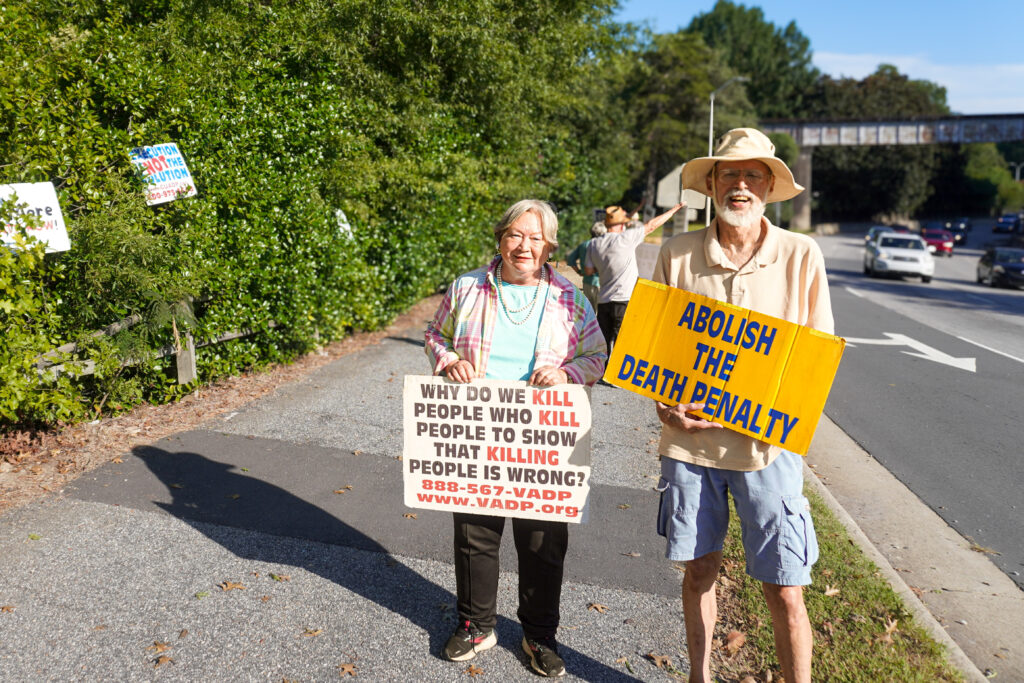
For Duane, protest was about unwavering persistence wearing down the edges of injustice over time. He stood with his sign at the gates, even when it felt like nothing was changing.
When Duane passed away, his loved ones gathered again at the prison to honor his final wish: that his ashes be spread at the vigil site. Now Duane keeps permanent vigil, his presence a part of every protest – proof that one person’s commitment can echo long after they’re gone.
Small Acts, Big Shifts
Research on long-term protest movements shows that public opinion rarely shifts overnight. It changes slowly, through thousands of small moments that begin to alter what people see as normal and just.
The Monday vigils work exactly this way.
You show up, week after week, year after year. And people start to notice. They start to change.
margaret Toman
Mike, who began coming after learning about the death penalty through his parish, told us: “You build relationships out here. People drive by every week, they start to wave, they start to talk. That’s how change happens. One person at a time.”
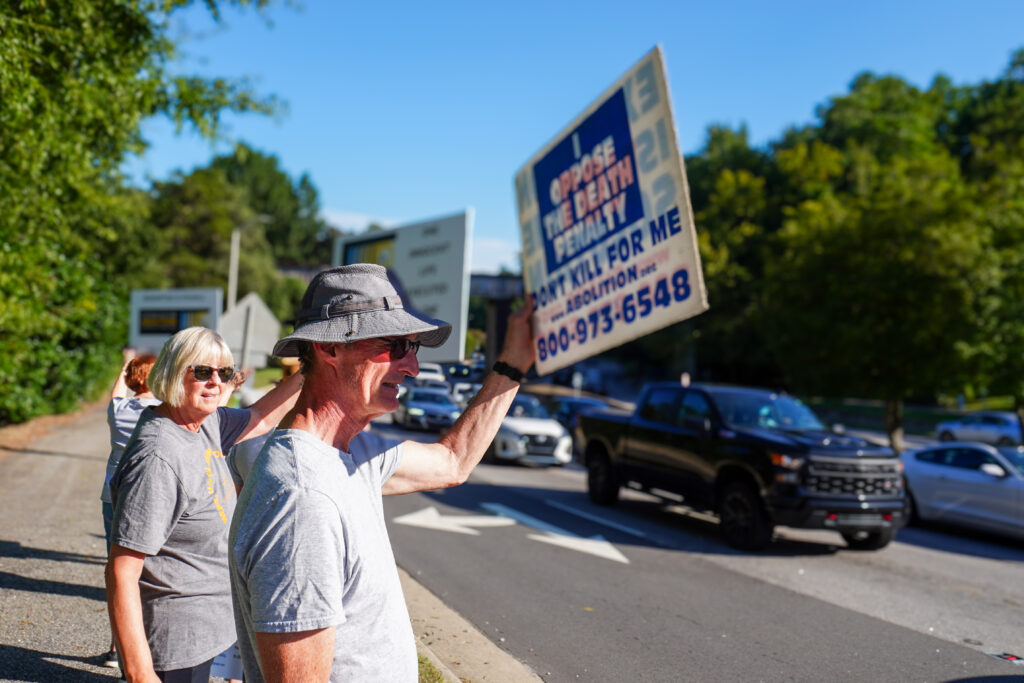
Others tell similar stories. A stranger went into a nearby convenience store to buy 12 umbrellas for protestors standing in a downpour. A man pulled over to argue but stayed for an hour-long conversation about justice. Neighbors stop by with cold water during the worst summer heat.
Carol, who has been attending for several years with her husband Bob, put it simply: “A lot of people are afraid of protestors. But when they see us out here again and again, we become familiar. It makes a difference.”
The Vigil is Visible
Central Prison houses North Carolina’s execution chamber as well as the 120 of the 122 people who currently live on death row.
In earlier years, people inside the prison could sometimes see the protestors outside the gates, even flash lights from their windows in response. Over time, the state let holly bushes grow tall enough to block the view, ultimately even moving the death row unit to a building farther from the road.
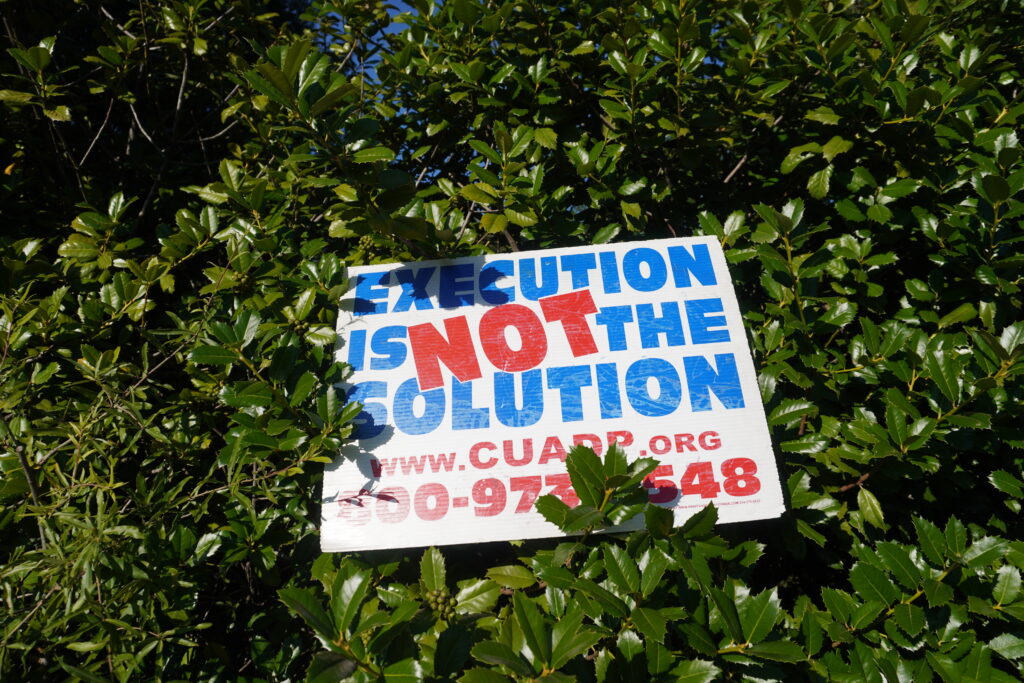

The people inside may no longer see the vigil, but the vigil persists as a public refusal of state violence, a living reminder that executions will never happen in silence.
“Every person is cherished,” said Denise, who writes regular letters to someone on death row. “When you talk to someone who has been there for decades, when you hear their story, you realize the death penalty is absurd. It shouldn’t exist.”
Join Us
The Monday vigil has carried on for 20 years because people like Duane, Margaret, Marsh, Jane, Cynthia, Nancy, Carol, Bob, Denise, Vicki, Mike, and Bonnie refuse to let it end. They believe change comes through public presence, through moral insistence, through the long work of showing up.
And they need you to join.
In the spring and summer, protestors gather from 5–6 PM every Monday at the gates of Central Prison in Raleigh. Through the fall and winter, protestors gather from 4–5 PM.
Bring a sign. Wave at passing cars. Stand with others who believe North Carolina can choose justice over executions.
Until the death penalty ends, the vigil will go on.