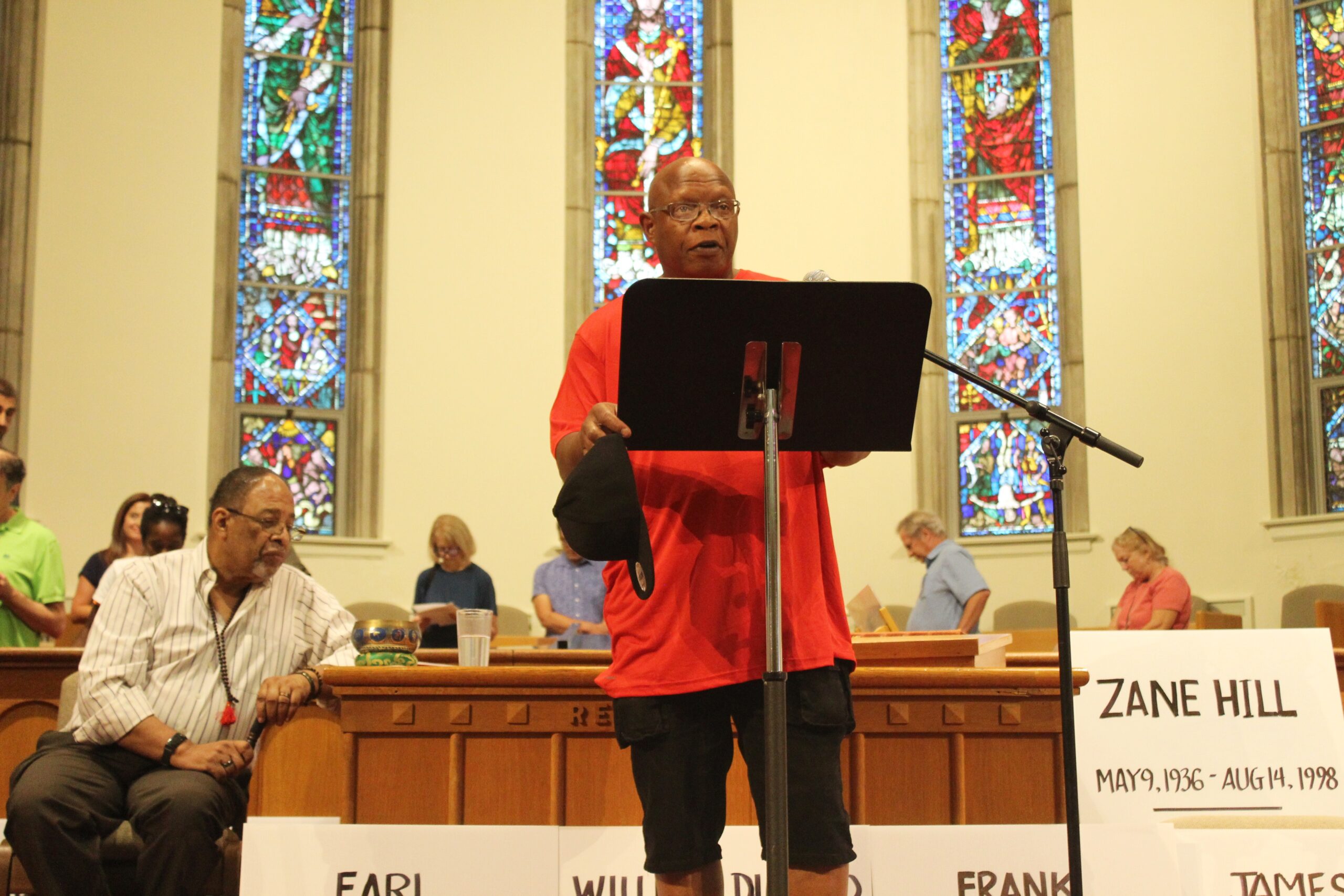
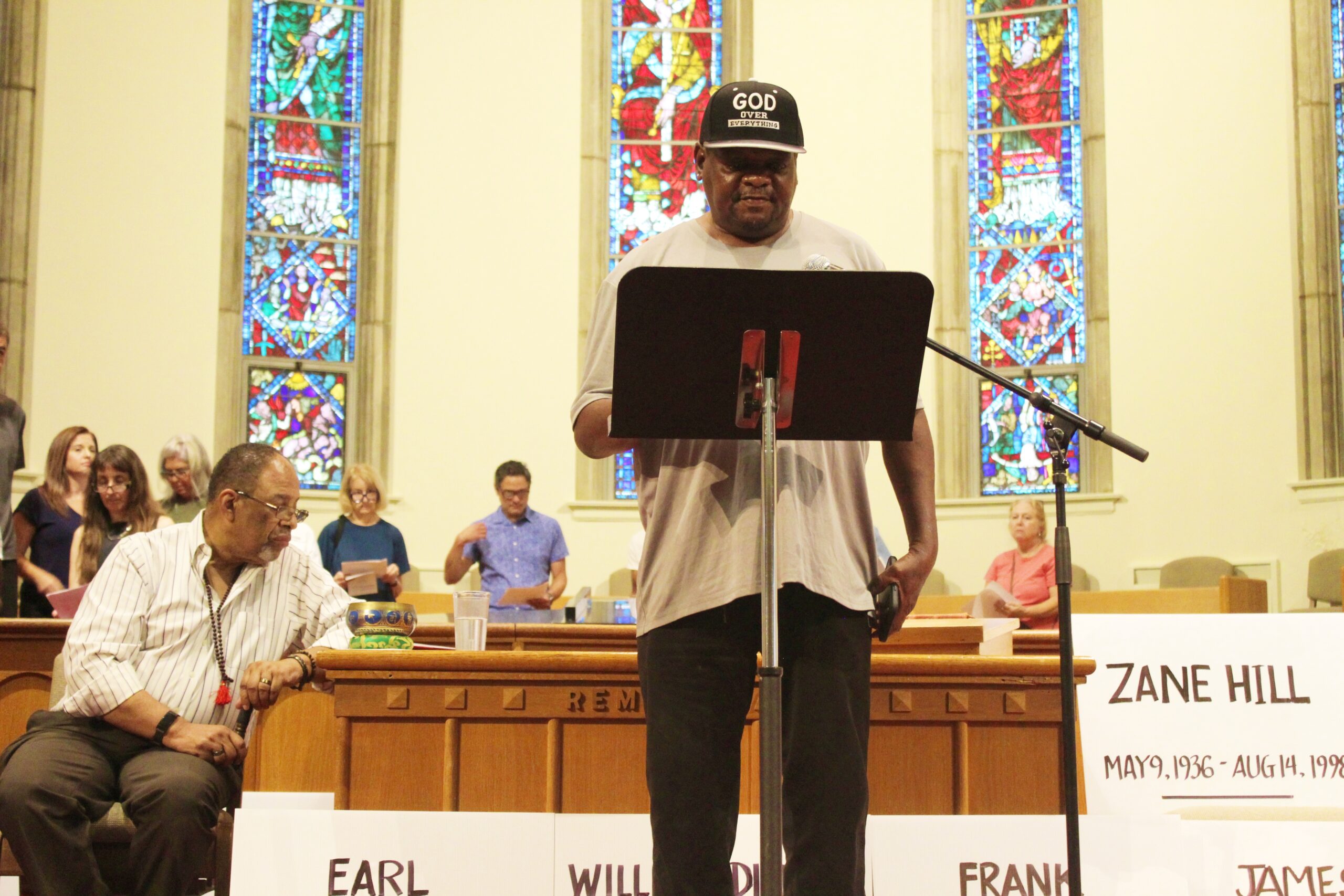
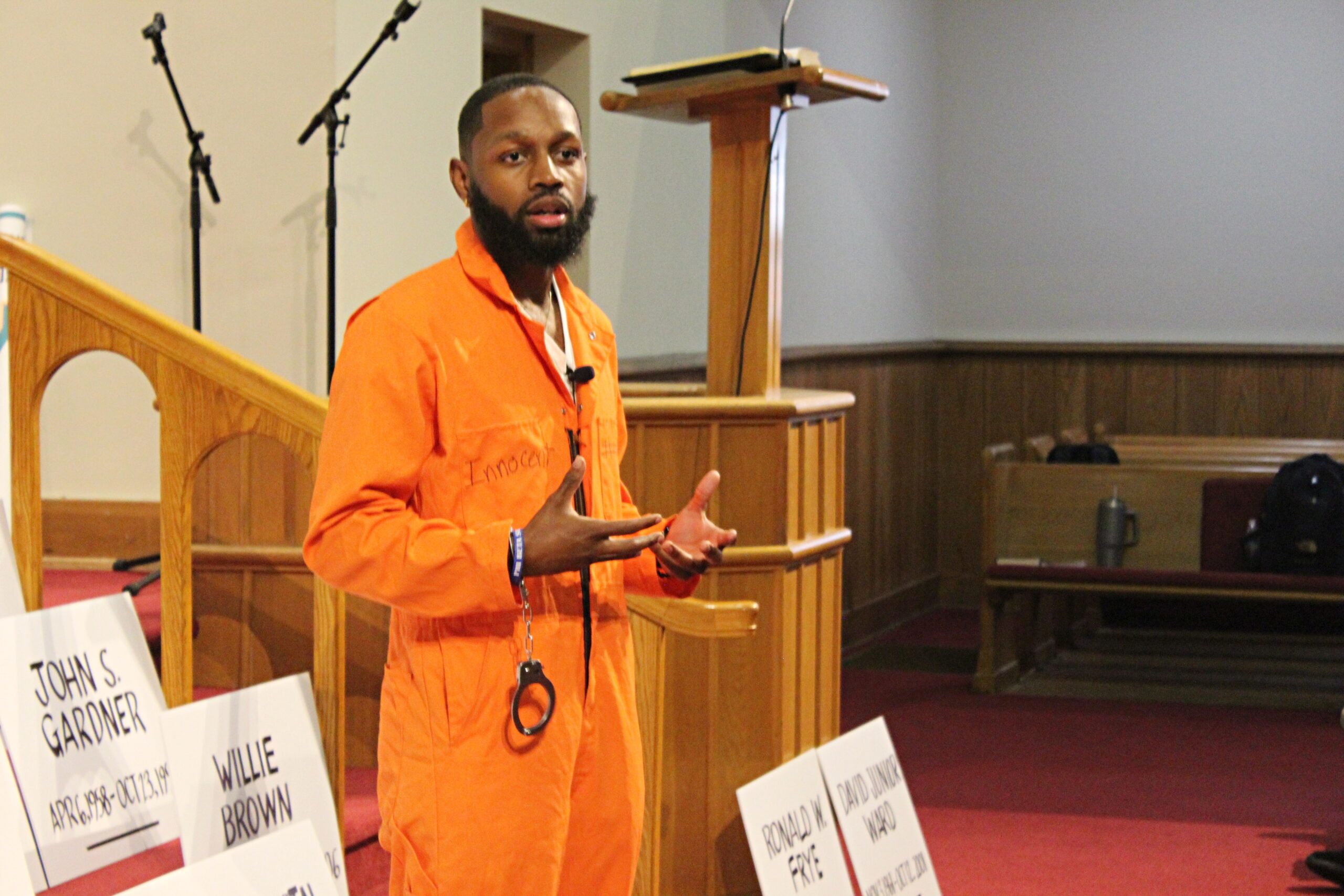
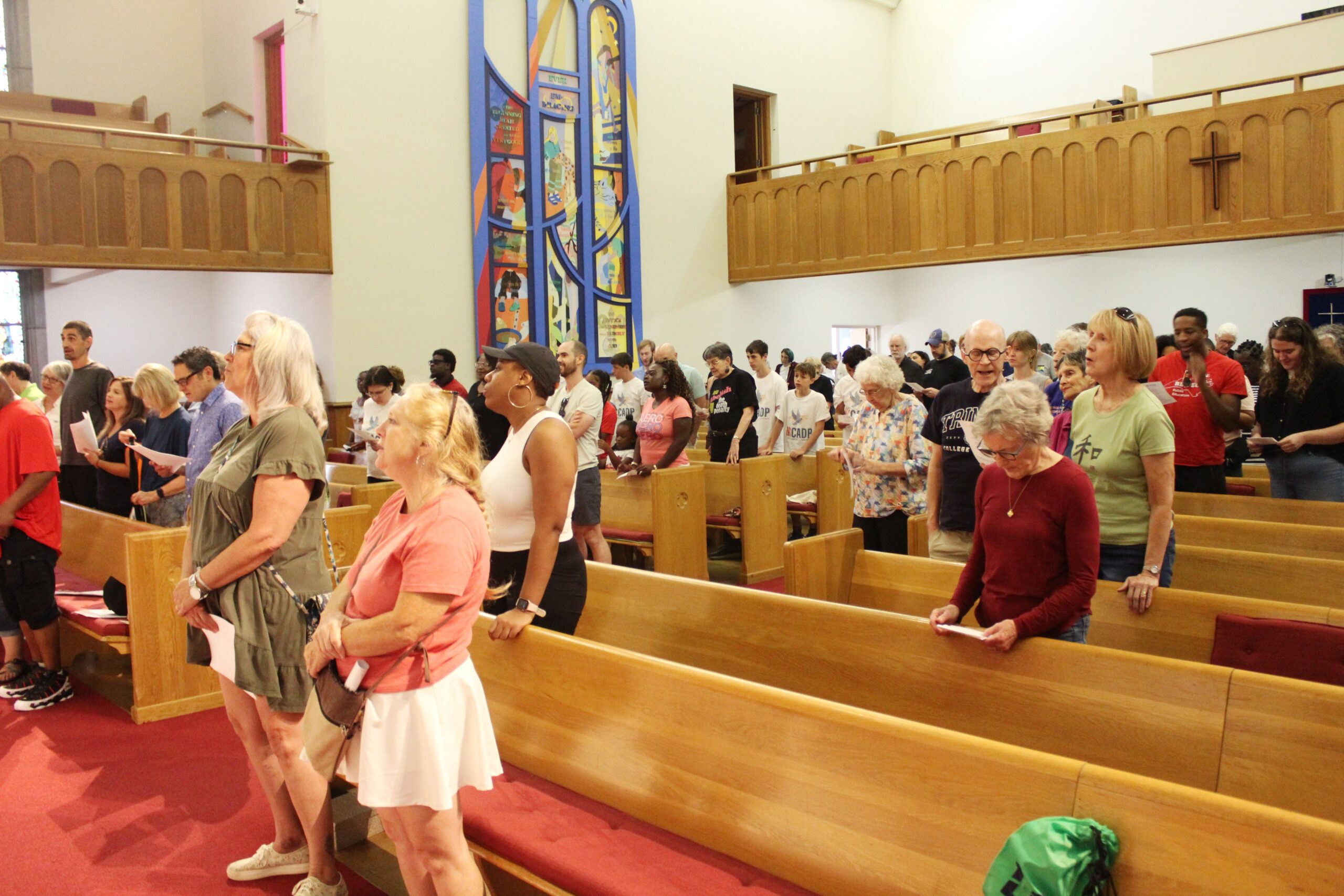
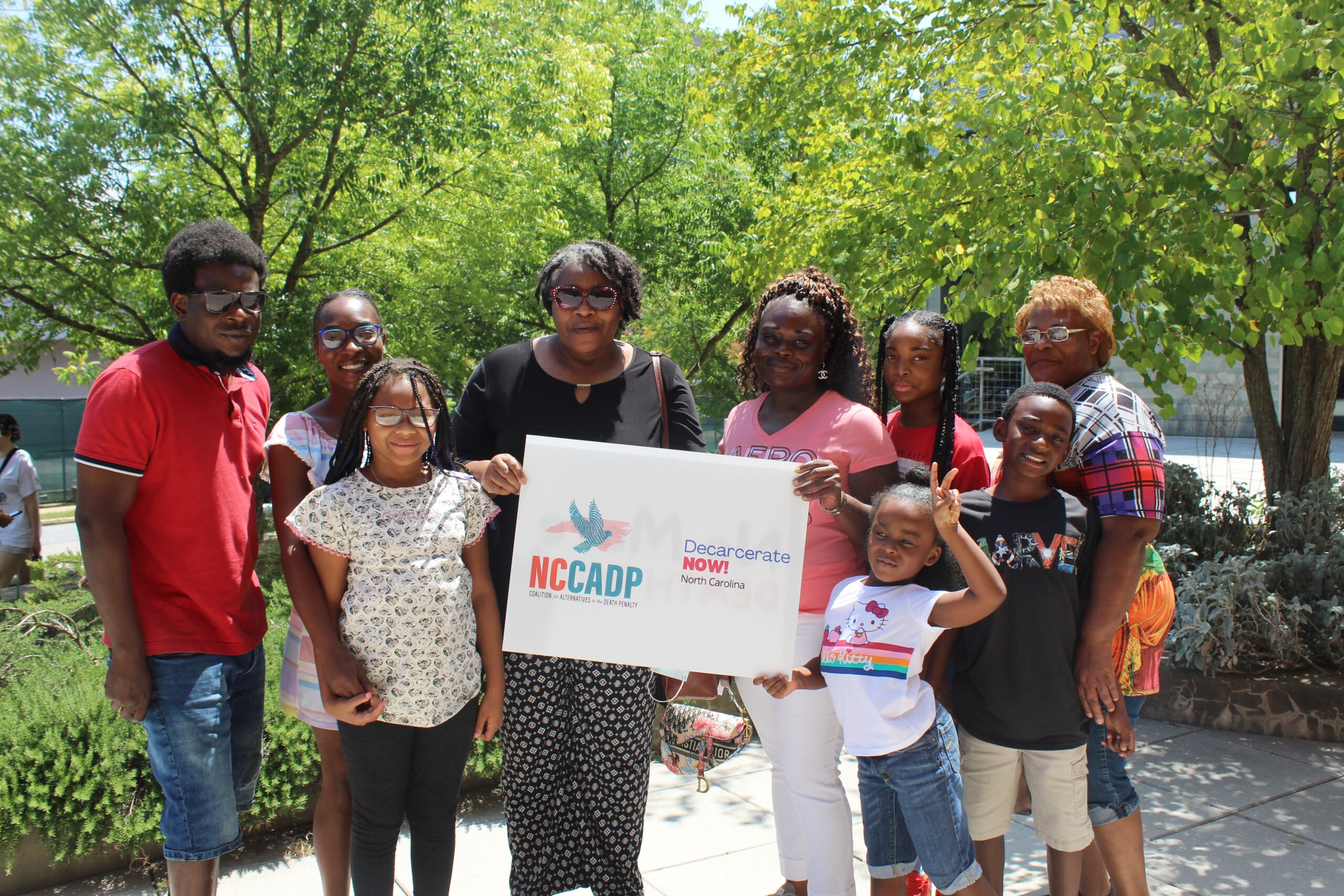
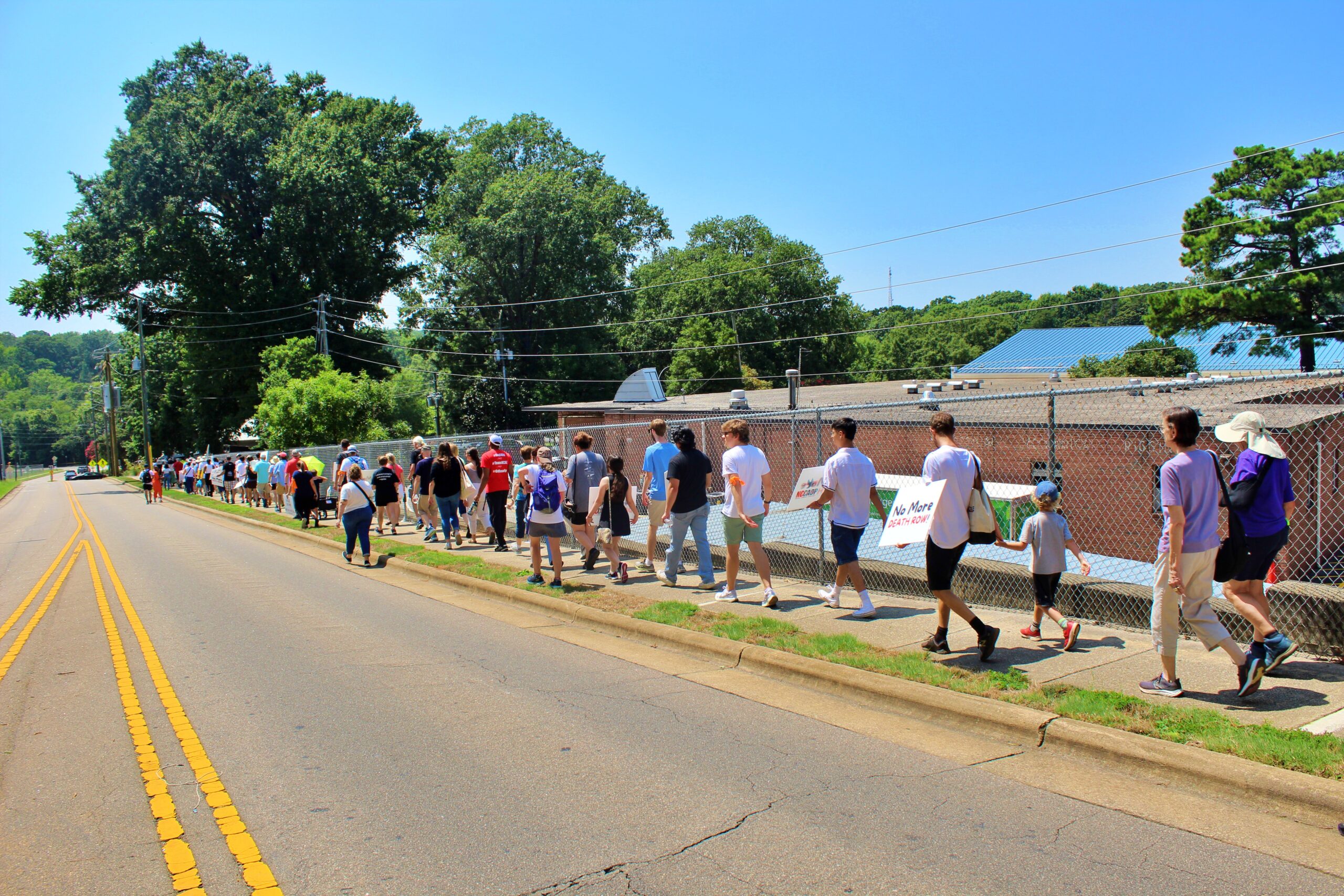
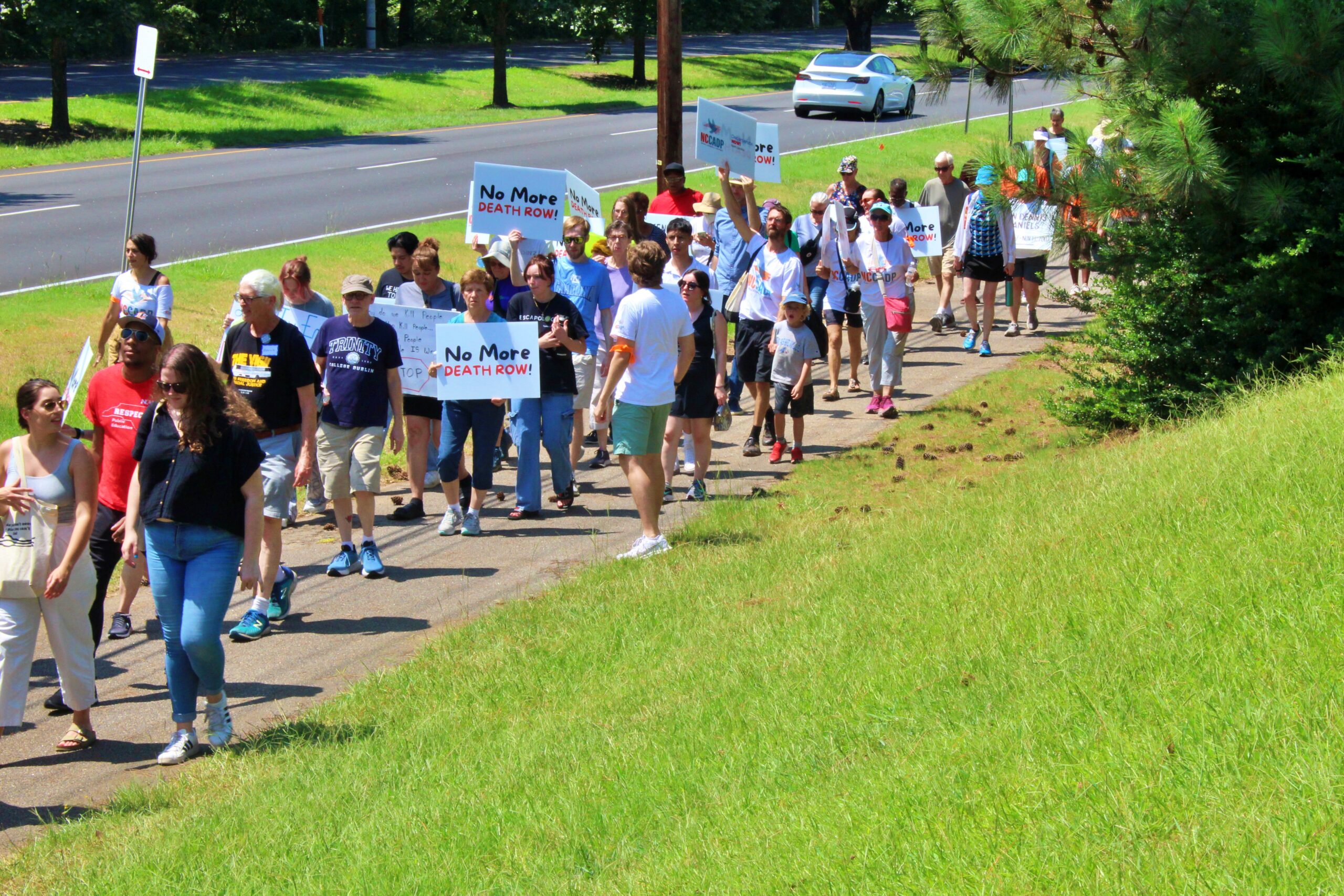
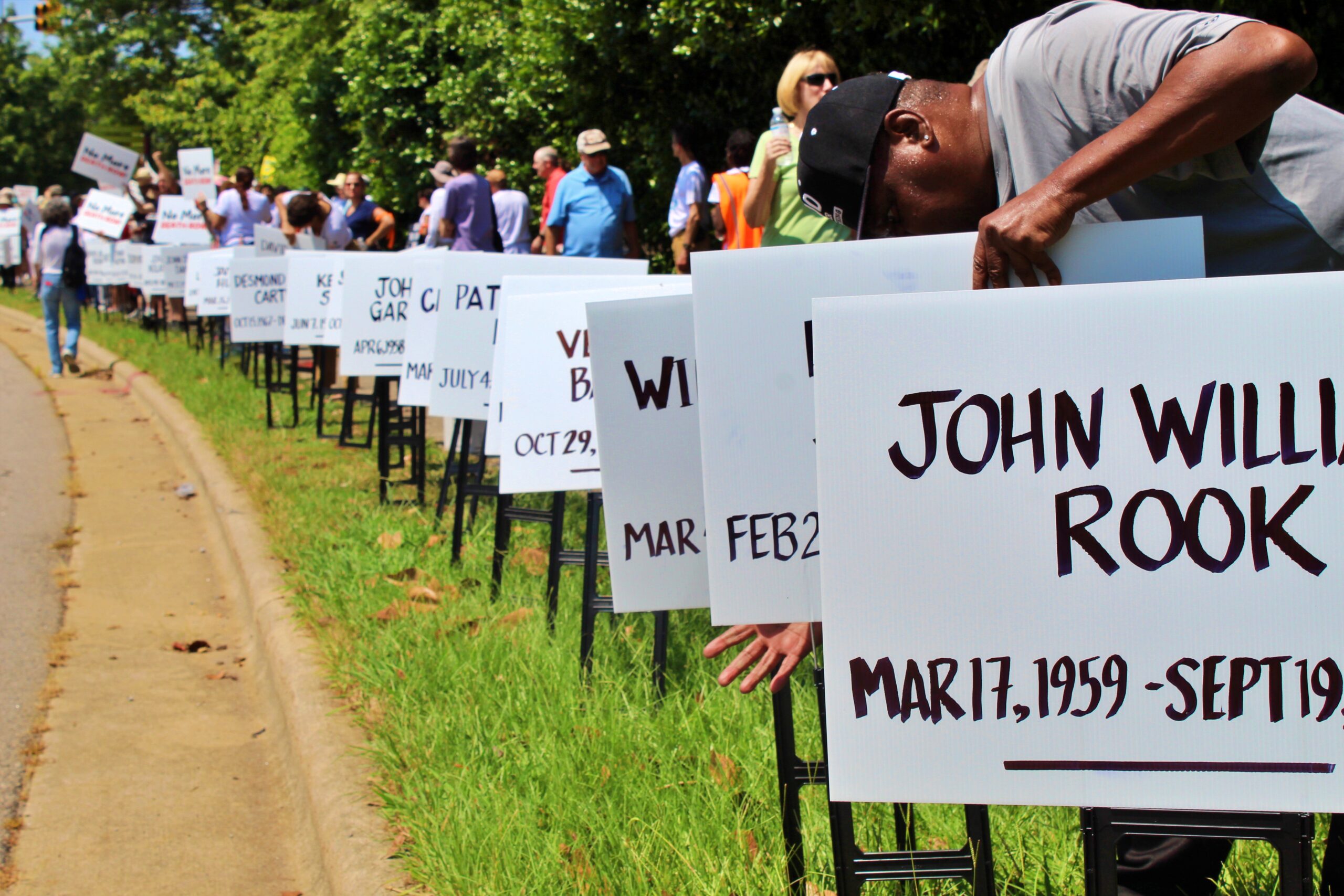
On August 19, our coalition once again came together to create a future without executions. About 200 people gathered at Pullen Memorial Baptist Church in Raleigh to remember the 43 people executed under North Carolina’s modern death penalty. Afterward, we marched to Central Prison, which houses the nation’s fifth largest death row, to demand that it be dismantled.
The theme of our event was “Beyond Executions,” a phrase with multiple meanings.
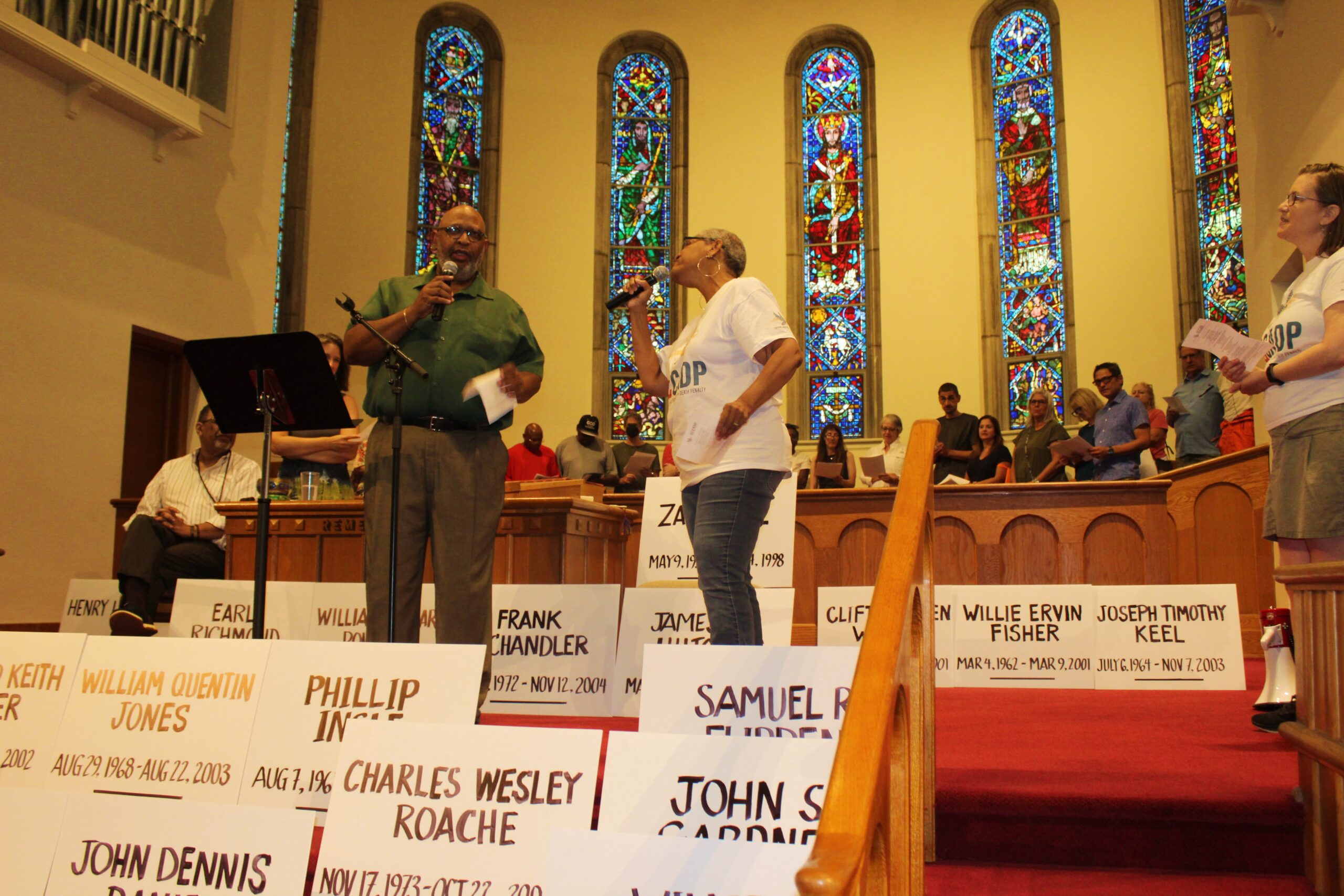
First, we wanted to remember the pain that executions have caused, and to acknowledge that the harm stretches far beyond the hour of execution and the person being killed. That’s why we gathered in a sanctuary to read aloud the names of all 43 people executed under North Carolina’s modern death penalty.
Our readers were people who were directly harmed by those executions. Family members and friends of executed people. Exonerated men who, while wrongfully imprisoned on death row, endured the executions of their friends. Attorneys and mitigation investigators who still mourn their clients’ losses. Our readers stood shoulder to shoulder with homicide survivor family members to say that killing is wrong, no matter who carries it out.
We affirmed the humanity of those who were executed, and of those who love them. We sang freedom songs, and one family member performed “Take My Hand, Precious Lord,” which her uncle used to sing on death row.
We read aloud a beautiful poem by Robbie Lyons, who was executed December 5, 2003, which felt almost as if it had been written for the occasion. It was Robbie’s plea to be seen as a “sad man” rather than a “mad man.” The fabulous Nick Courmon also debuted a new spoken word piece, “Cradle to the Gurney,” based on the stories of people on death row.
After an emotional remembrance of the executions we could not prevent, we moved to envisioning a world beyond executions. A world where North Carolina’s death chamber is permanently closed, and the racist death penalty is consigned to history.
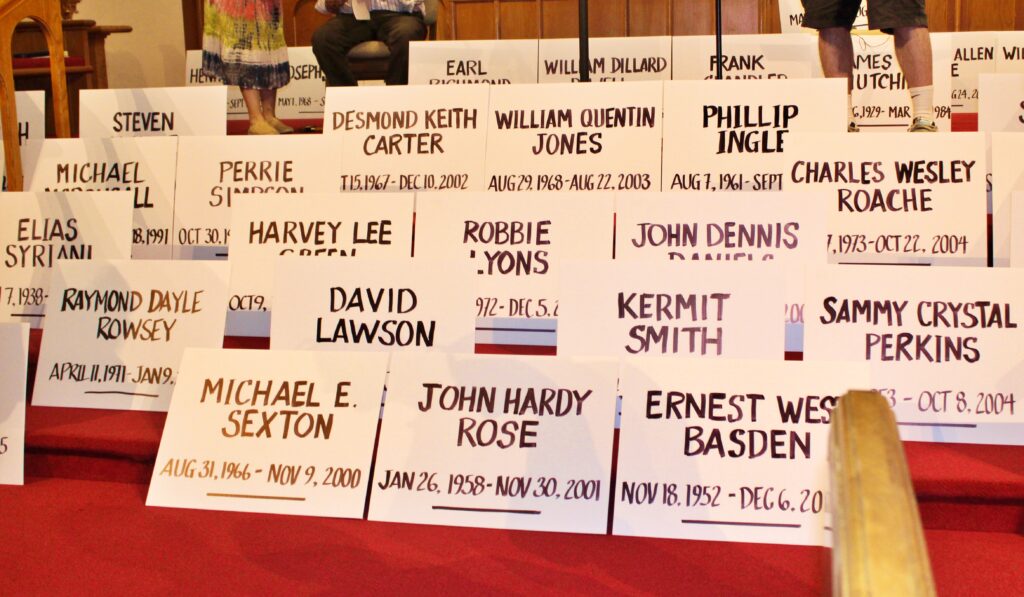
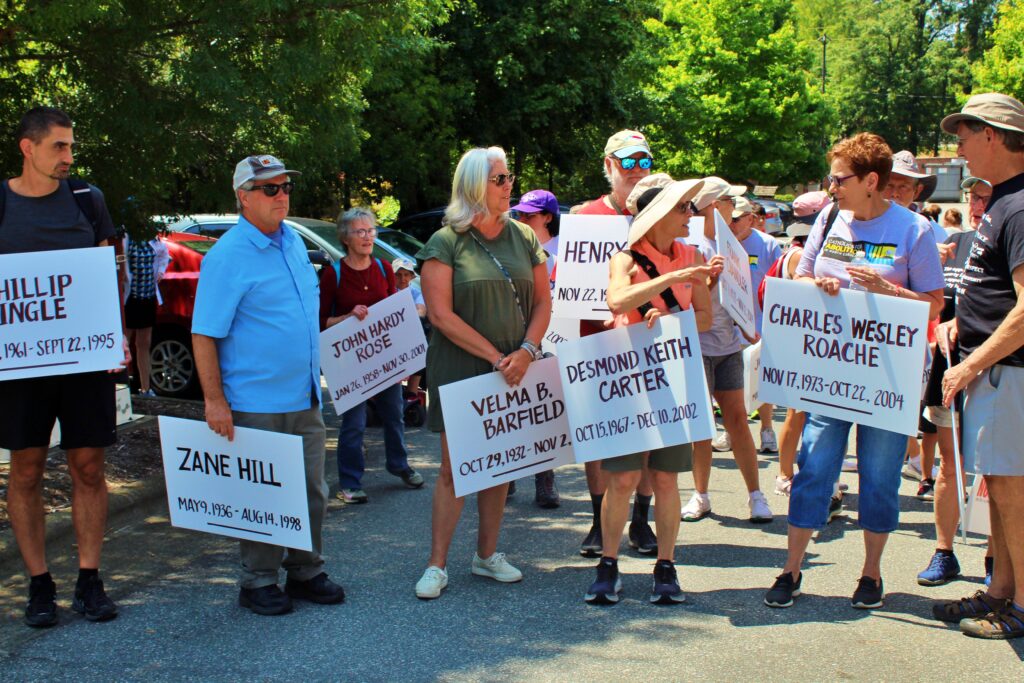
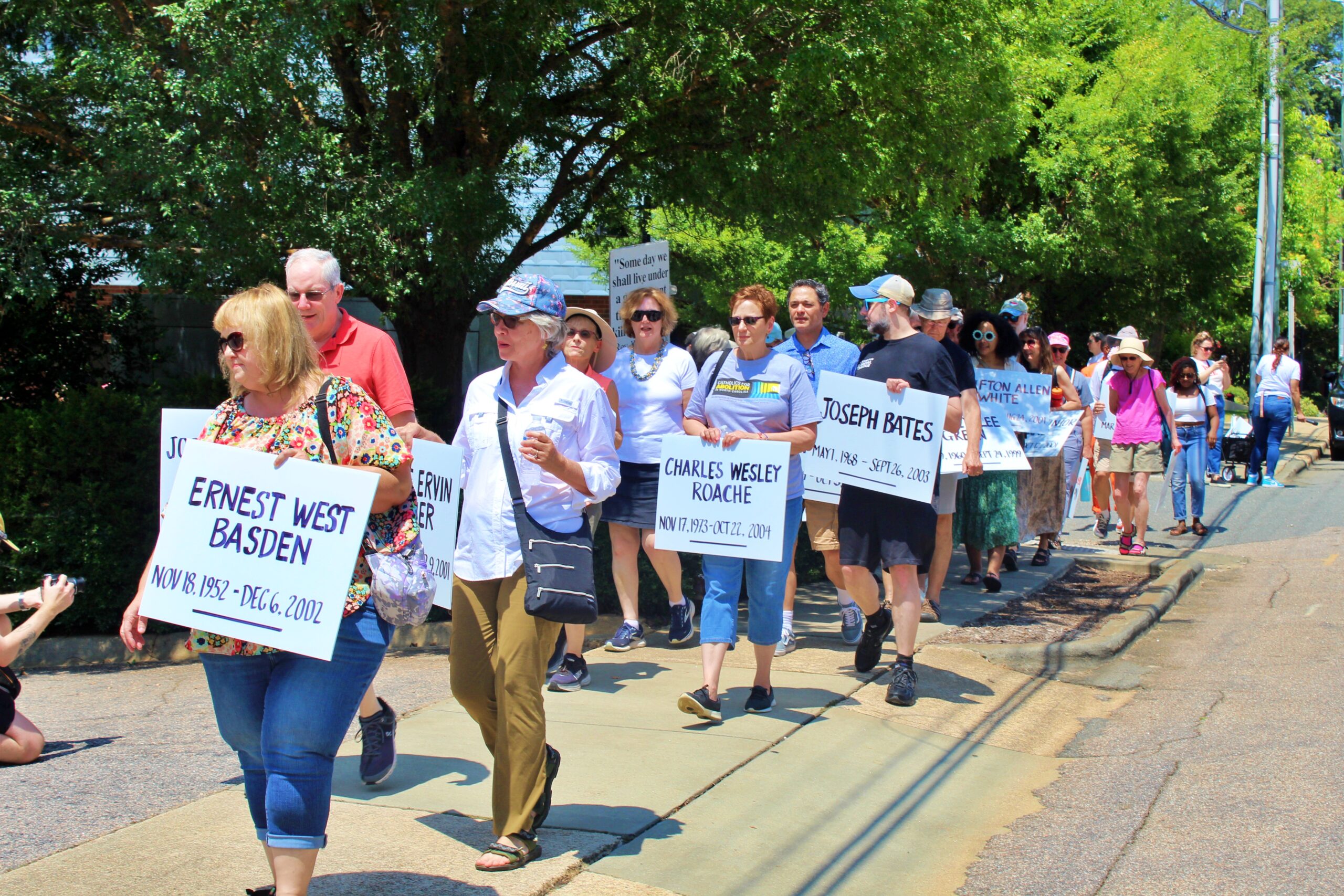
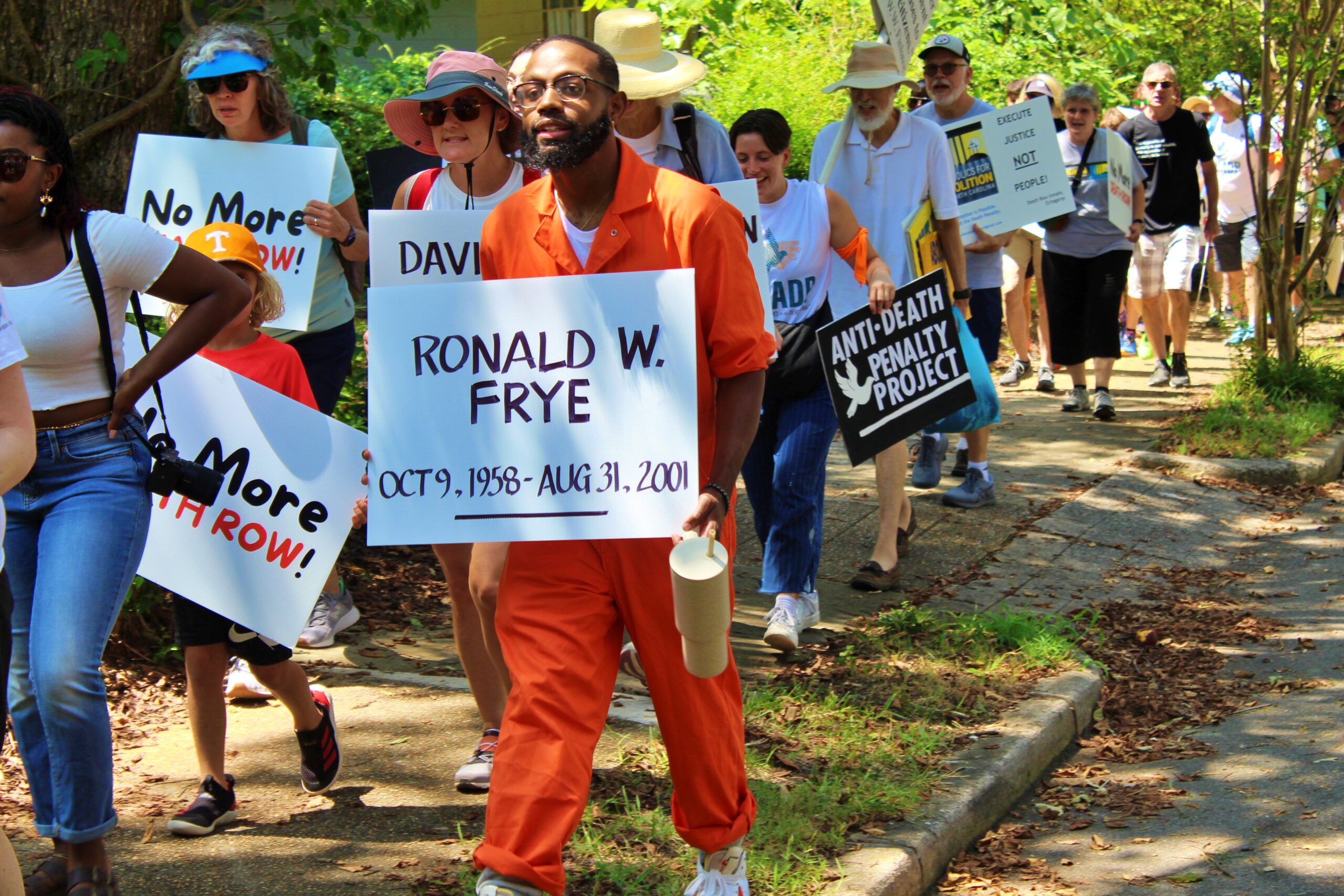
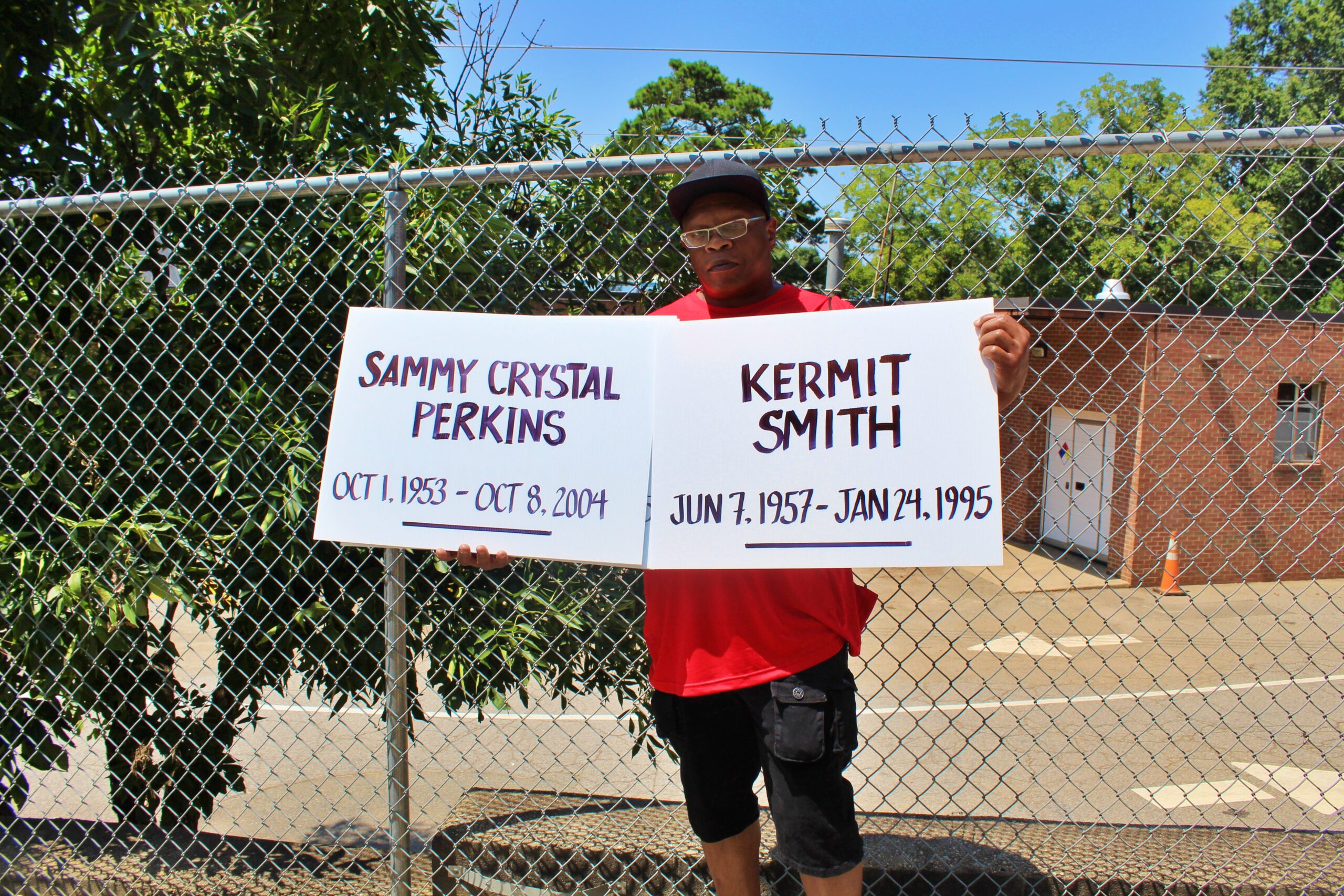
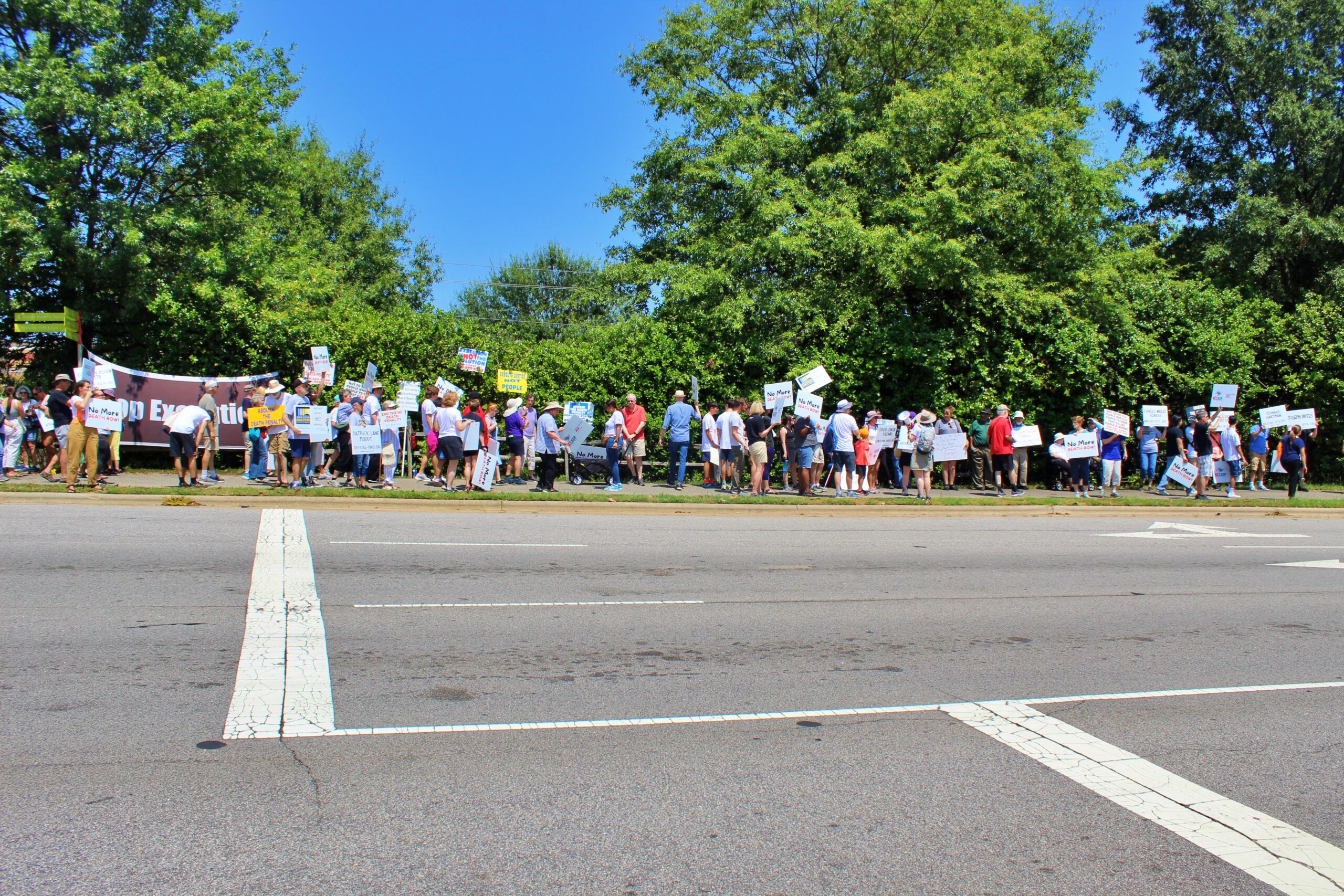
We marched through Raleigh carrying handmade signs bearing the names of the executed, along with their birth and execution dates. We planted them in front of Central Prison, and vowed that no new names would be added. Though the people on death row couldn’t see us, we believe they felt our presence.
We hope Gov. Cooper also heard our call. No more killing in our names. Lead our state beyond executions.
Below are the one-sentence eulogies shared for each of the 43 people executed in North Carolina between 1984 and 2006.
Ernest Basden. He served as a worship liturgist in the prison and mentored other men on death row. He also urged his family and friends to continue the fight against the death penalty, inspiring the creation of the Capital Restorative Justice Project. Executed at 50 years old.
Michael McDougall. He became a supervisor at a company that sold fire hydrants. Executed at 36 years old.
Phillip Ingle. He had two young daughters and a sister who loved him dearly. Executed at 34 years old.
Sammy Crystal Perkins. He was a Duke basketball fan. Executed at 51 years old.
Frank Chandler. He was a voracious reader who especially enjoyed sci-fi and history. Executed at 32 years old.
Quentin Jones. He learned sign language as a child because he had a cousin whose hearing was impaired. Executed at 34 years old.
Ricky Lee Sanderson. He was a jester and always had a joke, which is good because we needed some laughter. Executed at 38 years old.
Joseph Bates. Guys on the row called him “Grandpa.” He sported a mullet and was a great tattoo artist. Executed at 35 years old.
Kenneth Boyd. He was an elder you could talk to. He was quiet. He was my friend and we talked before he was executed. Executed at 57 years old.
David Junior Brown. He was a mentor to others on the row, and on the outside, he was a DJ for his friends. Executed at 51 years old.
David Junior Ward. He was down to earth and a jokester. We called him “Dog.” He could make you laugh. Executed at 39 years old.
Robbie Lyons. Known as Hussein, his Muslim name. He was a big joyful kid at heart and liked to play around. Executed at 31 years old.
Michael Sexton. He was a graduate of Sanderson High School in Raleigh. Executed at 34 years old.
David Lawson. He fought for the right of all on death row to be recognized as human. Executed at 38 years old.
John Thomas Noland. He was the sole caretaker for his children, and his last wish was for them to get his social security benefits. Executed at 50 years old.
Willie Fisher. He served as a lay minister at Central Prison and formed a close bond with the prison chaplain. Executed at 46 years old.
Joseph Timothy Keel. He was an entertaining storyteller who loved his son. Executed at 39 years old.
Clifton Allen White. He would always end visits with his lawyer by saying “Hey, call me a cab.” Executed at 43 years old.
Earl Richmond. He took a lot of pride in being a role model, peacemaker and stabilizing force for the men on death row, even until the very end of his life. Executed at 43 years old.
Harvey Lee Green. He became a member of Pullen Memorial Baptist Church while on death row and was a penpal to several members of the youth group. Executed at 38 years old.
Arthur Boyd. He loved to laugh and enjoyed painting. Executed at 53 years old.
John Gardner. He once owned a St. Bernard puppy. Executed at 34 years old.
Desmond Carter. He had a close relationship with his family and, as a teenager, he helped an elderly neighbor by cutting her grass and raking her leaves. Executed at 35 years old.
Steven McHone. He drew and painted beautiful still lifes and landscapes. Executed at 35 years old.
Elias Syriani. He was a professional singer who once performed for the king of Jordan. Executed at 67 years old.
Perrie Simpson. He spent his childhood in a series of foster homes, where he was consistently described as curious and affectionate. Executed at 43 years old.
Patrick Lane Moody. He and his friends on death row drew and sent hundreds of Christmas cards each year. Executed at 39 years old.
Willie Brown. He was born and raised in Williamston, NC, the second of seven children. Executed at 61 years old.
Velma Barfield. She counseled and encouraged women who were confined near her death row cell, and they grieved her loss deeply. Executed at 52 years old.
Raymond Rowsey. He loved peanut M&Ms. Executed at 32 years old.
Charles Roache. His lawyers described him as soft spoken and remarkably gentle. Executed at 30 years old.
William Powell. Known as “Bugs.” He served his community as a firefighter and a member of the rescue squad. Executed at 58 years old.
Ronnie Frye. His last wish was to walk barefoot on grass. Executed at 42 years old.
Eddie Hartman. He loved linguini with clam sauce. Executed at 39 years old.
John Rook. On the day of his execution, he raised his shackled hands over his lawyer’s head so he could hug her neck. Executed at 27 years old.
James Rich. He loved pizza with black olives. Executed at 26 years old.
John Daniels. As a child, he sang in the choir at Morning Glade AME Zion Church. Executed at 46 years old.
Henry Hunt. He converted to Catholicism in prison. Executed at 58 years old.
Zane Hill. He was a country boy, liked by all who knew him, whose friends were loyal to the end. Executed at 62 years old.
Kermit Smith. He reconciled with his estranged sister on the night of his execution. Executed at 37 years old.
John Hardy Rose. He served honorably in the Marines and the Army and later became a truck driver. Executed at 43 years old.
Samuel Flippen. He was an active member of the youth group at Gospel Light Baptist Church. Executed at 36 years old.