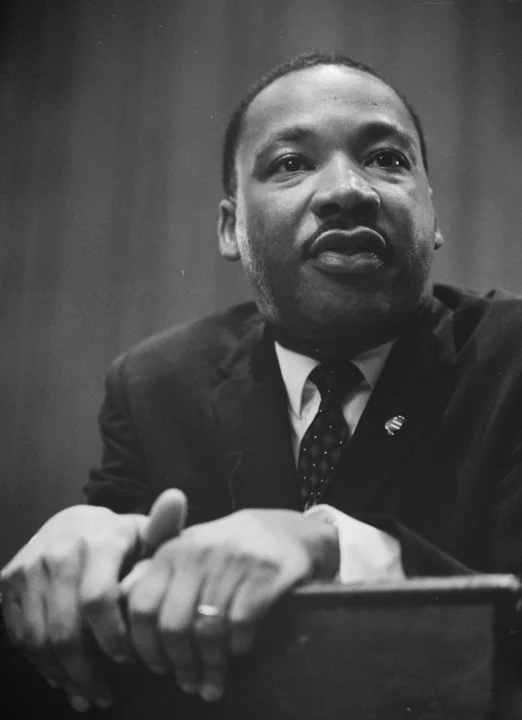
Each year on Martin Luther King Jr. Day, we honor a life devoted to justice, equality, and the transformative power of nonviolent action. While Dr. King is most often remembered for his leadership in the struggle for civil rights, his vision extended far beyond desegregation and voting rights. He spoke clearly and consistently against state‑sanctioned violence, including the death penalty, which he viewed as fundamentally incompatible with justice.
Dr. King believed that the purpose of the justice system should be restoration, not retaliation. When asked whether God approved of capital punishment, he replied, “I do not think that God approves the death penalty for any crime… Capital punishment is against the better judgment of modern criminology and, above all, against the highest expression of love in the nature of God.” For King, the moral failure of the death penalty was inseparable from its reliance on violence as a solution to harm.
This belief was grounded in his philosophy of nonviolence. In a 1967 speech, Dr. King warned that “violence multiplies violence… darkness cannot drive out darkness; only light can do that.” Nonviolence, he argued, was not passive acceptance of injustice, but an active, courageous commitment to breaking cycles of harm. The death penalty, by contrast, reinforces those cycles, responding to violence with more violence rather than accountability, healing, or transformation.
Dr. King also understood the death penalty as a reflection of deep racial injustice within the legal system. In 1958, he publicly opposed the execution of Jeremiah Reeves, a Black teenager sentenced to death by an all‑white jury in Alabama. King called the case a “tragic and unsavory injustice,” highlighting how race, poverty, and unequal access to legal representation shape who is sentenced to death. His critique remains painfully relevant today, as the death penalty continues to be applied disproportionately to people of color and those with the fewest resources.
Capital punishment is against the better judgment of modern criminology and, above all, against the highest expression of love in the nature of God.
After Dr. King’s assassination, his family carried forward his opposition to capital punishment. Coretta Scott King wrote, “An evil deed is not redeemed by an evil deed of retaliation. Justice is never advanced in the taking of a human life.” Their message echoes King’s belief that the moral measure of a society lies in how it treats its most marginalized members.
This MLK Day, the North Carolina Coalition for Alternatives to the Death Penalty invites our community to reflect on the connection between Dr. King’s legacy of nonviolence and the movement to abolish the death penalty. Abolition is a moral commitment to dignity, mercy, and justice. Honoring Dr. King means continuing his call to build a society where accountability does not rely on cruelty, and where the value of every human life is affirmed.