Subscribe to Our Newsletter

This field is for validation purposes and should be left unchanged.
Name(Required)
Email(Required)
Address(Required)
Check all that apply:

  • Skip to main content
  • Skip to footer

NC Coalition for Alternatives to the Death Penalty

Committed to ending the death penalty and creating a new vision of justice

  • Who We Are
    • Mission & History
    • Our Values
    • People Most Proximate
    • Coalition Members
    • Staff, Board, & Advisory Council
    • Our Funders
  • What We Do
  • Why End the Death Penalty?
    • Column 1
      • Racism
      • Innocence
      • Intellectual Disability & Mental Illness
    • Column 2
      • Public Safety
      • High Cost of Death
      • Waning Support
    • Column 3
      • Lethal Injection
      • Antiquated Sentences
      • Unfair Trials
  • Events
  • The Pledge
  • Blog
  • Commutations Campaign
  • Get Involved
  • Donate

Search NC Coalition for Alternatives to the Death Penalty

Jurors sent an innocent man to death row. Now they ask: “Where did we go wrong?”

September 6, 2018

Originally published in the News & Observer
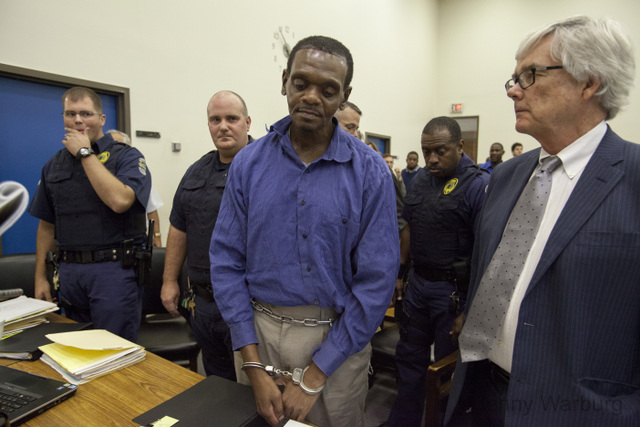
Henry McCollum death row exoneration
Henry McCollum on the day of his exoneration in 2014 (Photo by Jenny Warburg)

By Kristin Collins

September 6, 2018

One elderly woman sat with us in her living room, wearing a pink nightgown. “I should have followed my conscience,” she said, her hands shaking. “I hope he can forgive me.” It’s unclear if she’s seeking forgiveness from the innocent man she sent to death row, or God himself.

She believed the Bible’s instruction: “Thou shalt not kill.” Yet, as a juror decades earlier, she voted for a death sentence for Henry McCollum, an intellectually disabled teenager who was accused of raping and murdering an 11-year-old girl in Robeson County.

The juror put the trial out of her mind until, four years ago this week, McCollum was exonerated. New DNA testing proved another man guilty, and McCollum blameless.  After 30 years on death row, McCollum was free.

At the time, I was relatively new to my job at the Center for Death Penalty Litigation, whose lawyers represented McCollum. His story showed me just how high the stakes are in this world. North Carolina came close to executing an innocent man.

I am still learning from his case. This spring and summer, a co-worker and I criss-crossed Robeson and Cumberland counties, finding jurors who unwittingly sentenced an innocent man to death. The jurors served at McCollum’s original trial in 1983, and his retrial in 1991, held in Fayetteville. Both juries voted unanimously for death.

We hoped they could shed light on how our system got it so terribly wrong. But as I knocked on strangers’ doors, I worried they would be defensive or angry. Instead, they welcomed us into their homes.

Some seemed relieved to finally talk through the trauma of the trial, though none would let us use their names. Many were ashamed of their role, afraid of what their neighbors would think. Some feared God’s wrath, and wondered if they would go to hell for McCollum’s wrongful conviction. Some shed tears at the mention of his name and said the experience was too painful to revisit. They remembered McCollum at the defense table, silent and unresponsive, like a confused and broken child.

All were denied the information they needed to reach a fair verdict. They were shown gruesome crime photos and McCollum’s confession, written by the police. Even McCollum’s defense attorneys admitted his guilt, believing the jury would spare him if he accepted responsibility.

No one told the jury that another, almost identical crime was committed just a month after the girl’s murder — and that the culprit was not McCollum, but a man who lived by the field where her body was found. The jury didn’t know fingerprints were found at the scene, and that none of them were McCollum’s. They didn’t know the case against McCollum started with a rumor from a teenage girl, who later admitted she made it up.

One juror said his biggest regret is that he trusted prosecutors to tell the truth. If McCollum was on trial, he believed, he’d probably done it.

Like everyone we talked to, his most vivid memories were the photos. At the time, he had a daughter the same age as the victim. When the verdict was announced in the courtroom, he looked at her father. The juror had done what the prosecutor said was right, and he hoped it would ease another father’s pain.

“I’ve been trying to figure out, where did we go wrong?” he said. “I feel like we got duped by the system.”

I was in the courtroom for McCollum’s exoneration four years ago. I will never forget the sight of him standing in a cage – the court probably calls it a holding cell – during a break. He stared silently at the floor, powerless against a system that had chained and caged him for his entire adult life.

Now, there is another image that stays with me. A woman sitting in the dim light of her living room, hardly strong enough to rise from her chair, wondering what those 30 years were like for Henry McCollum. Wondering whether God has heard her pleas for forgiveness.

Filed Under: False Evidence, Innocence, Latest News, Why We Care

Footer

Contact

NCCADP Alternate Logo
NCCADP
3326 Durham-Chapel Hill Blvd.
Building D, Suite 201
Durham, NC 27707
noel@nccadp.org
919-404-7409

Follow Us on Instagram

NCCADP is delighted to welcome two new members to NCCADP is delighted to welcome two new members to our Board of Directors, Kerwin Pittman and Paul Klever. 

@kerwin_pittman is the founder of @rreps_. He is a re-entry expert and brings lived experience of spending more than 11 years behind bars. Kerwin sits on the NC Task Force for Racial Equity in Criminal Justice and the State Re-Entry Council Collaborative.

Paul Klever served as executive director of Charles House Association for 20 years. He brings expertise in nonprofit leadership and over a decade supporting people return to community life after incarceration through the Religious Coalition for a Nonviolent Durham. 

Their experience, insight, and commitment to ending the death penalty in North Carolina come at a pivotal time for our movement. We are grateful for their leadership and excited for the work ahead.

Read more about Paul and Kerwin at nccadp.org/leadership.

Special thanks to our two outgoing board members, Margaux Lander and Mark Pickett, whose leadership has helped shape many critical phases of our work!

#NoMoreDeathRow #EndTheDeathPenalty #NCCADP
Happening this Thursday in Asheville – you're invi Happening this Thursday in Asheville – you're invited!

Who benefits from mass incarceration and the prison industrial complex? In their new book, The Prison Industry: How It Works and Who Profits, Bianca Tylek and Worth Rises expose the economic forces that uphold and benefit from these systems.

Join us at Firestorm Books in Asheville on January 22 to hear Bianca in conversation with Rev. Philip Cooper of Operation Gateway, a fireside chat moderated by NCCADP’s Executive Director, Noel Nickle.

Learn more at the link in our bio.
Martin Luther King, Jr. was a dedicated death pena Martin Luther King, Jr. was a dedicated death penalty abolitionist. This MLK Day, we reflect on the connection between Dr. King's legacy of nonviolence and the movement to abolish the death penalty.

In 1952, at the young age of 16, Alabama high school student Jeremiah Reeves was accused of sexually assaulting a white woman. In a rushed trial, an all-white jury sentenced him to die. His defense argued that law enforcement had coerced his confession by strapping him to an electric chair and threatening to flip the switch immediately unless he declared his guilt. 

Reeves spent 6 years on death row as his case moved through the appeals process. Dr. King became a strong advocate for Reeves, but the state still put him to death. In 1958, just 9 days after Reeves' killing, Dr. King led a march, the Prayer Pilgrimage, to the steps of the Alabama capitol. In front of a crowd of more than 2,000 people, Dr. King boldly proclaimed the injustices of the death penalty: "It is the severity and inequality of the penalty that constitutes the injustice."

Reeves' execution was a flashpoint for civil rights advocates, one of a long series of injustices that fueled the Montgomery bus boycott and the Civil Rights Movement more broadly.

Throughout his life, Dr. King repeatedly spoke out against the death penalty, which he saw as racist, brutal, antiquated, and fundamentally in opposition to his theory of nonviolence. 

Read more about how we can honor Dr. King's legacy by ending the death penalty on our website: nccadp.org/mlk-day-2026

#NoMoreDeathRow #MLKDay #MartinLutherKingJr #EndTheDeathPenalty
Follow on Instagram

Stay Connected

  • Facebook
  • Instagram
  • Twitter

Copyright © 2026 · NC Coalition for Alternatives to the Death Penalty · All Rights Reserved · Website by Tomatillo Design