Subscribe to Our Newsletter

This field is for validation purposes and should be left unchanged.
Name(Required)
Email(Required)
Address(Required)
Check all that apply:

  • Skip to main content
  • Skip to footer

NC Coalition for Alternatives to the Death Penalty

Committed to ending the death penalty and creating a new vision of justice

  • Who We Are
    • Mission & History
    • Our Values
    • People Most Proximate
    • Coalition Members
    • Staff, Board, & Advisory Council
    • Our Funders
  • What We Do
    • Commutations Campaign
  • Why End the Death Penalty?
    • Column 1
      • Racism
      • Innocence
      • Intellectual Disability & Mental Illness
    • Column 2
      • Public Safety
      • High Cost of Death
      • Waning Support
    • Column 3
      • Lethal Injection
      • Antiquated Sentences
      • Unfair Trials
  • Events
  • 20 Years With No Executions
  • Blog
  • The Pledge
  • Get Involved
  • Donate

Search NC Coalition for Alternatives to the Death Penalty

Kenneth Rouse

Learn more: The death penalty is racist

During his 1992 trial, Kenneth Rouse attempted suicide by smashing his hands through a window and slashing his wrists. His mental disabilities were so severe that he was not fully capable of understanding his actions or participating in his defense. But the biggest strike against him was that he was a black man charged with killing a white woman, and at least one member of his all-white jury was openly racist.
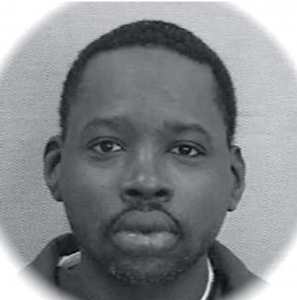
Kenneth was sentenced to death for the 1991 robbery and murder of Hazel Broadway, a clerk at an Asheboro convenience store. After the trial, defense investigators assigned a law student to interview jurors in the case. One juror, Joseph Baynard, signed a sworn affidavit admitting that he had lied to earn his spot on the panel.

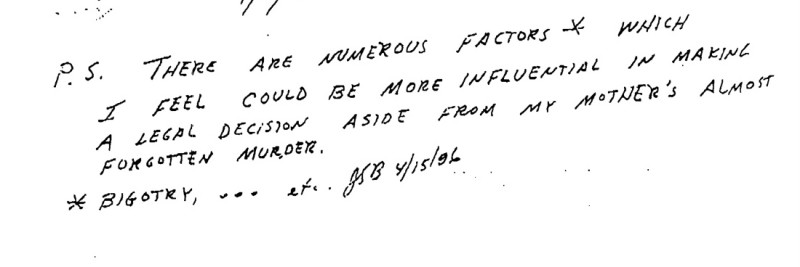
Baynard’s mother had been murdered by a black man 40 years earlier, under very similar circumstances to the crime Kenneth stood accused of. In the affidavit, Baynard said, “In particular, the pictures of Mrs. Broadway [the victim] at the murder scene reminded me of pictures of my mother after she had been murdered.” He said he decided not to mention his mother’s killing because he wanted to serve on the jury.

The juror also admitted in the affidavit that racial bigotry played a role in his decision to sentence a black man to death. Baynard said he believed that “blacks do not care about living as much as whites do” and that “black men rape white women so they can brag about it to their friends.” He referred to African-Americans with racist slurs. He said that one purpose of the death penalty is to rid the world of defective human beings and that Kenneth was “one step above a moron.”

This evidence has never been heard in court. The lower courts denied requests for a new trial, and the federal appeals court refused to hear it because Kenneth’s lawyers filed his petition one day after the deadline.

Four U.S. District Court judges disagreed with the decision not to hear this new evidence in Kenneth’s case. In her dissent, Judge Diana Gribbon Motz said, “I cannot join a decision that would allow the most minor procedural default imaginable to prohibit all evidentiary inquiry into such a serious constitutional claim.” Because of a single day, this important evidence of racial bias and improper jury conduct has never been examined in court — and the death sentence imposed by a biased jury still stands.

Filed Under: Racial Bias

Footer

Contact

NCCADP Alternate Logo
NCCADP
3326 Durham-Chapel Hill Blvd.
Building D, Suite 201
Durham, NC 27707
noel@nccadp.org
919-404-7409

Follow Us on Instagram

Disability Pride Month is a time to celebrate disa Disability Pride Month is a time to celebrate disabled people, recognize the ongoing fight for disability justice, and confront the ways our legal system continues to fail people with disabilities.

Although the Supreme Court barred the execution of people with intellectual disabilities more than two decades ago, that protection remains uneven. States continue to apply inconsistent standards, and people who should never face execution still do.

The death penalty has never been administered fairly. For people with intellectual disabilities, the consequences can be especially devastating.

Swipe through to learn more about the intersection of disability and the death penalty, and why the fight for abolition is also a fight for disability justice.
Florida has executed Dominick Anthony Occhicone Jr Florida has executed Dominick Anthony Occhicone Jr., the oldest person put to death by the state. He was 80 years old.

Dominick was the second person killed by Florida TODAY, a level of state-sanctioned brutality that is hard to comprehend.

He was the 12th person executed by Florida in 2026 and the 19th person executed in the US this year.

Our hearts go out to all those impacted by his death, including the loved ones of his victims.

#DominickOcchicone #Florida #NoMoreDeathRow #EndTheDeathPenalty
Florida has executed James Duckett, a former polic Florida has executed James Duckett, a former police officer who maintained his innocence for nearly four decades. Key DNA evidence in his case was destroyed by the state.

James' execution is the first of two in Florida today. He was the 11th person killed by Florida in 2026 and the 18th person executed in the US this year. 

Our hearts go out to all those impacted by his death.

#JamesDuckett #Florida #NoMoreDeathRow #EndTheDeathPenalty
Follow on Instagram

Stay Connected

  • Facebook
  • Instagram
  • Twitter

Copyright © 2026 · NC Coalition for Alternatives to the Death Penalty · All Rights Reserved · Website by Tomatillo Design