Please read this powerful analysis from Gretchen M. Engel, executive director of the Center for Death Penalty Litigation, a NCCADP partner organization:
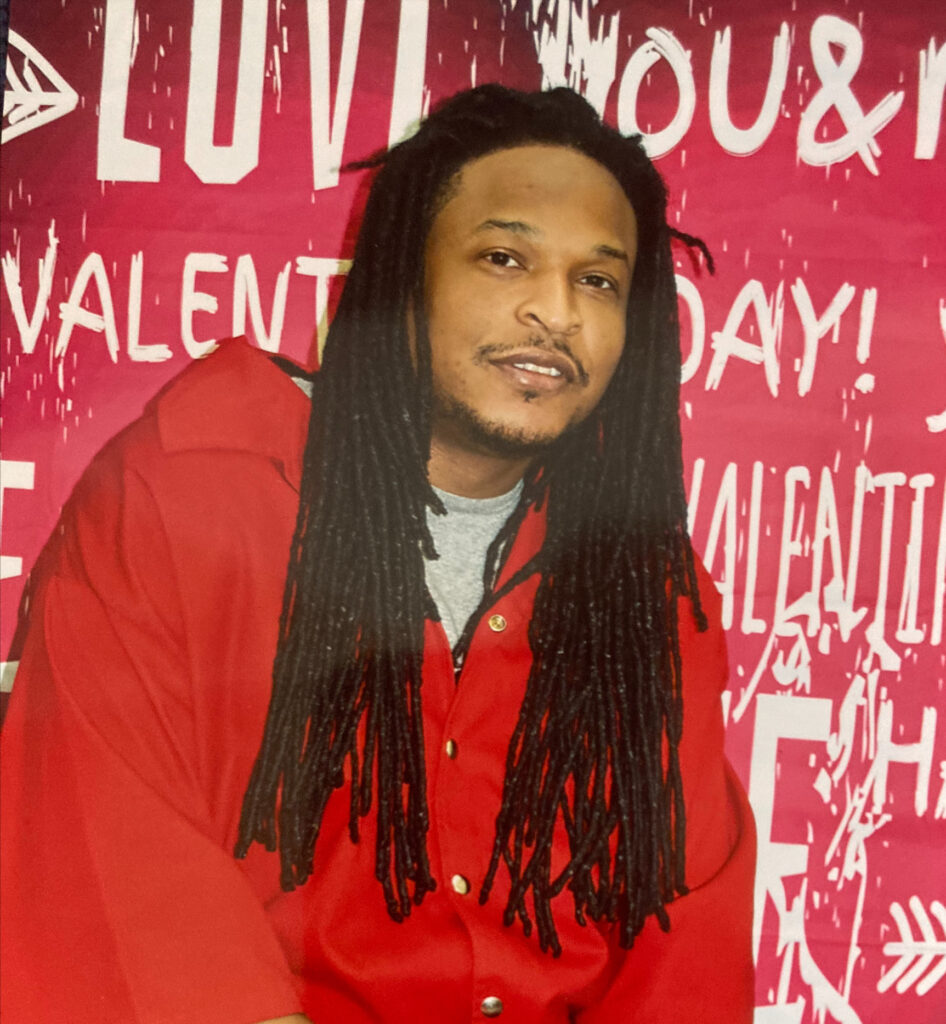
You may have already heard that, on Feb. 7, CDPL and its partners achieved a tremendous victory under North Carolina’s Racial Justice Act. (Read our press release.) Our client Hasson Bacote became the fifth person to prove that his death sentence was poisoned by racism. The ruling didn’t affect Mr. Bacote’s sentence because he had already received a commutation to life without parole from Gov. Cooper. Nevertheless, this ruling carries great significance in our work to end the death penalty.
Superior Court Judge Wayland Sermons didn’t just agree with us that racist jury strikes denied Black people a voice in capital juries, the same finding that Judge Gregory Weeks made more than a decade ago in the cases of four Cumberland County clients. Judge Sermons went further, finding that race affected who was sentenced to death. He wrote that, in Johnston County, “Black defendants like Mr. Bacote have faced a 100 percent chance of receiving a death sentence, while white defendants have a better than even chance of receiving a life sentence.” Judge Sermons called out Mr. Bacote’s prosecutor, Gregory Butler, who also prosecuted others who remain on death row, for routinely “denigrating Black defendants in thinly veiled racist terms.” Even after a judge warned him not to, Mr. Butler referred to Black defendants as “predators of the African plain.” He called another Black man a “piece of trash.” In Mr. Bacote’s case, he used the insult “thug,” and admitted at the hearing this spring that he knew this was a racially coded term. It was deeply gratifying to see a judge acknowledge this discrimination after decades of watching prosecutors face no consequences for using racist tropes against our clients.
Perhaps most importantly, Judge Sermons acknowledged that Mr. Bacote’s case “fit within a long history of racial discrimination.” As we litigate capital cases across North Carolina, it’s clear that most judges and prosecutors want to believe our modern death penalty system has no link to this state’s history of slavery, lynching, and segregation. Yet, as we revealed in our groundbreaking project Racist Roots, the modern death penalty is deeply entangled with white supremacy and remains a tool to enforce racial hierarchy.
In his ruling, Judge Sermons reckoned with this truth and did not mince words. He acknowledged that the exclusion of Black people from juries is linked to their exclusion from voting rights. He described how historical practices of barring Black people from jury pools evolved into prosecutors’ modern practice of using peremptory strikes to disproportionately exclude Black citizens. He also clearly noted the link between racial terror and the death penalty. Judge Sermons wrote, “The historical evidence received by this Court reveals that racial intimidation and discrimination continued in Johnston County for many years, including right outside the courthouse doors. Into the early 2000s, Johnston County remained known as ‘Klan country.’ This reputation stemmed, in part, from the landscape itself: For years, the major entrances to towns such as Smithfield, Princeton, and Benson, were marked by a series of imposing billboards advertising the county as home to the Ku Klux Klan.” (Read the full order.)
It’s hard to describe how stunning and heartening it was to see a judge acknowledge these deep truths about the death penalty. It was certainly emotional for Mr. Bacote, who lived under a racist death sentence for 15 years. We hope this ruling will encourage North Carolina’s leaders to take a close look at the cases of the 121 people who remain on North Carolina’s death row. Slowly but surely, we are accruing a mountain of evidence that the modern death penalty is not just descended from racism, but that it cannot escape its racist roots.