Subscribe to Our Newsletter

This field is for validation purposes and should be left unchanged.
Name(Required)
Email(Required)
Address(Required)
Check all that apply:

  • Skip to main content
  • Skip to footer

NC Coalition for Alternatives to the Death Penalty

Committed to ending the death penalty and creating a new vision of justice

  • Who We Are
    • Mission & History
    • Our Values
    • People Most Proximate
    • Coalition Members
    • Staff, Board, & Advisory Council
    • Our Funders
  • What We Do
    • Commutations Campaign
  • Why End the Death Penalty?
    • Column 1
      • Racism
      • Innocence
      • Intellectual Disability & Mental Illness
    • Column 2
      • Public Safety
      • High Cost of Death
      • Waning Support
    • Column 3
      • Lethal Injection
      • Antiquated Sentences
      • Unfair Trials
  • Events
  • 20 Years With No Executions
  • Blog
  • The Pledge
  • Get Involved
  • Donate

Search NC Coalition for Alternatives to the Death Penalty

Racial Justice Act

A racial justice act victory — and what it means for our work to end the death penalty

Feb 12, 2025
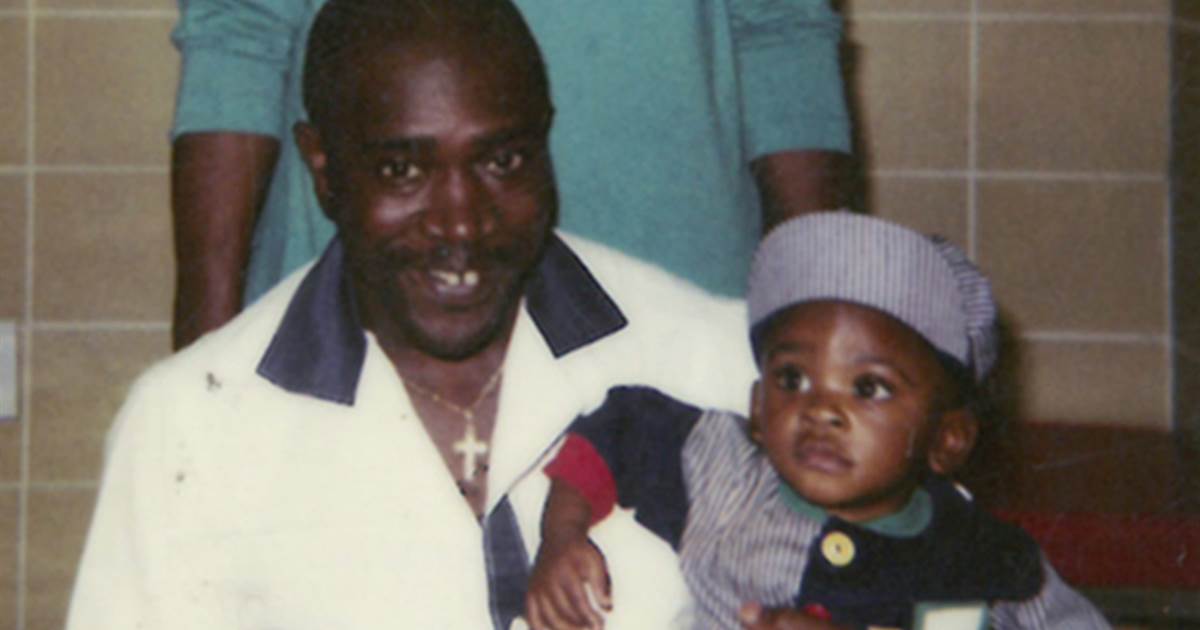
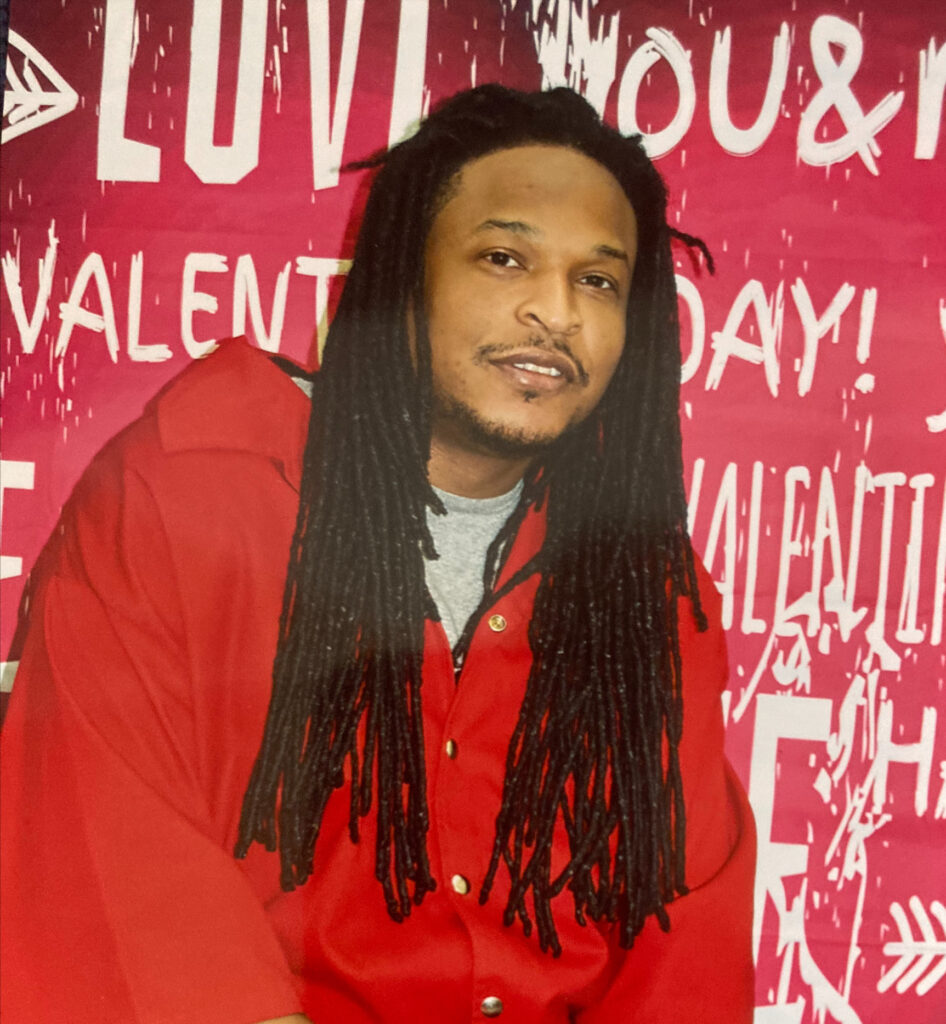
Feb. 7, CDPL and its legal partners achieved a tremendous victory under North Carolina’s Racial Justice Act. Their client Hasson Bacote became the fifth person to prove that his death sentence was poisoned by racism. The ruling didn’t affect Mr. Bacote’s sentence because he had already received a commutation to life without parole from Gov. Cooper. Nevertheless, this ruling carries great significance in our work to end the death penalty.
A racial justice act victory — and what it means for our work to end the death penalty
February 12, 2025 · Kristin Collins

Feb. 7, CDPL and its legal partners achieved a tremendous victory under North Carolina’s Racial Justice Act. Their client Hasson Bacote became the fifth person to prove that his death sentence was poisoned by racism. The ruling didn’t affect Mr. Bacote’s sentence because he had already received a commutation to life without parole from Gov. Cooper. Nevertheless, this ruling carries great significance in our work to end the death penalty.

Filed Under: Blog, Racial Justice Act

‘Klan Country’ no more: We showed up for justice in Johnston County

Feb 26, 2024
On Monday, Feb. 26, we filled the Johnston County Courthouse for the start of a landmark hearing that will reveal the full scope of the NC death penalty’s racism. During more than a week of testimony, attorneys will lay out incontrovertible evidence that the North Carolina death penalty is a tool of white supremacy. The crowd that packed the courtroom on Monday sent a clear message: The people of North Carolina are watching. Our presence was especially meaningful in Johnston County, where racism has been not just pervasive but, at times, proudly displayed.

‘Klan Country’ no more: We showed up for justice in Johnston County

February 26, 2024 · Kristin Collins

On Monday, Feb. 26, we filled the Johnston County Courthouse for the start of a landmark hearing that will reveal the full scope of the NC death penalty’s racism. During more than a week of testimony, attorneys will lay out incontrovertible evidence that the North Carolina death penalty is a tool of white supremacy. The crowd that packed the courtroom on Monday sent a clear message: The people of North Carolina are watching. Our presence was especially meaningful in Johnston County, where racism has been not just pervasive but, at times, proudly displayed.

Filed Under: Blog, Racial Justice Act

Nearly three decades after a death sentence, evidence of a racist trial finally comes to light

May 31, 2023
A man who has spent nearly 30 years on death row finally had a chance to present evidence that Black jurors were illegally excluded from his trial. Frank Chambers, a Black man, was sent to death row in 1994 by a Rowan County jury that included only a single non-white member. The evidence of discrimination was so extensive that the hearing took an entire week. 

Nearly three decades after a death sentence, evidence of a racist trial finally comes to light

May 31, 2023 · Kristin Collins

A man who has spent nearly 30 years on death row finally had a chance to present evidence that Black jurors were illegally excluded from his trial. Frank Chambers, a Black man, was sent to death row in 1994 by a Rowan County jury that included only a single non-white member. The evidence of discrimination was so extensive that the hearing took an entire week. 

Filed Under: Blog, Racial Bias, Racial Justice Act

Racist jury strikes go on trial in the NC Supreme Court

Feb 1, 2023
Russell Tucker was a Black man facing the death penalty in the South in the “tough-on-crime” 1990s. He deserved the chance to be tried by a jury of his peers. However, a Forsyth County prosecutor came up with reason after reason why Black people could not remain on the jury. On Feb. 8, Mr. Tucker's attorneys will present evidence to the NC Supreme Court that jurors were illegally excluded because of their race.

Racist jury strikes go on trial in the NC Supreme Court

February 1, 2023 · Kristin Collins

Russell Tucker was a Black man facing the death penalty in the South in the “tough-on-crime” 1990s. He deserved the chance to be tried by a jury of his peers. However, a Forsyth County prosecutor came up with reason after reason why Black people could not remain on the jury. On Feb. 8, Mr. Tucker’s attorneys will present evidence to the NC Supreme Court that jurors were illegally excluded because of their race.

Filed Under: Blog, Racial Bias, Racial Justice Act

In life-and-death cases, the jury box must be open to all — not just those most prone to convict

Aug 24, 2022
We already know from our experience with the Racial Justice Act how prosecutors work to keep juries in capital cases overwhelmingly white, using the tool of peremptory strikes. Now, new evidence shows that another insidious tool further skews juries toward white and male — and makes it all but impossible for Black women to have […]

In life-and-death cases, the jury box must be open to all — not just those most prone to convict

August 24, 2022 · Kristin Collins

We already know from our experience with the Racial Justice Act how prosecutors work to keep juries in capital cases overwhelmingly white, using the tool of peremptory strikes. Now, new evidence shows that another insidious tool further skews juries toward white and male — and makes it all but impossible for Black women to have […]

Filed Under: Blog, Racial Bias, Racial Justice Act, Wake County

Remembering Marcus Robinson, who helped expose death penalty racism
Jul 1, 2022
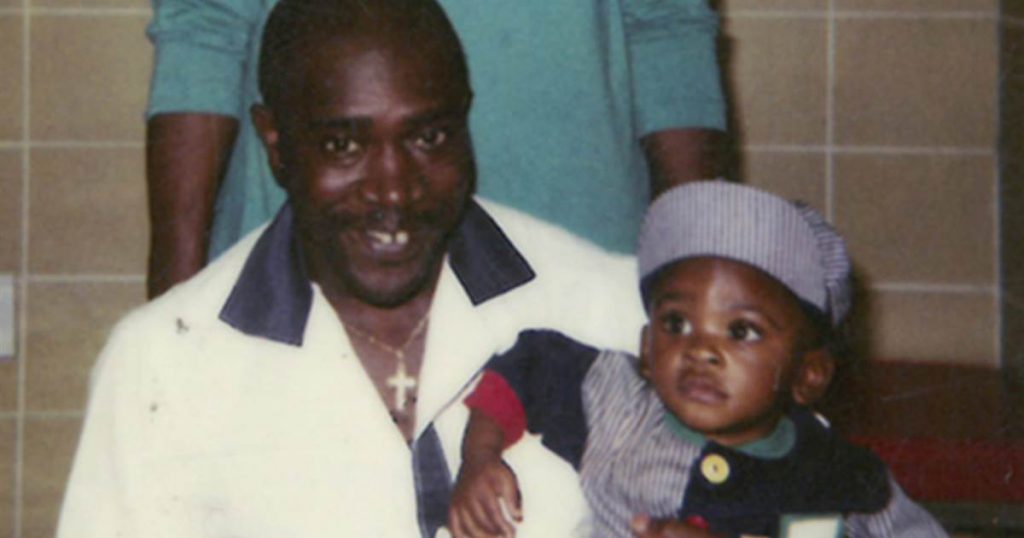
Reposted from the Center for Death Penalty Litigation Earlier this month, Marcus Robinson was found dead in his cell at Scotland Correctional Institution. The prison ruled it a suicide. He was 49 and had spent his entire adult life, as well as a good chunk of his childhood, in prison. His death didn’t make the […]

Remembering Marcus Robinson, who helped expose death penalty racism
July 1, 2022 · Kristin Collins

Reposted from the Center for Death Penalty Litigation Earlier this month, Marcus Robinson was found dead in his cell at Scotland Correctional Institution. The prison ruled it a suicide. He was 49 and had spent his entire adult life, as well as a good chunk of his childhood, in prison. His death didn’t make the […]

Filed Under: Blog, Racial Justice Act

George Floyd Memorial

Chauvin trial shows that justice requires diverse, inclusive juries

Apr 22, 2021
No one should have been on the edge of their seat about the verdict in Derek Chauvin’s trial. He was caught on video kneeling on George Floyd’s neck for more than nine minutes as Floyd begged for his life. But this is America, where police are almost never held accountable, so we held our breath and prepared for Chauvin to be acquitted. But in this rare case, a jury of six white, four Black and two multiracial people provided a measure of justice, finding Chauvin guilty of murder. Surely, the jury’s diverse makeup helped it reach this much-needed verdict. Yet, it’s exactly this kind of diversity that prosecutors often work to avoid. They strike Black citizens from juries at far higher rates than whites. Then, when they’re accused of violating the law prohibiting racist jury strikes, they offer the flimsiest possible defenses. And no matter how implausible their excuses are, they almost always get away with it.

Chauvin trial shows that justice requires diverse, inclusive juries

April 22, 2021 · Kristin Collins

George Floyd Memorial

No one should have been on the edge of their seat about the verdict in Derek Chauvin’s trial. He was caught on video kneeling on George Floyd’s neck for more than nine minutes as Floyd begged for his life. But this is America, where police are almost never held accountable, so we held our breath and prepared for Chauvin to be acquitted. But in this rare case, a jury of six white, four Black and two multiracial people provided a measure of justice, finding Chauvin guilty of murder. Surely, the jury’s diverse makeup helped it reach this much-needed verdict. Yet, it’s exactly this kind of diversity that prosecutors often work to avoid. They strike Black citizens from juries at far higher rates than whites. Then, when they’re accused of violating the law prohibiting racist jury strikes, they offer the flimsiest possible defenses. And no matter how implausible their excuses are, they almost always get away with it.

Filed Under: Latest News, National News, Public Safety Officials, Racial Bias, Racial Justice Act

James Ferguson II on the meaning, impact and promise of the Racial Justice Act

Jun 17, 2020
  This article was originally published on June 17, 2020 in the NC Policy Watch. When I was a young Black lawyer in the late 1960’s and 1970’s, there was an unwritten rule in North Carolina’s courtrooms: Though race shaped every aspect of the criminal punishment system, we were not to mention it, let alone […]

James Ferguson II on the meaning, impact and promise of the Racial Justice Act

June 17, 2020 · Emily Baxter

  This article was originally published on June 17, 2020 in the NC Policy Watch. When I was a young Black lawyer in the late 1960’s and 1970’s, there was an unwritten rule in North Carolina’s courtrooms: Though race shaped every aspect of the criminal punishment system, we were not to mention it, let alone […]

Filed Under: Blog, Criminal Justice Reform, Latest News, Racial Bias, Racial Justice Act

Landmark N.C. Supreme Court ruling brings death penalty racism into spotlight

Jun 5, 2020
The Center for Death Penalty Litigation’s June 5 2020 Press Release: The North Carolina Supreme Court today issued two landmark civil rights rulings on the Racial Justice Act, clearing the way for a much-needed review of racial discrimination in death penalty cases across the state. The court decided 6-1 Friday that Rayford Burke and Andrew […]
Landmark N.C. Supreme Court ruling brings death penalty racism into spotlight

June 5, 2020 · Emily Baxter

The Center for Death Penalty Litigation’s June 5 2020 Press Release: The North Carolina Supreme Court today issued two landmark civil rights rulings on the Racial Justice Act, clearing the way for a much-needed review of racial discrimination in death penalty cases across the state. The court decided 6-1 Friday that Rayford Burke and Andrew […]

Filed Under: Latest News, Racial Bias, Racial Justice Act

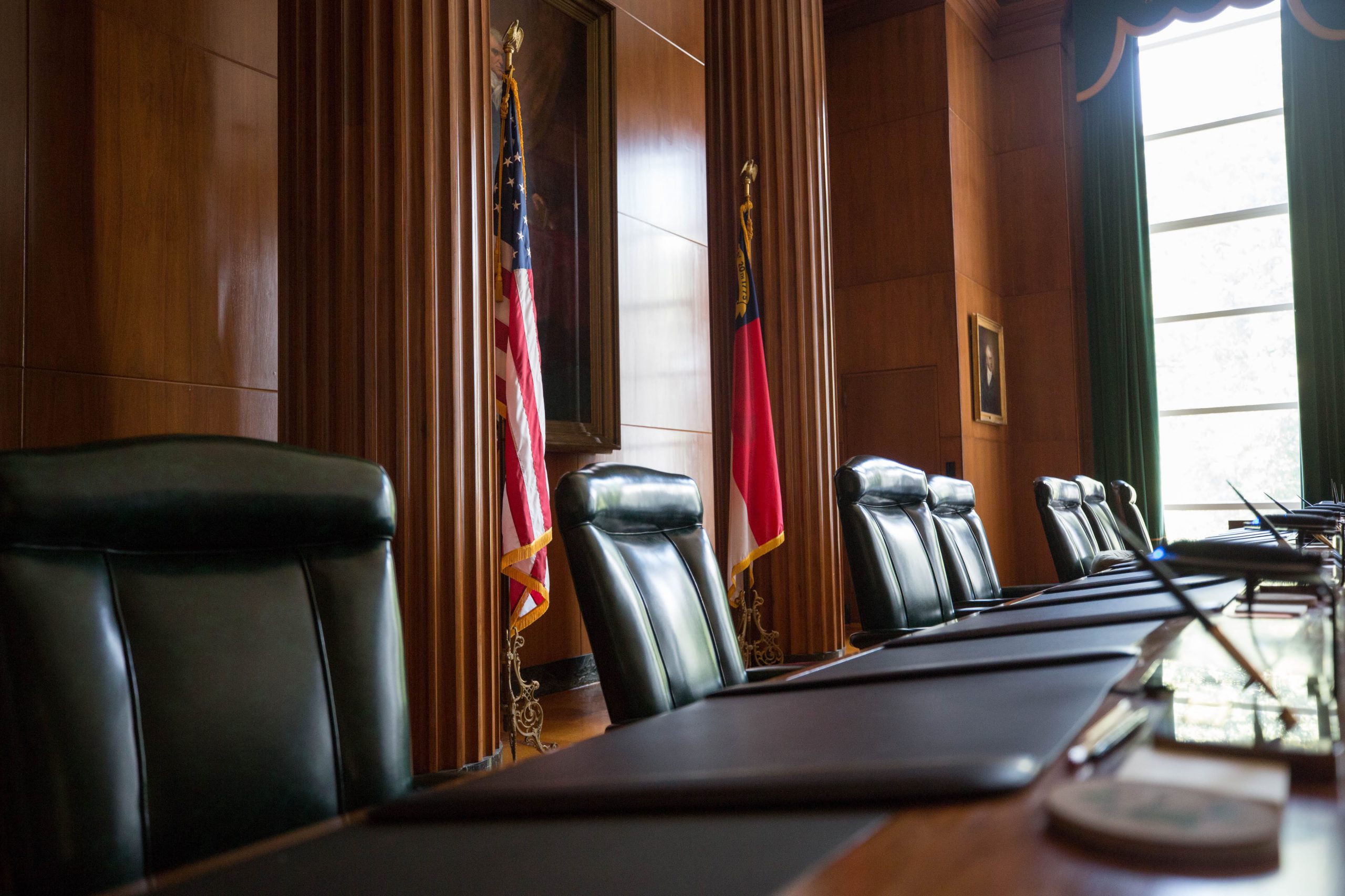
Justices' benches at the Supreme Court of the State of North Carolina

NC Supreme Court sends a message to judges: Start taking jury discrimination seriously

May 6, 2020
In these days of COVID, it’s easy to be overwhelmed by bad news. But we shouldn’t forget to celebrate good news, and we’ve had a little of that in the past week. On Friday, the North Carolina Supreme Court issued a decision that sends a clear message: North Carolina’s courts must finally begin to take the exclusion of black jurors seriously. The decision says that, when a person on trial suggests that a prosecutor struck a  juror because of the juror’s race, the courts must fully investigate. They must consider the history of disproportionate jury strikes in the county, and compare the treatment of white people and people of color in the jury pool to see if it’s been equal. If these sound like no brainers, that’s because they are. This is the least the courts can do to begin to end the decades-long practice of denying people of color a voice in the criminal punishment system.

NC Supreme Court sends a message to judges: Start taking jury discrimination seriously

May 6, 2020 · Kristin Collins

Justices' benches at the Supreme Court of the State of North Carolina

In these days of COVID, it’s easy to be overwhelmed by bad news. But we shouldn’t forget to celebrate good news, and we’ve had a little of that in the past week. On Friday, the North Carolina Supreme Court issued a decision that sends a clear message: North Carolina’s courts must finally begin to take the exclusion of black jurors seriously. The decision says that, when a person on trial suggests that a prosecutor struck a  juror because of the juror’s race, the courts must fully investigate. They must consider the history of disproportionate jury strikes in the county, and compare the treatment of white people and people of color in the jury pool to see if it’s been equal. If these sound like no brainers, that’s because they are. This is the least the courts can do to begin to end the decades-long practice of denying people of color a voice in the criminal punishment system.

Filed Under: Latest News, Racial Bias, Racial Justice Act

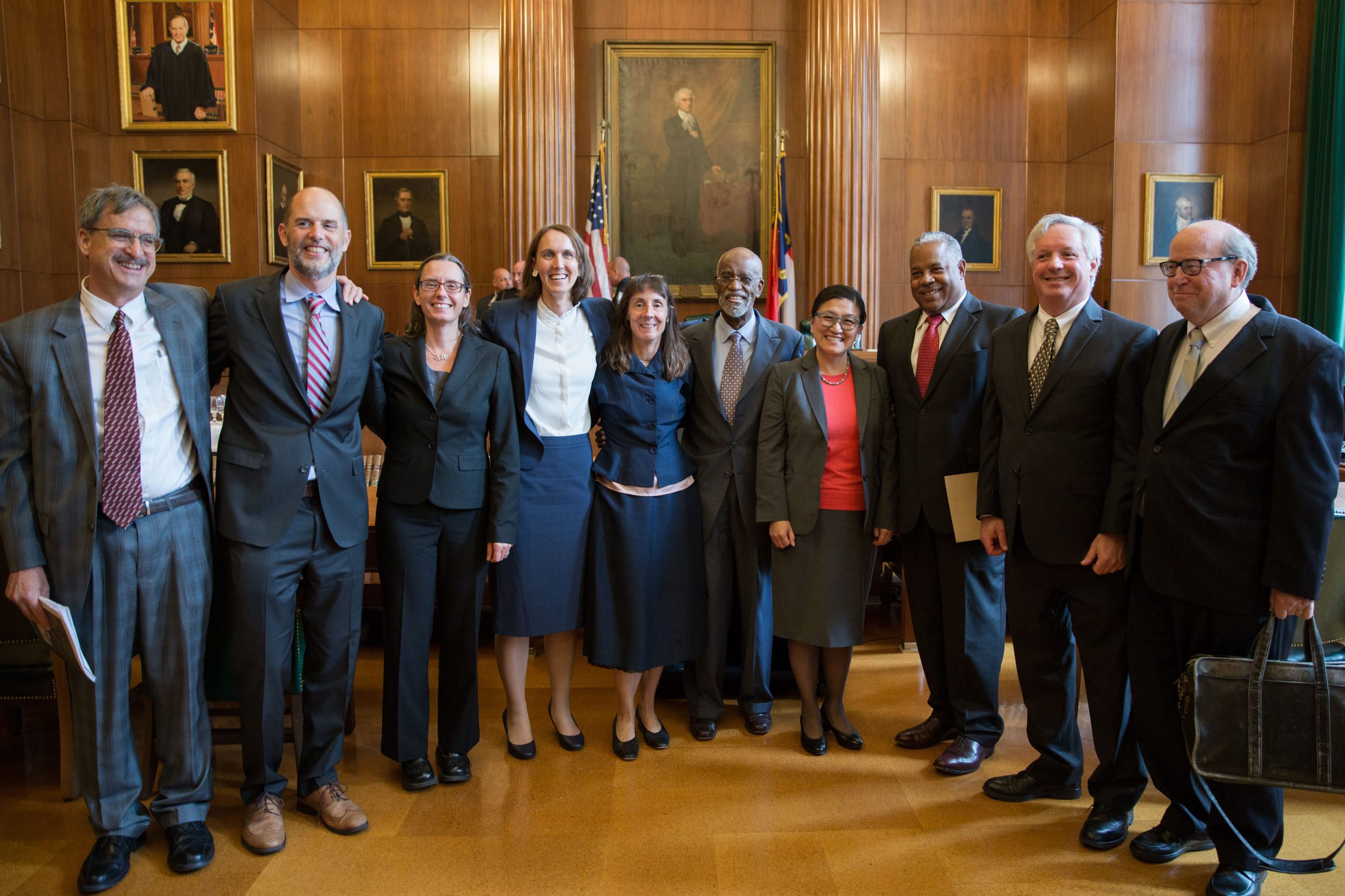
A history-making day in the North Carolina Supreme Court

Sep 12, 2019
At the end of August, our movement made history. A group of talented attorneys from across the state and the nation argued before the North Carolina Supreme Court. At issue were the cases of six men and women on death row who have uncovered compelling proof that their sentences were poisoned by racial discrimination. All […]

A history-making day in the North Carolina Supreme Court

September 12, 2019 · Kristin Collins

At the end of August, our movement made history. A group of talented attorneys from across the state and the nation argued before the North Carolina Supreme Court. At issue were the cases of six men and women on death row who have uncovered compelling proof that their sentences were poisoned by racial discrimination. All […]

Filed Under: Latest News, Racial Justice Act, Uncategorized

Coming up: Racial Justice Act cases will put evidence of death penalty racism before the North Carolina Supreme Court

Aug 19, 2019
A big day is coming up, and we need your help! Beginning one week from today, North Carolina’s highest court will hear six cases under the North Carolina Racial Justice Act. These cases go to the heart of our fight to end the racist death penalty. They include stunning evidence of racism in death penalty trials. The court will have to decide whether that evidence will get its day in court, or whether it will be thrown away. The decision comes down to whether the state will be allowed to execute people whose death sentences are tainted by racism.

Coming up: Racial Justice Act cases will put evidence of death penalty racism before the North Carolina Supreme Court

August 19, 2019 · Kristin Collins

A big day is coming up, and we need your help! Beginning one week from today, North Carolina’s highest court will hear six cases under the North Carolina Racial Justice Act. These cases go to the heart of our fight to end the racist death penalty. They include stunning evidence of racism in death penalty trials. The court will have to decide whether that evidence will get its day in court, or whether it will be thrown away. The decision comes down to whether the state will be allowed to execute people whose death sentences are tainted by racism.

Filed Under: Latest News, Racial Justice Act

The whitening of the jury: How discrimination thrives in NC courtrooms

Aug 1, 2019
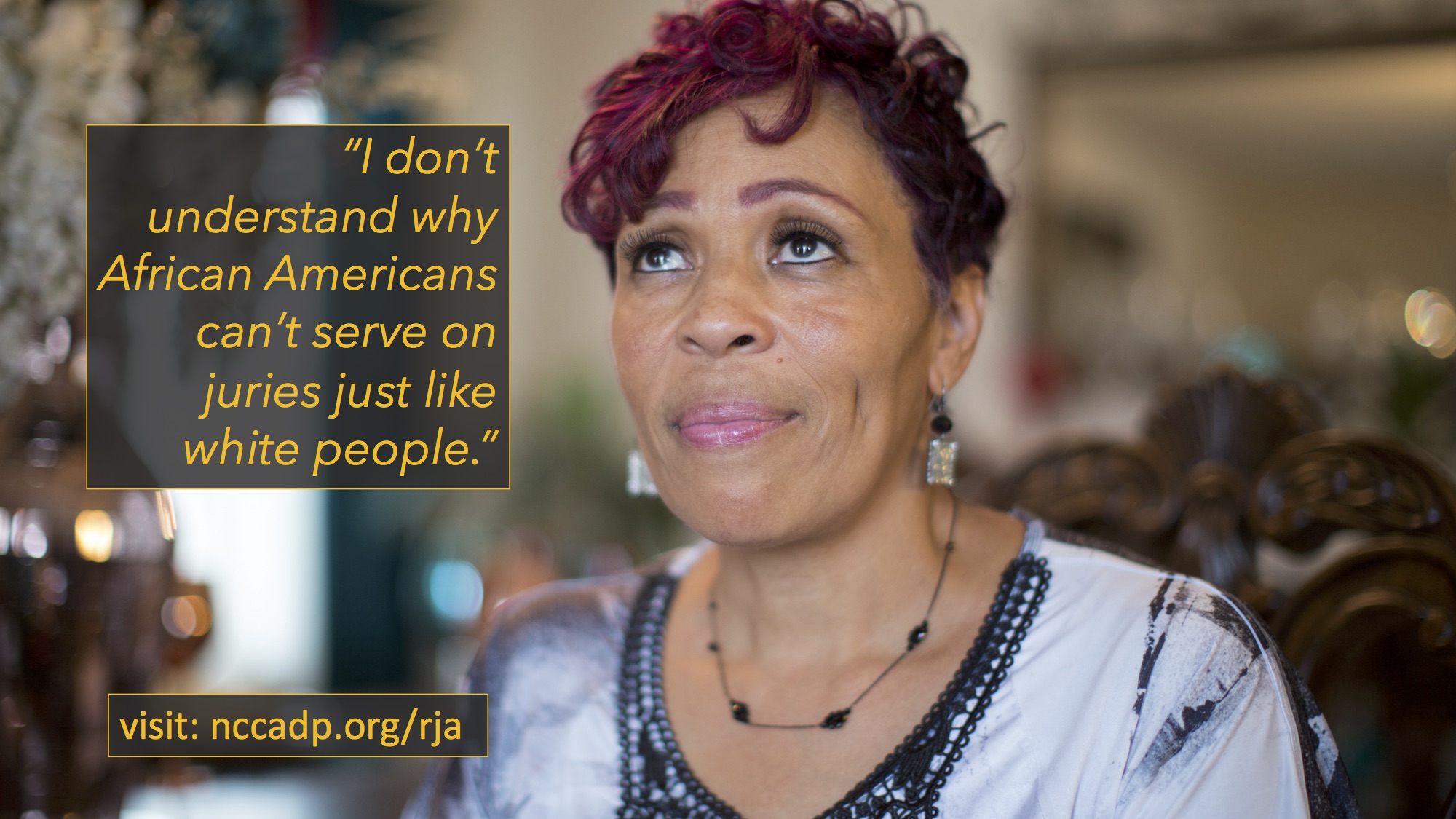
Black people have a constitutional right to serve on juries, just like white people. That should go without saying. But the reality is that prosecutors use all kinds of tricks and excuses to stop black citizens from sitting on juries. In this 5-minute audio documentary created by students at Duke’s Center for Documentary Studies, CDPL […]

The whitening of the jury: How discrimination thrives in NC courtrooms

August 1, 2019 · Kristin Collins

Black people have a constitutional right to serve on juries, just like white people. That should go without saying. But the reality is that prosecutors use all kinds of tricks and excuses to stop black citizens from sitting on juries. In this 5-minute audio documentary created by students at Duke’s Center for Documentary Studies, CDPL […]

Filed Under: Latest News, Racial Bias, Racial Justice Act

Keith Tharpe death penalty Georgia

Keith Tharpe is not an anomaly. Lots of death row inmates have been called at “n___r” at their trials.

Oct 4, 2017
Last week, the Supreme Court halted the execution of Keith Tharpe in Georgia because of a juror’s admission that he voted for death because he believed Tharpe was a “n----r.” It might be tempting to believe this case was just an anomaly. But Keith Tharpe is far from the only defendant to be sentenced to death by a deeply racist juror.

Keith Tharpe is not an anomaly. Lots of death row inmates have been called at “n___r” at their trials.

October 4, 2017 · Kristin Collins

Keith Tharpe death penalty Georgia

Last week, the Supreme Court halted the execution of Keith Tharpe in Georgia because of a juror’s admission that he voted for death because he believed Tharpe was a “n—-r.” It might be tempting to believe this case was just an anomaly. But Keith Tharpe is far from the only defendant to be sentenced to death by a deeply racist juror.

Filed Under: Latest News, Racial Bias, Racial Justice Act

Footer

Contact

NCCADP Alternate Logo
NCCADP
3326 Durham-Chapel Hill Blvd.
Building D, Suite 201
Durham, NC 27707
noel@nccadp.org
919-404-7409

Follow Us on Instagram

Last week's interfaith service was only possible b Last week's interfaith service was only possible because so many of our incredible community members offered their words, traditions, experiences, and presence so generously. 

We are grateful to every person who helped lead us through the service:

Rev. Chalice Overy of Pullen Memorial Baptist Church 
Yousuf Siddiqui of the Islamic Association of Raleigh 
Marianne Norris of St. Francis of Assisi Catholic Community
Rabbi Sandra Lawson of Carolina Jews for Justice 
Rev. Frank Dew of the North Carolina Council of Churches 
Nancy Jones of Catholics for Abolition in NC
Rev. Veronica Murphy of Wayman AME Church 
Elizabeth Norval of Unitarian Universalist Peace Fellowship Raleigh 
Rev. Esther Hethcox of First Presbyterian Church, Durham NC 
Noel Nickle of NCCADP
Michael Flaherty of the Kadampa Center for the Practice of Tibetan Buddhism

We are especially grateful to Alfred Rivera and Pat McCoy, members of NCCADP's Survivor Family Engagement Group, who shared a Litany of Remembrance and Healing shaped by their own experiences of the death penalty.

And thank you to each and every person who joined us on this meaningful evening. 

Let the last execution be the last.
A week ago today we gathered outside Central Priso A week ago today we gathered outside Central Prison to bear witness.
Did you know North Carolina STILL has the death pe Did you know North Carolina STILL has the death penalty? We're on a mission to end it, and we need your help. Join us tomorrow, Tuesday, Aug 25 from 7–8 PM for a virtual Death Penalty 101 conversation.

We'll learn all about NC's death penalty landscape, our work to end it, and connect you to ways you can help us end capital punishment in our state. 

REGISTER: bit.ly/NCCADPAug2026
Follow on Instagram

Stay Connected

  • Facebook
  • Instagram
  • Twitter

Copyright © 2026 · NC Coalition for Alternatives to the Death Penalty · All Rights Reserved · Website by Tomatillo Design