Subscribe to Our Newsletter

This field is for validation purposes and should be left unchanged.
Name(Required)
Email(Required)
Address(Required)
Check all that apply:

  • Skip to main content
  • Skip to footer

NC Coalition for Alternatives to the Death Penalty

Committed to ending the death penalty and creating a new vision of justice

  • Who We Are
    • Mission & History
    • Our Values
    • People Most Proximate
    • Coalition Members
    • Staff, Board, & Advisory Council
    • Our Funders
  • What We Do
  • Why End the Death Penalty?
    • Column 1
      • Racism
      • Innocence
      • Intellectual Disability & Mental Illness
    • Column 2
      • Public Safety
      • High Cost of Death
      • Waning Support
    • Column 3
      • Lethal Injection
      • Antiquated Sentences
      • Unfair Trials
  • Events
  • The Pledge
  • Blog
  • Commutations Campaign
  • Get Involved
  • Donate

Search NC Coalition for Alternatives to the Death Penalty

COVID Lessons: Public safety means letting go of extreme punishment

April 15, 2020

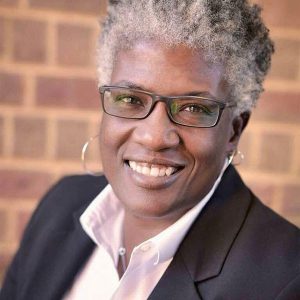
Durham DA Satana Deberry

COVID-19 is teaching society many lessons. One of them is that public safety doesn’t always mean locking people up for as much time as possible. Right now, public safety means letting people go home.

With the number of infected prisoners and guards growing quickly, reducing incarcerated populations protects us all — because once the virus spreads inside a prison, it doesn’t stay there. Prisons are like small cities. Many people go in and out every day: staff, defense lawyers, law enforcement, doctors, and many more. If a virus is in a prison, it threatens the free world too. No matter how much we try to deny the humanity of prisoners, we are all connected.

Public officials are being forced to take action.

First, many county jails began to reduce their populations. This was the obvious place to start, since jails hold people who have not yet been convicted  — and many are in jail not because they present grave threats to society, but because they can’t afford to pay bail.

Now, they’ve started taking bolder steps. Gov. Roy Cooper announced plans to release about 500 people who are at high risk for the virus, including pregnant women and people who are sick and elderly. It’s a shame it took a deadly virus for our society to see that people in these categories shouldn’t be kept in prison.

Perhaps most notable, Durham District Attorney Satana Deberry agreed to the early release of nine prisoners and announced her intention to consider other motions for early release. Though they don’t use it frequently, district attorneys have the power to agree to settlements and early release in cases where a defendant has been convicted, as long as a judge approves the deal.

Considering the immense power that district attorneys wield to put people behind bars, it’s only fair for them to also use their power to reexamine sentences when circumstances have changed. Occasionally, they even do this in death penalty cases.

In the past few years, district attorneys have agreed to remove a handful of people from death row, letting them instead serve sentences of life without parole. The settlements helped right wrongs including race discrimination, a death sentence for a man with severe mental illness, and disparate sentences for people involved in the same crime.

It’s often easier for district attorneys to let convictions stand than to reopen cases, but it’s not always what’s best for society. We hope more DAs will show the courage Deberry has displayed in her willingness to reconsider old decisions in light of new circumstances. 

As the coronavirus has shown us so clearly, it’s not always safest to push for the most severe punishment. 

—April 15, 2020
Filed Under: Latest News

Footer

Contact

NCCADP Alternate Logo
NCCADP
3326 Durham-Chapel Hill Blvd.
Building D, Suite 201
Durham, NC 27707
noel@nccadp.org
919-404-7409

Follow Us on Instagram

Today we honor every mother among us, including th Today we honor every mother among us, including those behind bars and those carrying love across impossible distances. Happy Mother's Day from all of us at NCCADP. 🩵
On April 25, NCCADP gathered with impacted communi On April 25, NCCADP gathered with impacted community members in Winston-Salem for Returning to the Circle, a restorative gathering for collective healing. Unlike many of our public-facing programs, this day was not centered on advocacy or education for others. Instead, it was centered on the people who so often carry that work themselves.

Throughout the day, participants ate and sang together, created art, joined restorative Circles, and spent time with one another. 

This work matters because movements cannot survive on urgency alone. Restorative justice reminds us that taking care of our community is intrinsic to the work of ending the death penalty. It is how we build a different future.

Special thanks to so many people who helped to make this gathering possible – Lynda Simmons, Leah Wilson-Hartgrove, Jodi McLaren, Shannon Gigliotti, Brenda Hooks, the Hartgrove family, each and every volunteer who made the event happen, Rev. Nathan Parrish and Peace Haven Baptist Church, and of course, everyone who joined us for this special day.
You can't separate the death penalty from racism. You can't separate the death penalty from racism. Alfred Rivera, an NC death row exoneree, explains why.

#EndTheDeathPenalty #NoMoreDeathRow #NorthCarolina #Abolition #SocialJustice #AlfredRivera #Exoneration #WrongfulConviction #DeathPenalty
Follow on Instagram

Stay Connected

  • Facebook
  • Instagram
  • Twitter

Copyright © 2026 · NC Coalition for Alternatives to the Death Penalty · All Rights Reserved · Website by Tomatillo Design