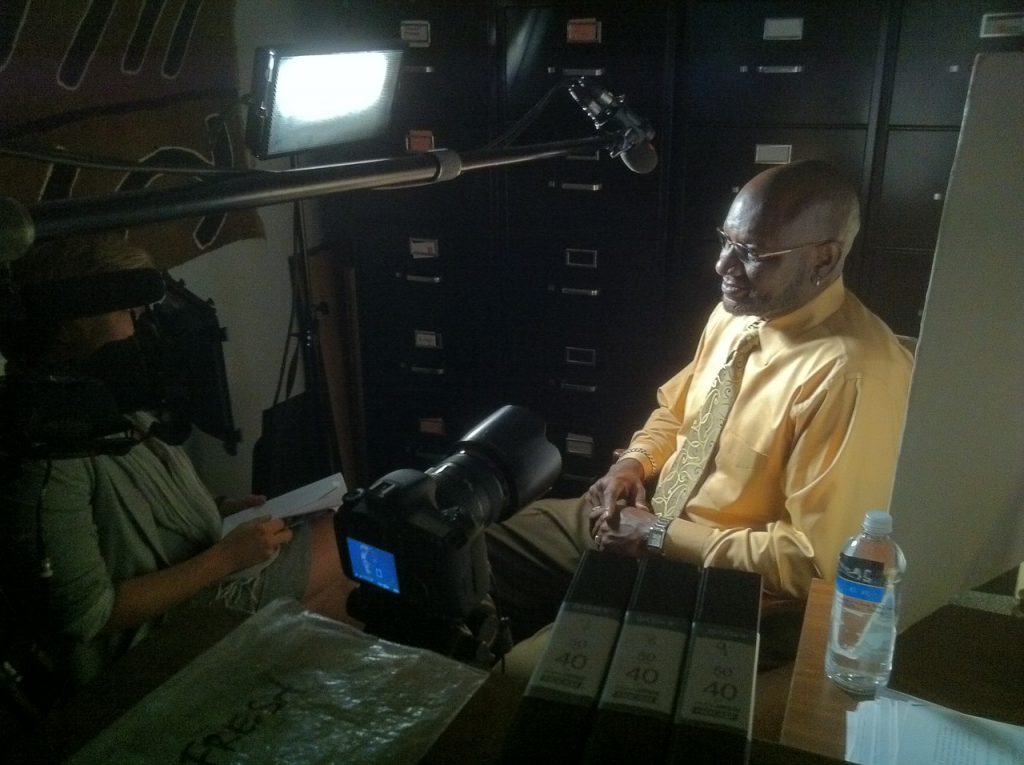
Because of a single juror, Darryl Hunt was spared the death penalty for a rape and murder he did not commit. He was not spared, however, from 19 years in prison — ten of those after DNA evidence showed he was innocent.
In August 1984, Darryl Hunt was an impoverished teenager in Winston-Salem, North Carolina, when police scooped him up and put him in a lineup. A 25-year-old newspaper copy editor, Deborah Sykes, had been raped and stabbed to death while on her way to work. The killing of a young white woman sparked community outrage, and police were eager to make an arrest.
A witness came forward to say he’d seen Ms. Sykes with a black man on the morning of the crime, and he picked Darryl from the lineup. Police lineups often lead to mistaken identifications and wrongful convictions, especially when they are cross-racial. In the years since Darryl’s arrest and conviction, North Carolina lawmakers have passed reforms outlining strict protocols for police lineups. In Darryl’s case, however, a faulty police lineup led to two decades of wrongful incarceration.
At his 1985 trial, the main evidence tying Darryl to the crime was the mistaken testimony of people who said they had seen him with Ms. Sykes on the morning of her murder. Another witness said they saw Darryl at a hotel disposing of bloody towels, an assertion that was simply false. Darryl’s girlfriend testified that he had confessed to her, but the jury was unaware that she faced her own prosecution on larceny charges and hoped her testimony against Darryl would result in lighter punishment. Later, she recanted her testimony against Darryl.
Facing the death penalty, Darryl testified that he did not know Deborah Sykes and had no involvement with the crime. The jury convicted Darryl, but a single juror refused to vote for the death penalty. In North Carolina, a death sentence cannot be imposed unless the jury is unanimous. Darryl was sentenced to life in prison.
In 1989, Darryl’s conviction was overturned because it relied on his girlfriend’s recanted statements. Prosecutors offered Darryl a deal. He could be freed by pleading guilty and accepting a sentence of the five years he had already served, but he refused to admit to a crime he did not commit. Darryl was retried for murder and again sentenced to life in prison.
In 1994, scientific advances allowed for DNA testing, which revealed that the DNA of the rapist did not match Darryl’s. In a hearing about the newly discovered DNA, the state changed its story, now insisting another man raped Ms. Sykes but Darryl killed her. The judge ruled in the prosecution’s favor, saying the DNA evidence did not prove his innocence. Darryl remained in prison for another decade.
In 2004, after immense public pressure, the state finally ran the crime scene DNA through a database of people convicted of felonies and found a perfect match — a man who had committed a similar rape just months after Deborah Sykes’ murder. Willard Brown confessed, and Darryl was finally freed. That same year, Darryl received a rare pardon of innocence from the governor.
Darryl spent 19 years in prison after a conviction based on mistaken identification and recanted testimony.
Darryl spent 15 years in prison after his conviction was overturned and he refused a plea deal that would have allowed him to go home.
Darryl spent 10 years in prison after DNA evidence proved he had not assaulted Ms. Sykes.
Between his date of conviction and date of exoneration, 29 people were executed in North Carolina.
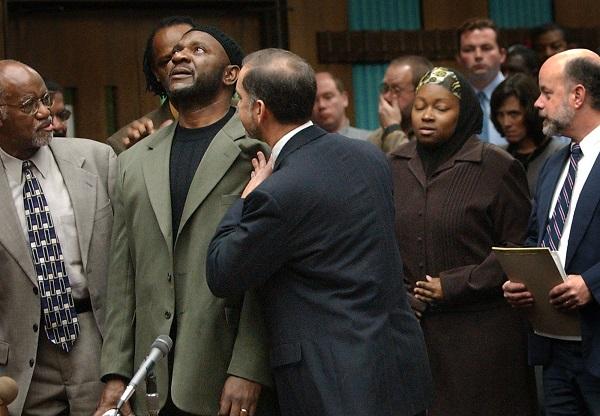
Darryl spent the rest of his life advocating to end capital punishment and ensure that no more innocent people get the death penalty in North Carolina. “If I had gotten a death sentence,” he said, “there’s no doubt in my mind I would have been executed.” He founded the Darryl Hunt Project for Freedom and Justice, a nonprofit organization dedicated to advocating for the wrongfully convicted supporting people recently released from prison.
Darryl died in 2016. He was 51. In 2022, investigative reporter Phoebe Zerwick published Beyond Innocence: The Life Sentence of Darryl Hunt, an in-depth book about Darryl’s life and death.