By Gretchen M. Engel
Reposted from the blog of N.C. Policy Watch
Since Arkansas shocked the world by trying to execute eight people in 10 days just to beat the expiration date on its lethal drugs, there has been more talk about the death penalty in North Carolina.
Most recently, WUNC’s Rusty Jacobs did a piece on where the death penalty stands, almost 11 years after North Carolina’s last execution. It revealed serious concerns about executing innocent people, and explained why it’s far more expensive to execute than to sentence people to life in prison.
However, one concept goes unchallenged in many stories about the death penalty: The naïve idea that the death penalty is used only in those rare, “worst of the worst” cases. Having spent my entire career up-close with North Carolina’s capital punishment system, I can tell you that’s not how it truly works.
First, let’s look at the 147 people on death row in North Carolina. More than three-quarters of them were sentenced more than 15 years ago, during an era in which North Carolina had one of the highest death-sentencing rates in the nation — even higher than Texas and Florida. Far from using the death penalty only in a handful of the most shocking crimes, execution was pursued Wild West-style in nearly every first-degree murder case.
During those years, we had a law unlike any other in the nation, which required prosecutors to seek the death penalty in every first-degree murder case with an aggravating factor. And, of course, the law is written so broadly that an aggravating factor can be found in almost any intentional killing.
Prosecutors were required to push for execution without regard to mitigating factors, or evidence that pointed to possible innocence. Even they thought this was a terrible idea, and they recommended the law be changed.
The General Assembly ended this requirement in 2001, but by then, death row had swollen to more than 200 people, more than 100 of whom remain there today. All of them were tried without the benefit of reforms intended to ensure fairness and prevent the conviction of innocent people.
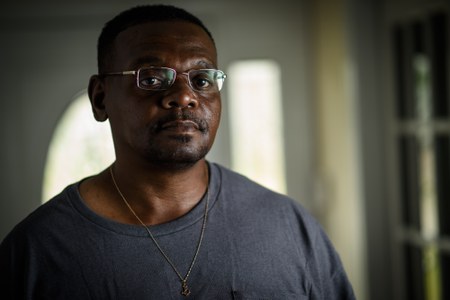
There was, for example, no requirement that confessions be recorded. In many cases, the state presented unreliable forensic testing and “junk” science, and defendants were sentenced to death by juries selected in a racially-discriminatory fashion. Some of them, like Henry McCollum and Leon Brown, were innocent. Most would never have received death sentences under today’s laws. These are the people who would be first in line if our execution chamber were to crank up.
Next, consider how the death penalty is used today. Do prosecutors use their discretion to carefully cherry-pick death penalty cases? Absolutely not.
In reality, our justice system runs on pleas. Prosecutors use the death penalty as leverage, to persuade reluctant defendants to plead guilty and accept life sentences.
It works like this: The vast majority of murders are initially charged capitally, and pleas are negotiated from there. The theory is that a defendant facing the threat of execution is more likely to accept whatever deal the state offers. Pursuing the death penalty even when the prosecutor thinks the case is not execution-worthy makes a mockery of justice.
Defendants who refuse a deal are often our most vulnerable clients: those who are mentally impaired, those who least trust their lawyers, or those who are innocent and refuse to plead guilty. People who refuse plea deals represent the vast majority of people who are tried capitally in North Carolina today.
This means a defendant’s chance of facing the death penalty depends less on the crime than on a willingness to accept a life sentence without a trial. Often, several defendants are involved in a crime. Some accept a deal and get a life sentence, while another — maybe not even the most culpable — ends up on trial for his life.
Juries can see that the people who go to trial are not the “worst of the worst.” Look at the two capital trials in North Carolina this year. Both defendants were offered pleas but insisted on going to trial.
The first trial, in Wake County, ended with a verdict of life imprisonment. This marked eight times in a row that a Wake jury has chosen life over death. In the second, just this month, a Robeson County jury not only rejected a death sentence but refused even to convict the defendant of first-degree murder. He was found guilty of second-degree murder.
Prosecutors might tell you they need the death penalty to punish the “worst of the worst.” But in practice, our state spends millions to pursue death sentences that are arbitrary and unnecessary, and uses the threat of death as a negotiation tactic — sometimes putting innocent lives on the line.
Gretchen Engel is the Executive Director of the Center for Death Penalty Litigation.