Subscribe to Our Newsletter

This field is for validation purposes and should be left unchanged.
Name(Required)
Email(Required)
Address(Required)
Check all that apply:

  • Skip to main content
  • Skip to footer

NC Coalition for Alternatives to the Death Penalty

Committed to ending the death penalty and creating a new vision of justice

  • Who We Are
    • Mission & History
    • Our Values
    • People Most Proximate
    • Coalition Members
    • Staff, Board, & Advisory Council
    • Our Funders
  • What We Do
  • Why End the Death Penalty?
    • Column 1
      • Racism
      • Innocence
      • Intellectual Disability & Mental Illness
    • Column 2
      • Public Safety
      • High Cost of Death
      • Waning Support
    • Column 3
      • Lethal Injection
      • Antiquated Sentences
      • Unfair Trials
  • Events
  • The Pledge
  • Blog
  • Commutations Campaign
  • Get Involved
  • Donate

Search NC Coalition for Alternatives to the Death Penalty

My client got two years of freedom after 36 years of wrongful incarceration; this does not mean the system works

February 9, 2022 · Jonathan Broun

Reposted with permission from NC Policy Watch
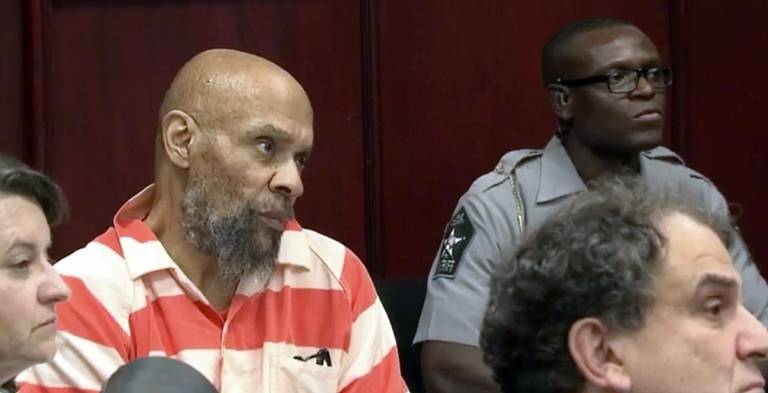
James Blackmon and Jonathan Broun, foreground, at his innocence hearing

I recently got some sad news. My former client, James Blackmon, died earlier this month from complications from COVID. He was 68. Mr. Blackmon was arrested for murder and, in 1988, pled guilty and received a life sentence. The problem was he had absolutely nothing to do with the crime.

Evidence uncovered by the North Carolina Innocence Inquiry Commission demonstrated that Mr. Blackmon was not even in North Carolina when the murder took place on St. Augustine’s campus in 1979. And that the police covered up evidence that an eyewitness had looked at a lineup and positively and strongly said that Mr. Blackmon was not the killer. And that while there was absolutely no forensic evidence that connected Mr. Blackmon to the crime or the crime scene, fingerprints suggested another suspect with a history of violence.

But Mr. Blackmon suffered from serious mental illness, a combination of schizophrenia and bipolar disorder. So, when the police got a tip from Dorothea Dix mental hospital that a patient was saying he had murdered people, the cops decided they had a chance to “solve” the case and clear it from their workload. They used Mr. Blackmon’s mental illness to coerce and manipulate him into “confessing” to a crime that he knew nothing about and had no involvement in. They tricked this man who was at the time wearing a Superman cape into saying that, while he was never present at St. Augustine’s, maybe he had transported the victim’s body to the campus while his mind remained elsewhere. He admitted to killing the victim — and to causing earthquakes and hurricanes.
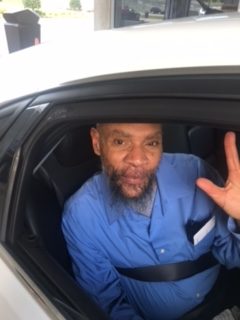
James Blackmon on his ride home after exoneration

The Wake County criminal justice system further coerced Mr. Blackmon by threatening him with the death penalty. He entered an Alford plea to second-degree murder and was given life imprisonment. But when he wasn’t being manipulated by the Raleigh Police Department, Mr. Blackmon always maintained his innocence. And when he wrote to N.C. Prisoner Legal Services, staff there recognized how terrible his interrogation had been. They referred the case to the Innocence Inquiry Commission, where staff tracked down every lead and proved that there was no way Mr. Blackmon had anything to do with the murder.

In 2018, after the Innocence Commission unanimously sent the case to a three-judge panel, Beth McNeill and I, both attorneys at Prisoner Legal Services, were appointed to represent Mr. Blackmon at the hearing. Under the statute, Wake County District Attorney Lorrin Freeman could have consented that Mr. Blackmon was innocent and there would have been no need for a hearing. But Ms. Freeman said she wanted the system to play out, that she had a duty to protect the system that had convicted Mr. Blackmon and, besides, we didn’t have DNA evidence that he was innocent.

Also, (but this part was left unsaid) people with mental illness like Mr. Blackmon are scary and they make us all feel uncomfortable and maybe he would be better off in prison. Fortunately, my co-counsel and I were able to convince the panel that Mr. Blackmon’s clear innocence should overcome our lack of DNA and bigotry against poor persons of color with severe mental illness.

Being part of the team that freed Mr. Blackmon in 2019 after he spent 36 years wrongfully incarcerated was one of the proudest moments of my career. Mr. Blackmon was arrested during my first semester in college. The hearing that freed him happened in the first few days my daughter was in college. I am so sorry that Mr. Blackmon only got to spend two and a half years in freedom. But I guess I am grateful that at least he got those two and a half years.

Shortly after the hearing, a judge congratulated me and said it was example of the system working. I am not sure how we can possibly say that a system that let an innocent man spend 36 years in prison because he suffered from mental illness can ever be called working.

I also did not see the case as a sign that things had changed. Lorrin Freeman’s attempt to stop the conviction from being overturned shows that prosecutors still do not understand mental illness and do not truly care if individuals with mental illness are wrongfully convicted. We still use the death penalty and life without parole to coerce people into taking pleas. And I discovered in working on Mr. Blackmon’s case, as well as other cases of people with mental illness, that our society does not adequately treat and care for people with severe mental illness, particularly when they are poor people of color.

I have both fear and confidence that people with severe mental illness are being convicted of serious crimes today. Thirty years from now, someone who is currently a freshman in college will be a middle-aged lawyer trying to get them out, arguing that people in the 2020s simply didn’t understand mental illness. Maybe in the 2050s, there will finally be progress in how we treat individuals with mental illness in the criminal justice system. Maybe.
Filed Under: Mental Illness, Uncategorized

Jonathan Broun is a Senior Staff Attorney at North Carolina Prisoner Legal Services.

Footer

Contact

NCCADP Alternate Logo
NCCADP
3326 Durham-Chapel Hill Blvd.
Building D, Suite 201
Durham, NC 27707
noel@nccadp.org
919-404-7409

Follow Us on Instagram

Martin Luther King, Jr. was a dedicated death pena Martin Luther King, Jr. was a dedicated death penalty abolitionist. This MLK Day, we reflect on the connection between Dr. King's legacy of nonviolence and the movement to abolish the death penalty.

In 1952, at the young age of 16, Alabama high school student Jeremiah Reeves was accused of sexually assaulting a white woman. In a rushed trial, an all-white jury sentenced him to die. His defense argued that law enforcement had coerced his confession by strapping him to an electric chair and threatening to flip the switch immediately unless he declared his guilt. 

Reeves spent 6 years on death row as his case moved through the appeals process. Dr. King became a strong advocate for Reeves, but the state still put him to death. In 1958, just 9 days after Reeves' killing, Dr. King led a march, the Prayer Pilgrimage, to the steps of the Alabama capitol. In front of a crowd of more than 2,000 people, Dr. King boldly proclaimed the injustices of the death penalty: "It is the severity and inequality of the penalty that constitutes the injustice."

Reeves' execution was a flashpoint for civil rights advocates, one of a long series of injustices that fueled the Montgomery bus boycott and the Civil Rights Movement more broadly.

Throughout his life, Dr. King repeatedly spoke out against the death penalty, which he saw as racist, brutal, antiquated, and fundamentally in opposition to his theory of nonviolence. 

Read more about how we can honor Dr. King's legacy by ending the death penalty on our website: nccadp.org/mlk-day-2026

#NoMoreDeathRow #MLKDay #MartinLutherKingJr #EndTheDeathPenalty
Ready to get mobilized? Join us Tuesday, January 2 Ready to get mobilized? Join us Tuesday, January 27 for our first Death Penalty 101 session of the year! 

Learn about the state of capital punishment in North Carolina, including ways you can get involved in the movement to end state killing. If you're ready to plug in, this is the place to start.

When: Tuesday, January 27 from 5:30-6:30 PM
Where: Zoom 

Register at bit.ly/NCCADPJan2026 or at the link in our bio.

#NoMoreDeathRow #EndTheDeathPenalty #NCCADP #DeathPenalty101
One year ago today, Governor Cooper, on his final One year ago today, Governor Cooper, on his final day in office, announced commutations for 15 men on death row. This news came at the close of our multi-year Commutations Campaign – a testament to the power of this community's organizing and advocacy.

A year later, we continue to rejoice for these 15 lives spared:

Hasson Bacote
Isiah Barden
Nathan Bowie
Rayford Burke
Elrico Fowler
Cerron Hooks
Guy LeGrande
James Little
Robbie Locklear
Lawrence Peterson
William Robinson
Christopher Roseboro
Darrell Strickland
Timothy White
Vincent Wooten

Victories like these remind us what's possible when people resist and dare to imagine something better. 

Even after these commutations, North Carolina continues to have the 5th largest death row in the nation. Here at NCCADP, we will not stop working until the racist, error-prone, and inhumane death penalty is no longer a threat in North Carolina.

If you believe in a future without the death penalty, one great way to show your support is with your dollars. Consider making a tax-deductible gift to NCCADP at nccadp.org/donate or donating by mail at 3326 Durham-Chapel Hill Blvd, Building D, Suite 201, Durham, NC 27707.
Follow on Instagram

Stay Connected

  • Facebook
  • Instagram
  • Twitter

Copyright © 2026 · NC Coalition for Alternatives to the Death Penalty · All Rights Reserved · Website by Tomatillo Design