Subscribe to Our Newsletter

This field is for validation purposes and should be left unchanged.
Name(Required)
Email(Required)
Address(Required)
Check all that apply:

  • Skip to main content
  • Skip to footer

NC Coalition for Alternatives to the Death Penalty

Committed to ending the death penalty and creating a new vision of justice

  • Who We Are
    • Mission & History
    • Our Values
    • People Most Proximate
    • Coalition Members
    • Staff, Board, & Advisory Council
    • Our Funders
  • What We Do
    • Commutations Campaign
  • Why End the Death Penalty?
    • Column 1
      • Racism
      • Innocence
      • Intellectual Disability & Mental Illness
    • Column 2
      • Public Safety
      • High Cost of Death
      • Waning Support
    • Column 3
      • Lethal Injection
      • Antiquated Sentences
      • Unfair Trials
  • Events
  • 20 Years With No Executions
  • Blog
  • The Pledge
  • Get Involved
  • Donate

Search NC Coalition for Alternatives to the Death Penalty

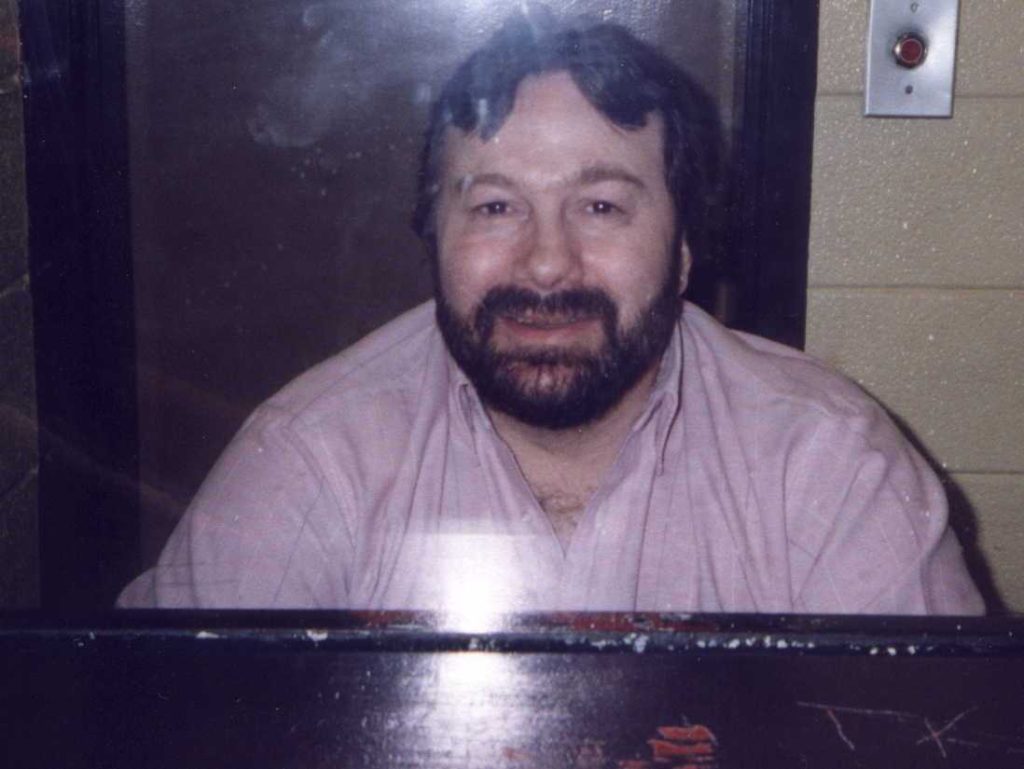
Ronald Frye

Learn more: Many death sentences result from egregiously unfair trials

As he faced the death penalty, Ronald “Ronnie” Frye’s court-appointed attorney was Tom Portwood, a notorious alcoholic who would later admit to drinking 12 shots a day during Ronnie’s trial. During the time he represented Ronnie and other capital defendants, Tom Portwood was involved in a car accident where police measured his blood alcohol concentration at more than 0.4, enough to kill most people. The attorney failed to do the most basic investigation into Ronnie’s background. He didn’t give the jury even a glimpse of Ronnie’s childhood of abandonment and abuse. A jury must be unanimous to impose a death sentence, and years after the trial, some jurors said they would have refused to vote for death if they had heard the story of Ronnie’s tortured youth.

Ronnie was executed in 2001. Tom Portwood also represented Nathan Bowie, who remains on death row, and Glen “Ed” Chapman, who was exonerated in 2008, 15 years after being sentenced to death for crimes he didn’t commit.

The U.S. Supreme Court says mitigating evidence is vital in a death penalty case to help explain a crime. It is unconstitutional to sentence a person to death without considering life experiences and other mitigating factors. Ronnie and his two brothers were abandoned by their father and left in the care of a neglectful single mother. At 18 months, Ronnie was rushed to the hospital after drinking a glass of kerosene. When Ronnie was just 3 years old, his mother gave him away to a couple she met at a gas station. The man was a violent alcoholic who beat Ronnie with a bullwhip, leaving what witnesses described as “bloody stripes” on Ronnie’s body.

Ronnie became the literal poster child for child abuse at police seminars

The beatings went on for six years before a teacher noticed Ronnie’s scars and the man was arrested for assault. A police chief later used Ronnie’s childhood photos as examples at child abuse seminars. Ronnie ended up in the custody of the biological father who deserted him at birth, who was also an abusive alcoholic. He dragged Ronnie out of bed to watch as he beat the boy’s stepmother. The stepmother left the home after a particularly severe beating. Neighbors reported Ronnie had been abandoned; his father wasn’t home, he was hungry, and the house was maggot-infested. Eventually, Ronnie was given back to the mother who had given him away him as a toddler.

Ronnie never received counseling for his childhood traumas. Instead, they fueled a lifetime of addiction to alcohol, marijuana, and cocaine. His downward spiral culminated in 1993 with the murder of Leroy Childress, a landlord who had just given Ronnie an eviction notice. After Ronnie’s trial, his lawyer’s alcoholism became so debilitating that Tom Portwood was pulled off another death penalty case and sent to a detox facility.

Ronnie was executed on August 31, 2001. Tom Portwood died two years later from an alcohol-related disease.


Filed Under: Unfair Trials

Footer

Contact

NCCADP Alternate Logo
NCCADP
3326 Durham-Chapel Hill Blvd.
Building D, Suite 201
Durham, NC 27707
noel@nccadp.org
919-404-7409

Follow Us on Instagram

At a recent Racist Roots screening, two audience m At a recent Racist Roots screening, two audience members shared that they were attending through a community leave program and would be returning to prison that evening.

When one person asked Ed Chapman for advice on navigating reentry after decades behind bars, Ed drew on his own experience surviving 14 years on North Carolina's death row after a wrongful conviction. His message was full of hope and encouragement: take it one day at a time. Find your support system. Be gentle with yourself. This is a season, and you will make it through.

Thank you to @raleighmennonite for making this event and this conversation possible!
You're invited! We hope you'll join us on June 23 You're invited! We hope you'll join us on June 23 for a webinar featuring some of the top experts who have helped shape North Carolina's death penalty landscape over the past 2 decades.

For nearly 20 years, North Carolina has paused executions while courts, impacted families, and communities across the state have continued grappling with the realities of the death penalty system. What have these two decades revealed?

Featured speakers:
• Henderson Hill, Co-Director of RedressNC, civil rights and capital defense attorney
• Rep. Vernetta Alston, North Carolina Representative and former capital defense attorney
•  Alfred Rivera, North Carolina death row exoneree and activist
•  Dr. Seth Kotch, Associate Professor of American Studies at UNC-Chapel Hill, author of Lethal State: A History of the Death Penalty in North Carolina

Moderated by NCCADP Executive Director Noel Nickle.

💻 20 Years With No Executions: What Have We Learned? (Webinar)
📆 Tuesday, June 23, 12–1:15 PM
📍 Zoom
🔗 Register at bit.ly/nccadpwebinar or at the link in our bio

#NoMoreDeathRow #EndTheDeathPenalty #NorthCarolina #20YearsWithoutExecutions #20thAnniversary #FYP
We're delighted to share that Melissa Boughton (@m We're delighted to share that Melissa Boughton (@melbough) has stepped into a new role as Board Co-Chair of NCCADP, serving alongside Erica Washington (@erica_webber_).

Melissa brings a wealth of experience in communications and advocacy to this role. She currently serves as Communications Director at Southern Coalition for Social Justice and previously led communications at the Wilson Center for Science and Justice at Duke Law School. Before that, she spent more than a decade as a journalist covering courts, criminal legal issues, and some of the most consequential justice stories of our time.

Melissa has long been a valued leader within NCCADP. We're excited for this next chapter of her leadership and grateful for all she contributes to our movement.

We're equally thankful for Erica Washington's longstanding service as board Co-Chair!

As we welcome Melissa into this role, we also extend our deepest thanks to Jennifer Marsh for her years of service as Board Co-Chair. Jennifer's leadership has helped strengthen NCCADP and our movement in countless ways. We are grateful that she will continue serving on the board as Secretary through the end of the year.

Please join us in congratulating Melissa and thanking Jennifer for her leadership!

Photo 1: Melissa Boughton
Photo 2: Erica Washington
Photo 3: Jennifer Marsh

Learn more about our board members at https://nccadp.org/leadership/
Follow on Instagram

Stay Connected

  • Facebook
  • Instagram
  • Twitter

Copyright © 2026 · NC Coalition for Alternatives to the Death Penalty · All Rights Reserved · Website by Tomatillo Design