Subscribe to Our Newsletter

This field is for validation purposes and should be left unchanged.
Name(Required)
Email(Required)
Address(Required)
Check all that apply:

  • Skip to main content
  • Skip to footer

NC Coalition for Alternatives to the Death Penalty

Committed to ending the death penalty and creating a new vision of justice

  • Who We Are
    • Mission & History
    • Our Values
    • People Most Proximate
    • Coalition Members
    • Staff, Board, & Advisory Council
    • Our Funders
  • What We Do
  • Why End the Death Penalty?
    • Column 1
      • Racism
      • Innocence
      • Intellectual Disability & Mental Illness
    • Column 2
      • Public Safety
      • High Cost of Death
      • Waning Support
    • Column 3
      • Lethal Injection
      • Antiquated Sentences
      • Unfair Trials
  • Events
  • The Pledge
  • Blog
  • Commutations Campaign
  • Get Involved
  • Donate

Search NC Coalition for Alternatives to the Death Penalty

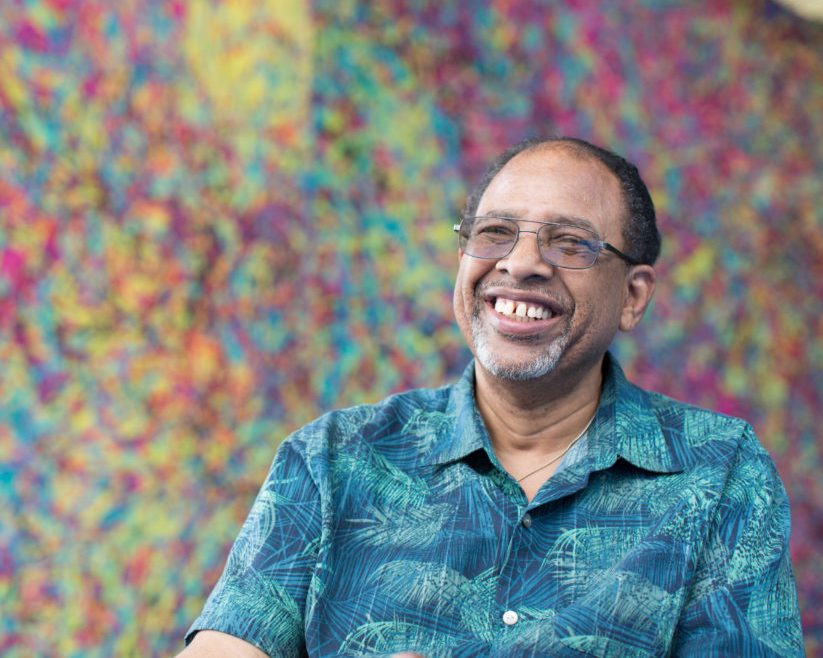
Andre Smith

Learn more: People Most Proximate: Our Creativity

Daniel “Peace” Smith was dancing in a Raleigh nightclub when he accidentally spilled another man’s beer. Thirty minutes later, that man stabbed Peace to death in the club’s bathroom. Peace’s parents were notified of their son’s death in the early hours of a Friday morning. Before noon, his father, Andre says he had forgiven the man who murdered his son.

Andre is a practicing Buddhist, and was already teaching meditation and anger management to incarcerated men at Nash Correctional when he lost his son. Losing Peace, he said, makes him even more dedicated to his practice and his teaching.

Some people are still living their loss after seven years, twenty years—they still can’t let it go. What can you do? There is nothing I can do or say. People hear my story of forgiveness, but they don’t see how they could get there or even if they should get there. I thought my daughter would be angry at me for forgiving her brother’s killer but, after a time, she told her mom, I’m not mad at Dad. I am just angry at myself because I can’t get there. You do question yourself and ask, What is wrong with me? Is it because I do not love my son? It is not an easy path.

I lost my son. And not wanting the guy who killed my son to suffer, this is contentment for me. I feel content. I’m not trying to get my son back, I know that’s never going to happen. I’m not trying to seek revenge. I am content. And so therefore I am able to experience some happiness as a result of that.
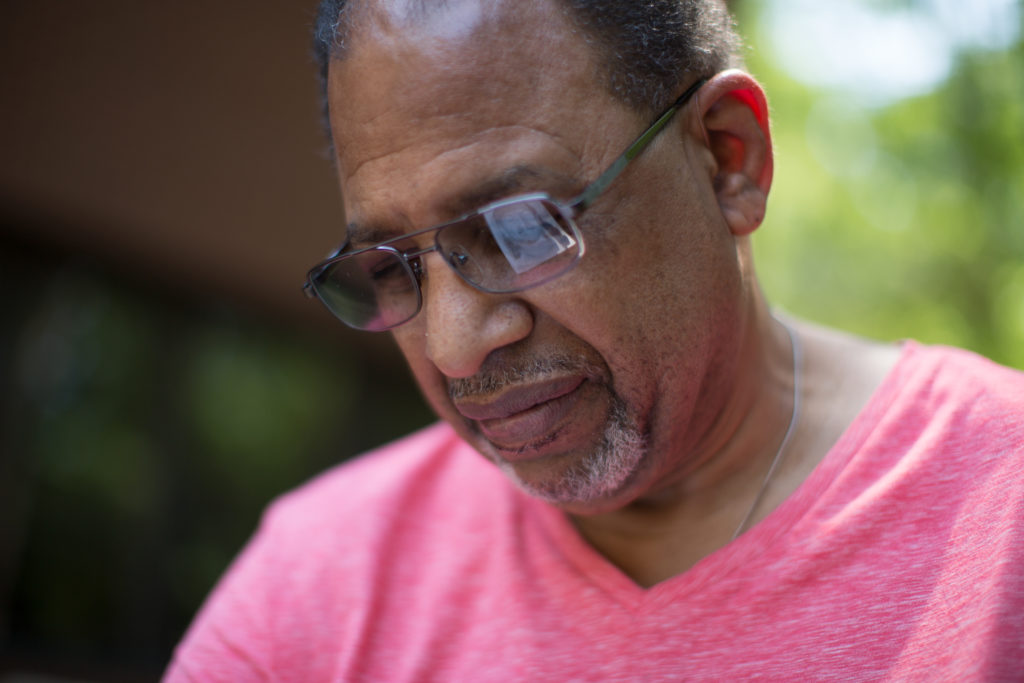
Andre looks at a pencil drawing of his son, a gift from an artist he mentored while the artist was in Nash Correctional.

Also, we’re all looking for closure, if this has ever happened to us. I don’t think you find closure in this person’s death. That’s not closure. Closure is when I feel happy, and when I’m not suffering. And the only way that I know of that I can feel happy and not suffer is to wish this guy no harm. And if possible, to serve him in some way. To help him to be able to never to do this again. To help him to be able to see, God, what I did was wrong. That’s what I want to do. That is what’s gonna make me happy. That is what’s going to make society happy. Because this person will never go out and kill again. Because this person understands what that is now. And this person has a new set of tools now that he can use, that he can apply to make sure that he never does that again. 

And that is what we should ultimately want. We erroneously think that if we take this guy’s life, then I have closure, and society has closure. But it doesn’t stop the killing. Yeah, that guy won’t kill again because he’s dead, right? But there will be someone else.

If I can teach Wallace Bass, the man who killed my son, if I can teach him how to deal with his anger. How to do differently, how to become a better human being, then he will pass it on to someone else. And this is how we will begin to see a world without this kind of stuff.

It’s a slow process. But it is a process. And it is moving forward. And it does make a difference. Just taking someone’s life, it doesn’t make a difference, it doesn’t move us forward.
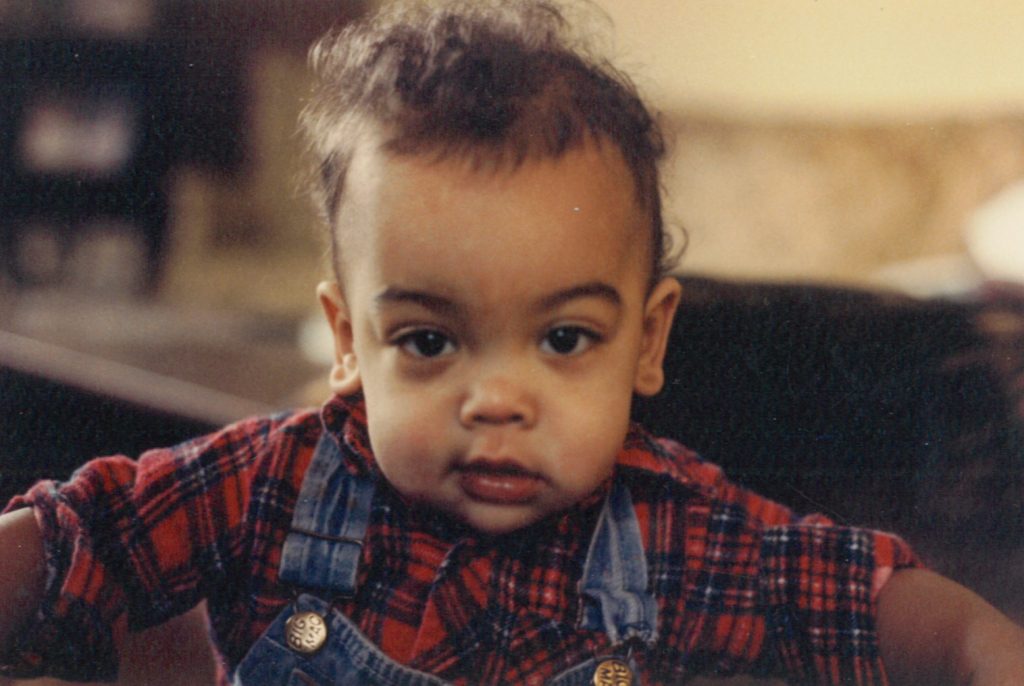
Daniel “Peace” Smith

Filed Under: People Most Proximate, Stories

Footer

Contact

NCCADP Alternate Logo
NCCADP
3326 Durham-Chapel Hill Blvd.
Building D, Suite 201
Durham, NC 27707
noel@nccadp.org
919-404-7409

Follow Us on Instagram

On this day in 2012, Judge Gregory Weeks issued a On this day in 2012, Judge Gregory Weeks issued a landmark ruling – the very first application of North Carolina's Racial Justice Act. Judge Weeks found that racism played a central role in the jury selection process that led to Marcus Robinson's death penalty conviction, even going so far as to state that Marcus' case proved the extent to which racism impacted capital cases across NC. 

Despite the gravity of these findings, the NC General Assembly repealed the RJA only 1 year later.

Marcus Robinson was resentenced to life without parole. Tragically, he died by suicide in 2022 while serving out this sentence.

#NoMoreDeathRow #EndTheDeathPenalty #NCDeathPenalty #NorthCarolina #RacialJusticeAct #RJA
Hey Asheville! Join us TODAY at 4 pm for this film Hey Asheville! Join us TODAY at 4 pm for this film screening, one of several Second Chance Month events hosted by the amazing community at Deep Time. NCCADP is deeply grateful and honored to be the recipient of funds raised by Deep Time this month. Come out to support Deep Time, NCCADP, and liberation from mass incarceration. Use the QR code to reserve your ticket (free).
123 people now live under a death sentence in NC, 123 people now live under a death sentence in NC, making ours the 5th largest death row in the country.

Join us on Zoom on Monday, 4/27, at 7 PM to learn all about NC's death penalty and the growing movement to end it.

Register at bit.ly/NCCADPApr2026
Follow on Instagram

Stay Connected

  • Facebook
  • Instagram
  • Twitter

Copyright © 2026 · NC Coalition for Alternatives to the Death Penalty · All Rights Reserved · Website by Tomatillo Design