Subscribe to Our Newsletter

This field is for validation purposes and should be left unchanged.
Name(Required)
Email(Required)
Address(Required)
Check all that apply:

  • Skip to main content
  • Skip to footer

NC Coalition for Alternatives to the Death Penalty

Committed to ending the death penalty and creating a new vision of justice

  • Who We Are
    • Mission & History
    • Our Values
    • People Most Proximate
    • Coalition Members
    • Staff, Board, & Advisory Council
    • Our Funders
  • What We Do
    • Commutations Campaign
  • Why End the Death Penalty?
    • Column 1
      • Racism
      • Innocence
      • Intellectual Disability & Mental Illness
    • Column 2
      • Public Safety
      • High Cost of Death
      • Waning Support
    • Column 3
      • Lethal Injection
      • Antiquated Sentences
      • Unfair Trials
  • Events
  • 20 Years With No Executions
  • Blog
  • The Pledge
  • Get Involved
  • Donate

Search NC Coalition for Alternatives to the Death Penalty

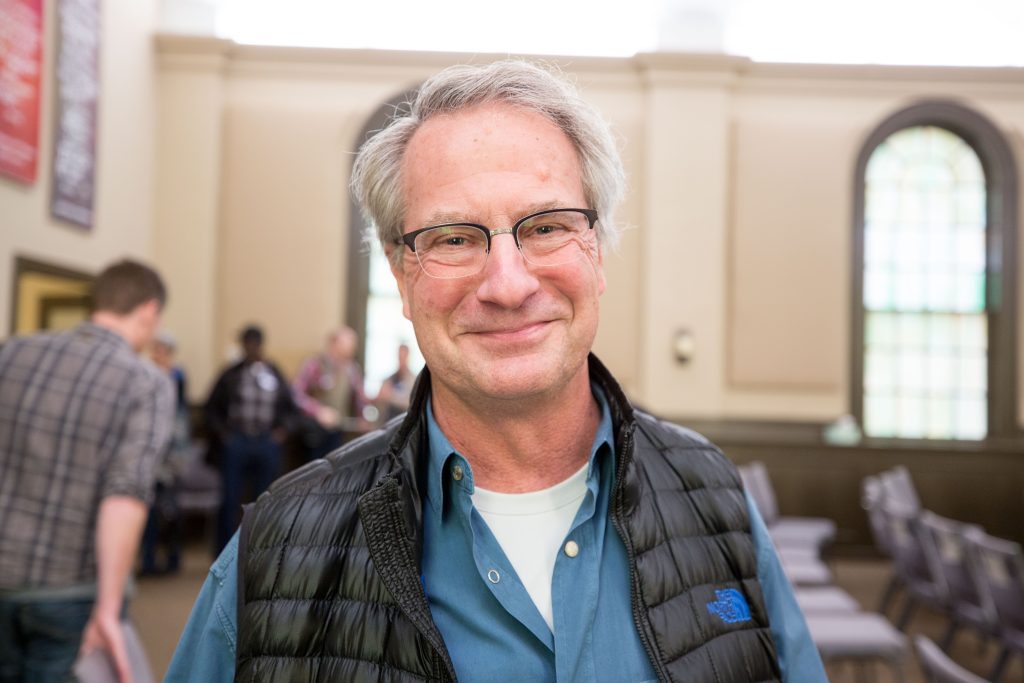
Pat McCoy

Learn more: People Most Proximate: Our Creativity

My sister, Kathy Lu McCoy, was abducted off of the streets of Spokane, Washington in 1974, and found murdered several hours later. The crime was extremely brutal, and her last few hours of life were hell on earth.

Her killer, Harry Edward Brooks, was apprehended shortly after she was found, received a life sentence, and remains in prison 41 years later.

While not a hate crime by legal definition, it was a hate crime, similar to the thousands of homicides, and tens of thousands of rapes and other violent acts, committed against women each year simply because they are women. The inability of women to move about independently without having extra fear of violence because of their gender remains a great civil rights problem.

The cruelty of the crime against my sister made me feel, among other emotions, a visceral desire for retribution. It did not, however, change my opposition to, or my family’s opposition to, the death penalty.

Those who have lost loved ones to violence of course have every right to feel however they do about that crime, and about what the fate of their loved one’s killer should be. Among life’s nightmares, such outrageous injustice ranks at the top for horror and damage from which there is no full recovery.

When a killer targets victims because of their race, sexual orientation, gender, religion, or other reasons motivated solely by hatred, that nightmare is even worse, because it rips the very fabric that binds us together as a nation and a people, and does violence to us all, never mind the added layer of violence to the victims’ survivors. There are no adequate words for such crimes against humanity.

We hang on to the death penalty as a deterrent, with no persuasive evidence that it deters, and out of moral outrage and a belief that some crimes cannot be adequately punished without it. The logic and sentiment here make sense, but they do not make the death penalty any less imperfect in the way we employ it. It’s bad public policy, in large part because it contains too many of the same biases and flaws that killers who receive it do. More and more people, including many family members of murder victims, hope we will stop using it, and make that fabric of our society stronger by doing so. My family and I are among them.

This article was originally posted in the Charlotte Observer on June 21, 2016: My sister’s murder and the death penalty.
Filed Under: People Most Proximate, Stories

Footer

Contact

NCCADP Alternate Logo
NCCADP
3326 Durham-Chapel Hill Blvd.
Building D, Suite 201
Durham, NC 27707
noel@nccadp.org
919-404-7409

Follow Us on Instagram

The fight for disability justice extends to every The fight for disability justice extends to every corner of our legal system, including the death penalty.

Henry McCollum and Leon Brown were coerced into false confessions, wrongfully convicted, and spent decades imprisoned for a crime they did not commit. Henry spent 31 years on death row before the brothers were finally exonerated.

Their story underscores why protections for people with intellectual disabilities are essential and why a system that can make mistakes this devastating can never guarantee justice.
We're getting excited for our upcoming summer coal We're getting excited for our upcoming summer coalition meeting, happening just two weeks from today, and hope you'll be able to join. ✊

These quarterly conversations bring together our organizational partners and folks across the state to strengthen our work and deepen our relationships to end the death penalty in north Carolina. 

Our quarterly statewide meetings are especially geared for people already familiar with NCCADP. If you're new to our work, please register to attend one of our monthly info sessions prior to registering. 

What: NCCADP Summer Statewide Coalition Meeting
When: Thursday, August 13, 1-2:30 pm
Where: Zoom 

Register at bit.ly/NCCADPSummer2026 or at the link in our bio
Disability Pride Month is a time to celebrate disa Disability Pride Month is a time to celebrate disabled people, recognize the ongoing fight for disability justice, and confront the ways our legal system continues to fail people with disabilities.

Although the Supreme Court barred the execution of people with intellectual disabilities more than two decades ago, that protection remains uneven. States continue to apply inconsistent standards, and people who should never face execution still do.

The death penalty has never been administered fairly. For people with intellectual disabilities, the consequences can be especially devastating.

Swipe through to learn more about the intersection of disability and the death penalty, and why the fight for abolition is also a fight for disability justice.
Follow on Instagram

Stay Connected

  • Facebook
  • Instagram
  • Twitter

Copyright © 2026 · NC Coalition for Alternatives to the Death Penalty · All Rights Reserved · Website by Tomatillo Design