Subscribe to Our Newsletter

This field is for validation purposes and should be left unchanged.
Name(Required)
Email(Required)
Address(Required)
Check all that apply:

  • Skip to main content
  • Skip to footer

NC Coalition for Alternatives to the Death Penalty

Committed to ending the death penalty and creating a new vision of justice

  • Who We Are
    • Mission & History
    • Our Values
    • People Most Proximate
    • Coalition Members
    • Staff, Board, & Advisory Council
    • Our Funders
  • What We Do
    • Commutations Campaign
  • Why End the Death Penalty?
    • Column 1
      • Racism
      • Innocence
      • Intellectual Disability & Mental Illness
    • Column 2
      • Public Safety
      • High Cost of Death
      • Waning Support
    • Column 3
      • Lethal Injection
      • Antiquated Sentences
      • Unfair Trials
  • Events
  • 20 Years With No Executions
  • Blog
  • The Pledge
  • Get Involved
  • Donate

Search NC Coalition for Alternatives to the Death Penalty

Why end the death penalty?

People with intellectual disabilities and mental illness are unfairly sentenced

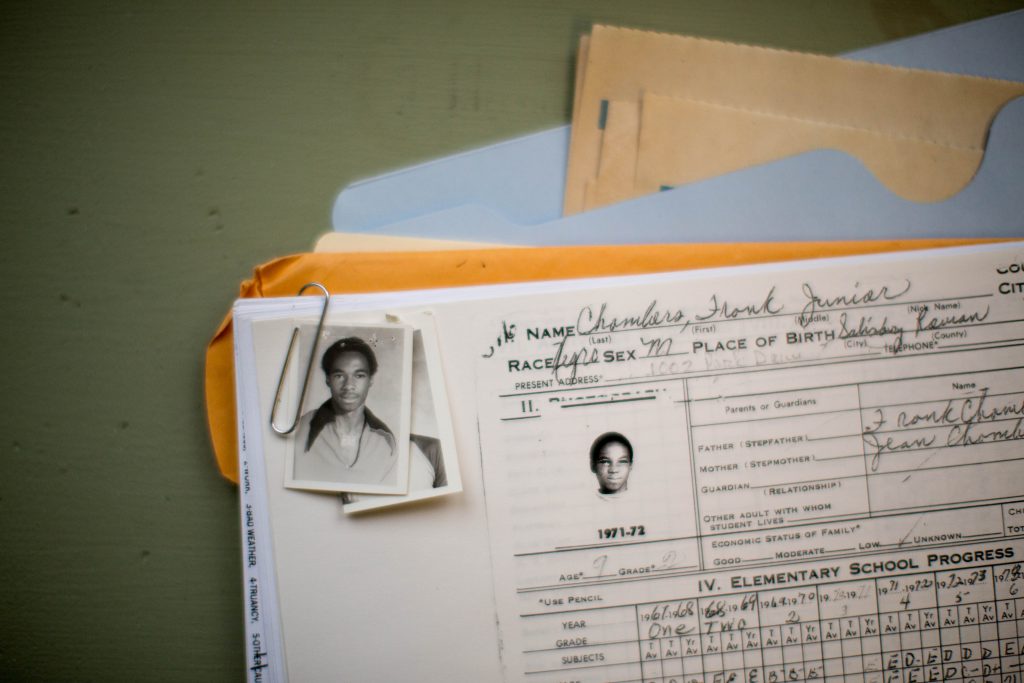
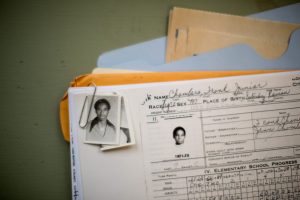
Frank Chambers' school photos and elementary school progress report
Frank Chambers’ school photos and elementary school records

The U.S. Supreme Court says the death penalty is intended for the most culpable defendants who commit the most heinous crimes. In practice, it often falls on people with intellectual disabilities and severe mental illness — those with a diminished capacity to understand their actions or to participate in their defense.

Under a 2001 North Carolina law, the death penalty is prohibited for people with intellectual disabilities. However, this protection is unevenly applied, because the state often fights to execute people by pointing to a specific IQ score that is slightly above the state’s cutoff — attempting to apply a “bright line” standard when a range of IQ scores and information about daily function are far more accurate in determining intellectual disability. This practice means that many people with clear disabilities still face execution in North Carolina.

There are even fewer protections for those with mental illness. There is no law preventing people with even the most severe mental illness from being tried capitally. Some people sentenced to death in North Carolina have schizophrenia and other psychotic disorders that cause delusions and hallucinations. Some have severe post-traumatic stress disorder, either because they are war veterans or suffered horrific childhood trauma. They did not have fair trials because their illness made it impossible for them to cooperate with their lawyers or make rational decisions.

A death penalty that preys on the most vulnerable people in our society makes a mockery of justice.

Right now in North Carolina:

  • Intellectual disabilities and mental illness make people more susceptible to police pressure to confess, even when they are innocent.
  • Intellectual disability is often harder for people of color to prove, because many attended under-resourced schools and were never evaluated as children.
  • Mental illness does not make people more likely to commit murder, but it does make them more likely to receive unfair trials and be sentenced to death.
  • Mental illness has led some people to fire their attorneys and represent themselves at capital trials, even while in the grips of delusions.

Stories
Case File: Timothy Richardson

Confession coerced from a man who functions at the level of a 12-year-old
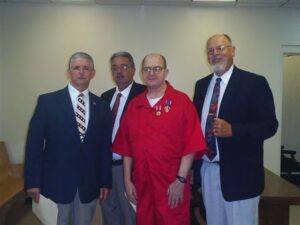
Timothy Richardson’s confession isn’t recorded or signed and would be illegal today. Other evidence has been destroyed. He remains on death row.
Learn More
Case File: James Davis

A combat veteran with severe PTSD receives no mercy
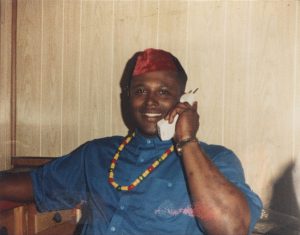
James Davis endured two brutal combat tours in Vietnam, severe childhood abuse, and is diagnosed with schizophrenia. Virtually no evidence of his mental illness was presented at trial.
Learn More
Case File: Guy LeGrande

Delusional and hearing voices, he represented himself at a capital trial
Guy LeGrande believed celebrities were sending him messages through the television. He called his jurors “antichrists” and told them to “pull the damn switch and shake that groove thing.”
Learn More
Case File: Frank Chambers

An abused and disabled child is portrayed as a criminal “mastermind”

A lifetime of evidence of intellectual disability has not been enough to get Frank Chambers removed from death row, despite laws that should protect him from execution.
Learn More
Case File: Allen Holman

Even the prosecutor believed he didn’t deserve execution

Despite his mental illness, extreme remorse and willingness to take responsibility, an outdated state law forced the state to seek the death penalty against Allen Holman.
Learn More

Last Updated: February 16, 2022

Footer

Contact

NCCADP Alternate Logo
NCCADP
3326 Durham-Chapel Hill Blvd.
Building D, Suite 201
Durham, NC 27707
noel@nccadp.org
919-404-7409

Follow Us on Instagram

Today is a monumental day for North Carolina. It h Today is a monumental day for North Carolina. It has officially been 20 years since our state's last execution. Tonight, we're gathering in Raleigh to honor this milestone. 

We’ll be joined by Rabbi Sandra Lawson of Carolina Jews for Justice, Rev. Esther Hethcox of First Presbyterian Church in Durham, death row exonerees, murder victim family members, faith leaders from many traditions, and others whose lives have been directly touched by the death penalty.

We want to fill the sanctuary of Pullen Memorial Baptist Church and the walk to Central Prison with people who believe 20 years should become 30, 40, and forever. We hope you'll be one of them.

REGISTER: bit.ly/NCCADPVIGIL

We're also excited to share that this event will be livestreamed. Starting at 6:30 PM, you can watch the livestream at this link: https://www.youtube.com/watch?v=LpJ85yAhSx4
Twenty years after North Carolina's last execution Twenty years after North Carolina's last execution, there's a lot to talk about. We can’t wait for Beyond the Death Penalty: Symposium next Saturday in Durham.

We’ll spend the afternoon digging into some big questions: 
👉 What does the death penalty still cost us?
👉 What can we learn from people who were wrongfully sentenced to death?
👉 And where do we go from here?

We’ll hear from exonerees, murder victim family members, attorneys, scholars, directly impacted people, students, restorative justice experts, and more.

Saturday, August 22, 1-4 PM
Eno River Unitarian Universalist Fellowship, Durham
REGISTER: bit.ly/nccadp-symposium (or at the link in our bio)

Join us for this free and public event!
Today we'll be in Western North Carolina for a Rac Today we'll be in Western North Carolina for a Racist Roots screening at First Baptist Church Burnsville. We'd love to see you there! 

After the film, we'll be joined by Lynda Simmons, a restorative justice practitioner and mental health specialist, whose life has been profoundly shaped by losing her son to homicide.

The program begins at 11:30 AM with a potluck meal graciously provided by the congregation. Feel free to bring a dish!

Register: bit.ly/FBCBurnsville or at the link in our bio

Racist Roots is a short film that uncovers the deep entanglement between white supremacy, racial terror lynching, and North Carolina's death penalty. It is a project of the Center for Death Penalty Litigation.
Follow on Instagram

Stay Connected

  • Facebook
  • Instagram
  • Twitter

Copyright © 2026 · NC Coalition for Alternatives to the Death Penalty · All Rights Reserved · Website by Tomatillo Design