Healing from Gunshots: A survivor’s search for restoration and forgiveness
By Helen Spielman
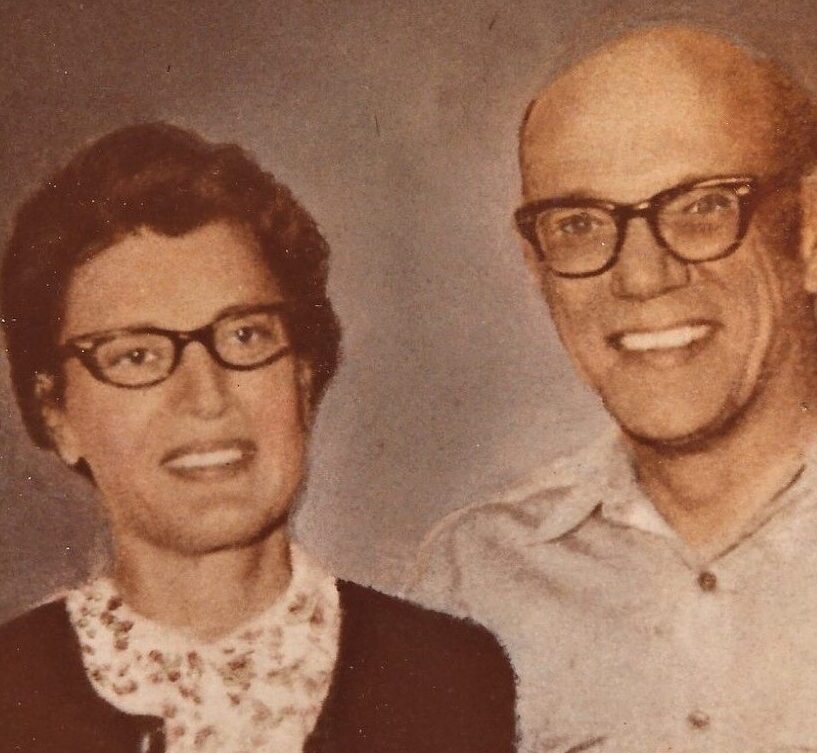
In 1975, Carol Dreiling was a young woman of 27 who had gone to visit her parents for Thanksgiving. She was still at their home on Dec. 3, when two young men who were strangers to her family broke into their house and shot her parents to death as she watched. They also shot Carol three times before taking her hostage. Only by luck was she able to escape and survive.
“The shock, trauma, pain, and darkness I experienced are almost impossible to describe.” Carol Dreiling, now a woman in her 70s, speaks calmly as she looks back at this defining moment. “When I think of it now, I know it occurred, but it feels like it happened to someone else. I had to work very hard, and for a very long time, to come out of that darkness.”
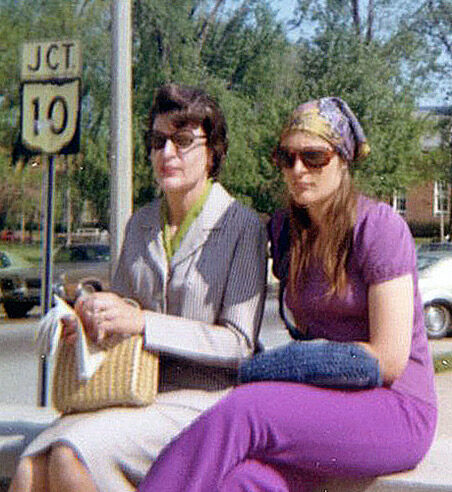
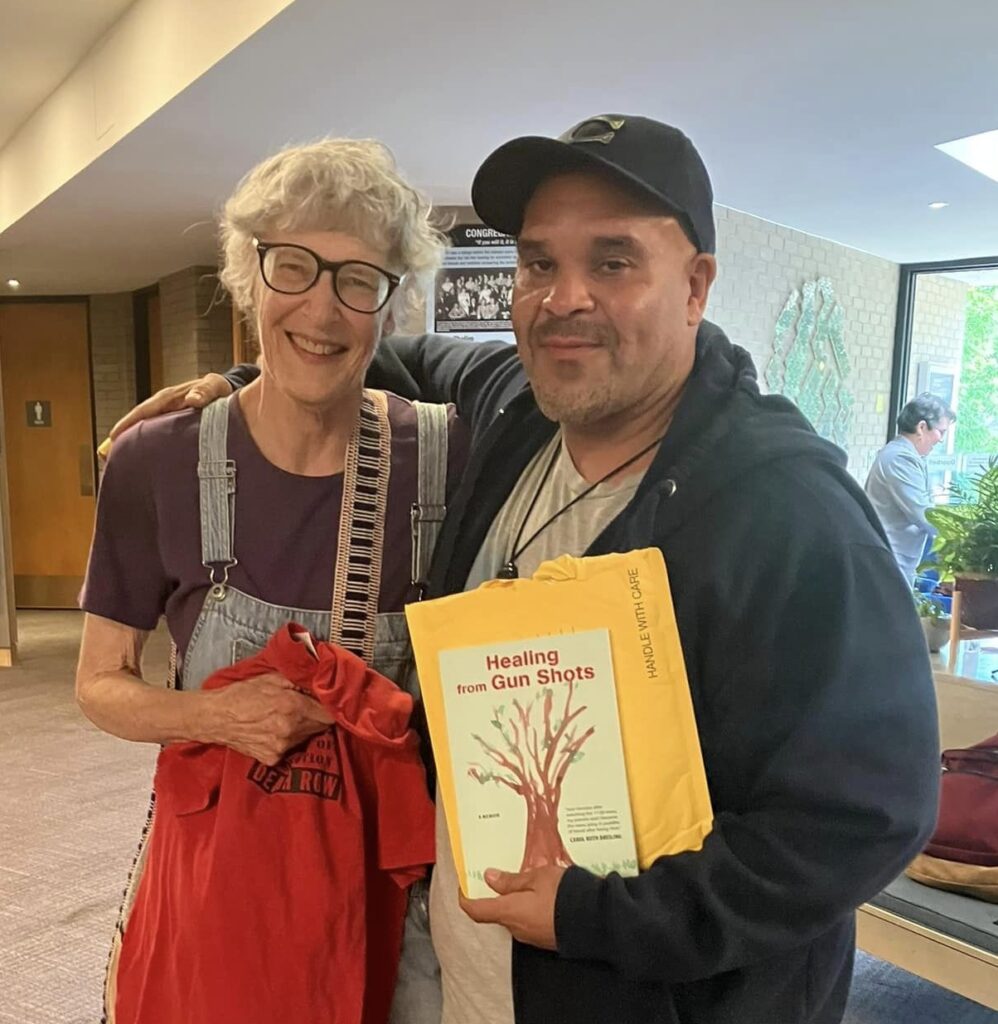
In her book, Healing from Gun Shots, Carol describes the abdominal pain, migraines, depression, anxiety, digestive issues, and other challenges that she’s had to overcome or live with every day since the shooting. She had the support of her brothers and extended family, friends and community, as well as physicians, acupuncturists, a trauma specialist, support groups, and counselors. Carol practiced yoga, used homeopathic remedies, and underwent extensive psychotherapy. “Unlike so many crime victims today, I was fortunate. I had a lot of support and help along the way.”
There was one place, however, that Carol never looked for healing: the death penalty. Many victims of crime are told to embrace this retributive punishment as a source of justice and “closure,” but not even the pain she endured could change Carol’s mind.
“I’m totally against the death penalty. It is violence! Violence happened to my family, and I wish that on no one. The death penalty creates a ripple effect into the community, and perpetuates more violence. It’s brutal, racist, and archaic. It needs to end.”
In the decades since the crime, Carol has become a proponent of restorative justice, which seeks to address the root causes of crime and fosters communication and accountability between victims and offenders. It often allows them to meet face to face in a facilitated circle, where survivors can articulate the pain the crime caused. Carol says she has seen restorative justice allow crime survivors like herself to move past hate and toward healing.
Restorative justice, unfortunately, wasn’t available to Carol. Now, it’s too late. One of the killers died in a shoot-out with police shortly after the crime. The other was stabbed to death in prison in 1985. She says she and her brothers have been able to forgive the men who shot her and killed her parents, but she still wishes for the meeting that never happened.
“I wish I could sit in a RJ circle with the murderers of my parents,” Carol says. “I’ve been in touch with a family member of one of the murderers. That meeting was hard for us both. The murderer’s family member shared that they were afraid of the murderer like I have been. I believe talking with each other made a big difference in both our lives.”
She becomes passionate when she talks about the death penalty. “An execution is a violent act. Even though a person has made a horrible mistake, once they’re executed, they will never have a chance to change. We kill to stop the killing? This system is not working! The murdering is just done legally by the state.”
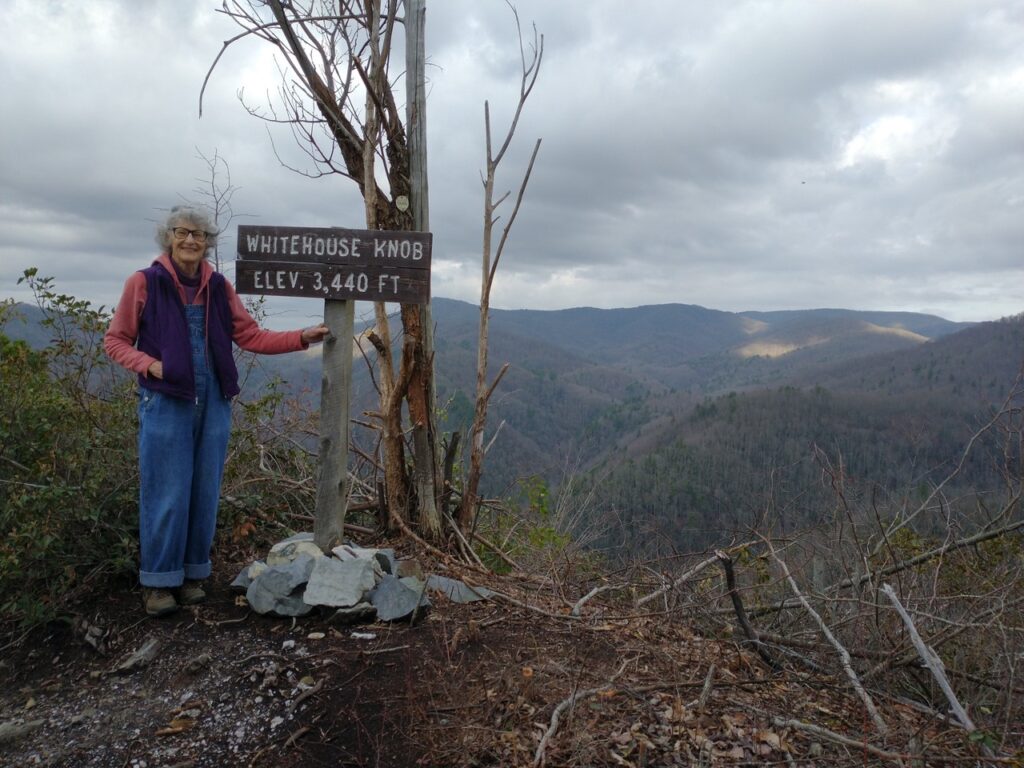
Today, Carol is happily married and lives in Alexander, NC with her husband. They grow gourmet mushrooms which they sell to restaurants and at farmers markets.
Carol wrote her book with the hope that readers would understand what she and her family went through, and see that healing is possible without hatred or revenge. Her memoir highlights her perseverance, determination, beauty of heart, and resilience; it contains the poems she wrote and excerpts from her journal during that time. (Purchase on Amazon or at healingfromgunshots.com.)
She writes, “I knew I had to make a conscious decision: I could live the rest of my life in fear or I could choose not to be afraid … I could choose to live in the light.”
“I dream about the day that the death penalty no longer exists in North Carolina, or anywhere. All the money spent on appeals could be used to assist victims’ basic needs such as counseling, housing, and job training. We, as a society, could spend those funds in a positive way. That is my dream.”