Subscribe to Our Newsletter

This field is for validation purposes and should be left unchanged.
Name(Required)
Email(Required)
Address(Required)
Check all that apply:

  • Skip to main content
  • Skip to footer

NC Coalition for Alternatives to the Death Penalty

Committed to ending the death penalty and creating a new vision of justice

  • Who We Are
    • Mission & History
    • Our Values
    • People Most Proximate
    • Coalition Members
    • Staff, Board, & Advisory Council
    • Our Funders
  • What We Do
  • Why End the Death Penalty?
    • Column 1
      • Racism
      • Innocence
      • Intellectual Disability & Mental Illness
    • Column 2
      • Public Safety
      • High Cost of Death
      • Waning Support
    • Column 3
      • Lethal Injection
      • Antiquated Sentences
      • Unfair Trials
  • Events
  • The Pledge
  • Blog
  • Commutations Campaign
  • Get Involved
  • Donate

Search NC Coalition for Alternatives to the Death Penalty

Jean Parks

Learn more: The death penalty does not keep us safe

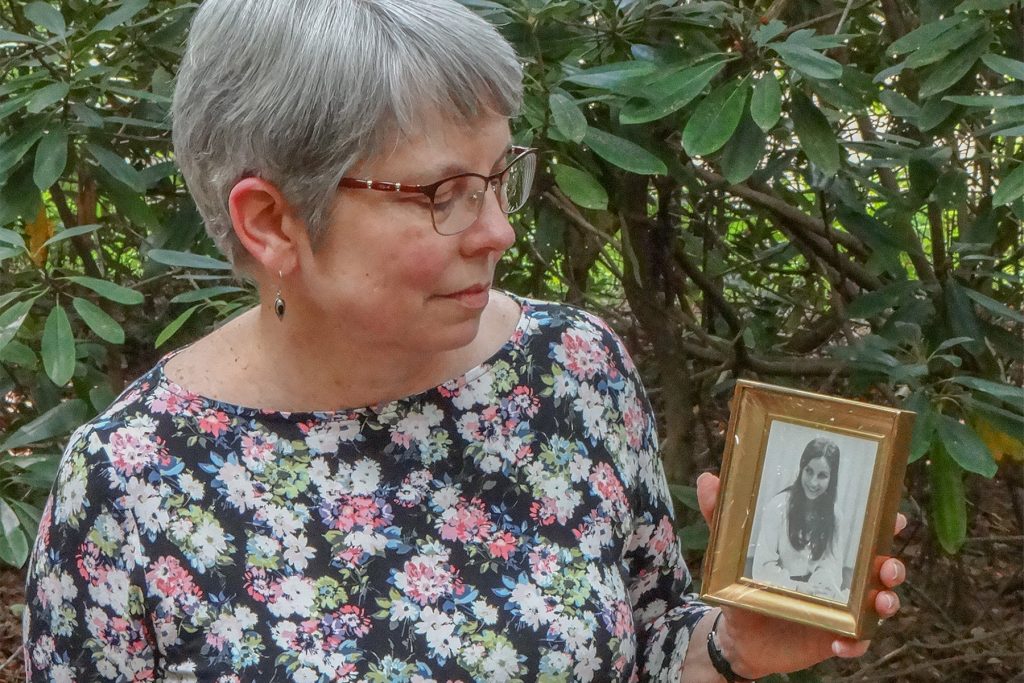
Jean, holding a photograph of her sister, Betsy. Photo by Jean’s husband, Art Grand

Jean Parks is an Asheville psychologist whose sister, Betsy Rosenberg, was murdered in 1975. Betsy was a student at NC State University at the time; Jean was attending Davidson College. The man convicted of killing Betsy, Gary Goldman, served more than 35 years before being paroled. Jean believes he is innocent, and met with Goldman in 2019. Here she tells her story in her own words.

I discovered that I opposed the death penalty while at a Parents of Murdered Children support group meeting in Texas. Someone from the Department of Corrections was explaining that they allow victim family members to observe executions, and that when they do, the families visit the prison the day before to get a sense of the layout. “A staff member is always with them,” he said, “offering coffee, doughnuts, and assistance.” The speaker then paused, and almost as an afterthought, said, “We don’t do anything for the families of the condemned.” 

Families of the condemned. I immediately began imagining what it would be like to have a loved one about to be executed by the state, knowing there wasn’t a damn thing I could do about it. The feelings I imagined were so similar to what my family experienced after Betsy was killed: grief, rage, helplessness. I was horrified to think that our state, “We the People,” is using a form of punishment that creates new grieving families unnecessarily.

From there, I learned more about the death penalty, and more reasons to oppose it: racial inequities, how it’s administered, the prolonged process of appeals that hurts the victims’ families all over again, the economic demands it places on our society, and, of course, the fact that innocent people have been executed. On top of that, for so many, there’s just no real closure.

Once I understood that many people are surprised when a murder victim family member opposes the death penalty, I’ve spoken up for reform, then repeal of the death penalty in North Carolina. I’ve met with a governor, spoken to legislators and written lots of letters to the editors of different newspapers. I’ve also worked to forgive the man convicted of killing my sister. I recently found out, however, that he is maintaining his innocence. I don’t know how to forgive a nameless person, one whose story I don’t know.

If you believe North Carolina needs the death penalty, imagine your father, mother, brother, sister or child has been sentenced to death. Next, imagine your loved one is innocent, but you can’t prove it. An execution date has been set. Do you think we need the death penalty now?

Filed Under: Failure to Deter Crime, People Most Proximate, Stories

Footer

Contact

NCCADP Alternate Logo
NCCADP
3326 Durham-Chapel Hill Blvd.
Building D, Suite 201
Durham, NC 27707
noel@nccadp.org
919-404-7409

Follow Us on Instagram

We are deeply grateful for your leadership at NCCA We are deeply grateful for your leadership at NCCADP! We hope you enjoy your special day!
Did you know that 1 in 5 people on North Carolina' Did you know that 1 in 5 people on North Carolina's death row served in the US military? Service members are at high risk of PTSD, traumatic brain injury, and other forms of trauma, which, if left untreated, can lead to violence in moments of crisis.

Honoring veterans means making sure they have access to mental and physical healthcare, return support, and the resources they need when they come home. 

#NoMoreDeathRow #VeteransDay #EndTheDeathPenalty
You're invited! Join NCCADP at Elon University nex You're invited! Join NCCADP at Elon University next Monday, November 17 at 5 PM for a screening of Racist Roots!

This 25-minute film uncovers the deep entanglement between white supremacy, racial terror lynching, and North Carolina's death penalty. Following the film, hear from Noel Nickle, NCCADP's Executive Director, and Alfred Rivera, an exoneree from North Carolina's death row.

This event is hosted by Elon University and is free and open to the public. Registration is kindly requested.

When: Monday, November 17, 5–6:30 PM
Where: Turner Theatre, Elon University, Elon, NC

Special thanks to NCCADP's Advocacy and Outreach Intern, Eliza Menser, for organizing this event!

Racist Roots is a project of the Center for Death Penalty Litigation.

#RacistRoots #NoMoreDeathRow #EndTheDeathPenalty
Follow on Instagram

Stay Connected

  • Facebook
  • Instagram
  • Twitter

Copyright © 2025 · NC Coalition for Alternatives to the Death Penalty · All Rights Reserved · Website by Tomatillo Design