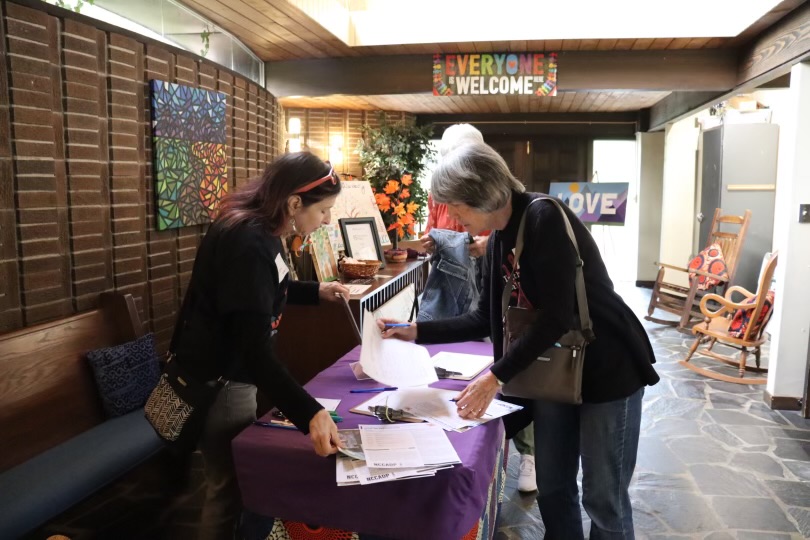
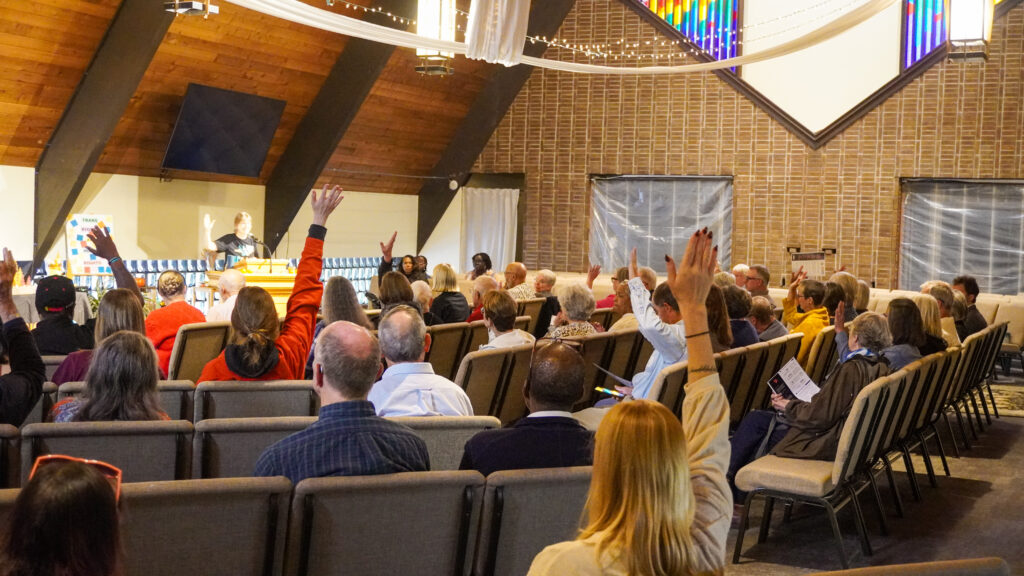
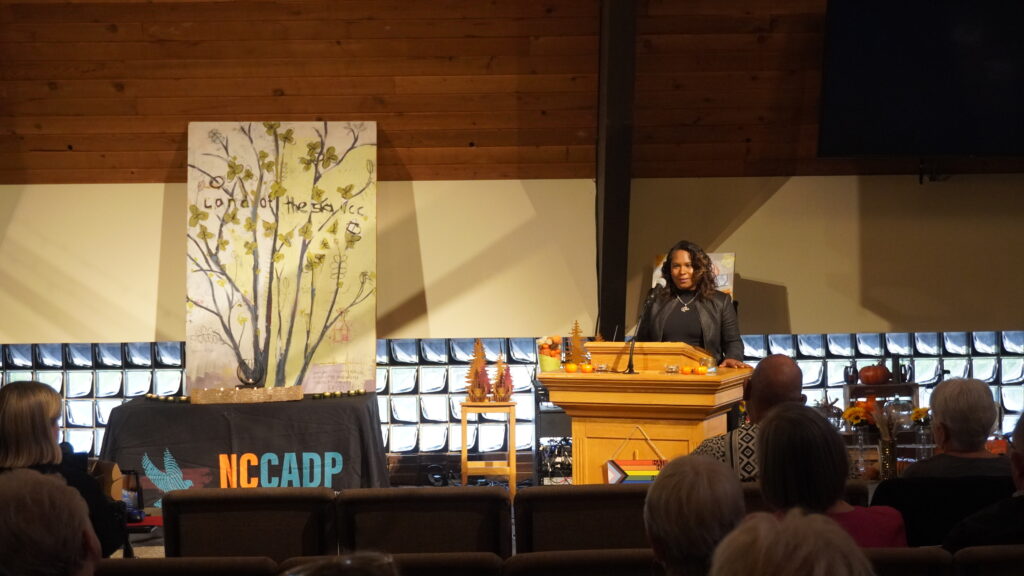
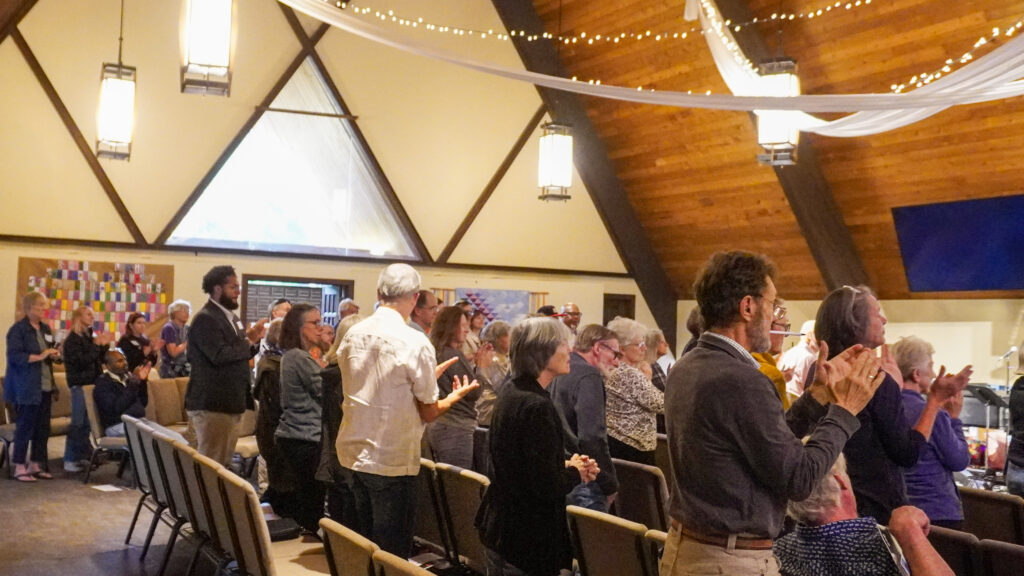
On a golden October afternoon in Asheville, community members gathered for “The Death Penalty Protects No One: What We Need Instead,” a World Day Against the Death Penalty event hosted by NCCADP.
The gathering came just one week after Governor Josh Stein signed HB 307, a law that seeks to restart executions and expand execution methods in North Carolina. Lawmakers claim it will make the state safer, but decades of evidence show that the death penalty fails to deter violence. It doesn’t protect anyone.
What it does is deepen harm – especially for survivors of violence – and drain resources from real safety solutions like mental health care, re-entry services, violence prevention, housing, education, and healing supports for victims’ families. This gathering was both a response to this dangerous moment and a vision of what genuine community safety can look like.

“The death penalty promises closure, but it doesn’t come from the death chamber.”
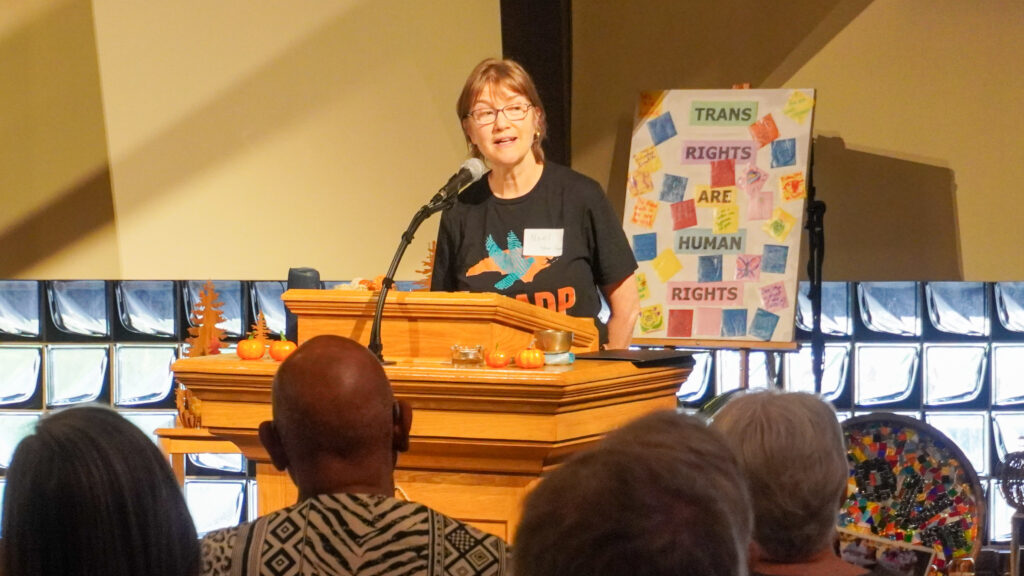
Rafiah Muhammad-McCormick opened the afternoon with her keynote address, drawing on her experience as an organizer with Tennesseans for Alternatives to the Death Penalty and as a mother who lost her son to gun violence. She spoke with extraordinary courage about her grief and her fight for healing over vengeance.
“Every single time a person is executed, a surviving family member or murder victim feels that pain again,” she said. “It takes us back. We do not need death. What we need is healing. The death penalty promises closure, but it doesn’t come from the death chamber. What families need are supports. They need resources. They need healing.”

Rafiah reminded us that the state spends millions of dollars on capital trials and executions – money that could be used to fund victim compensation, trauma recovery services, and community safety programs.
“Why are we spending millions and millions and millions of dollars to execute a person when we could be pouring that money into supporting victims?” she asked.
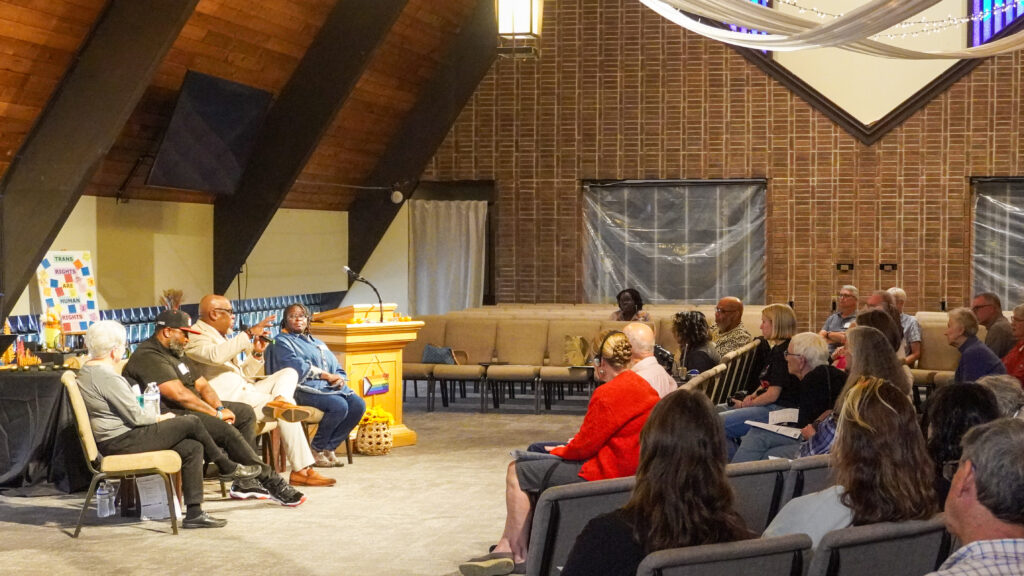
A conversation about real safety

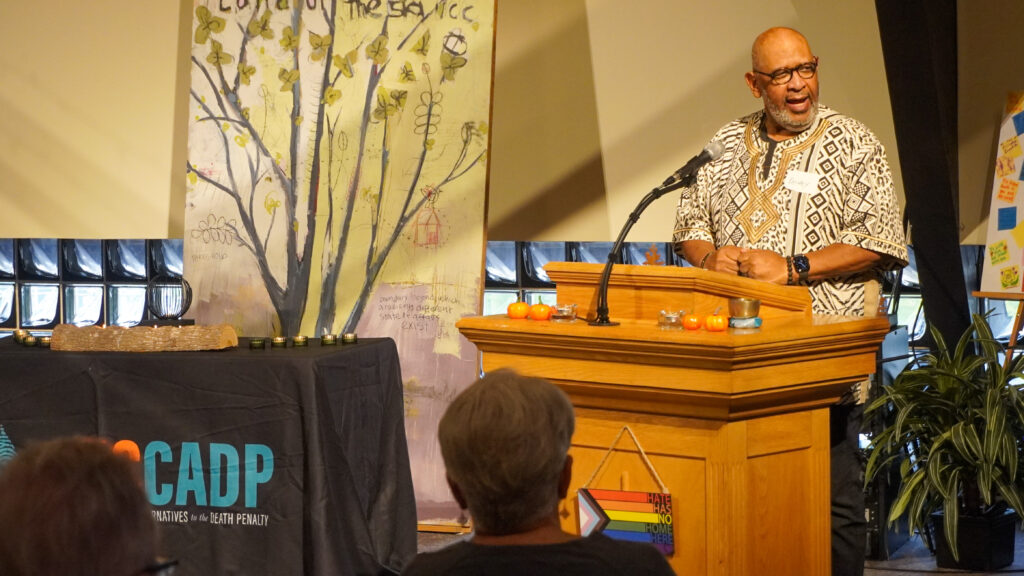
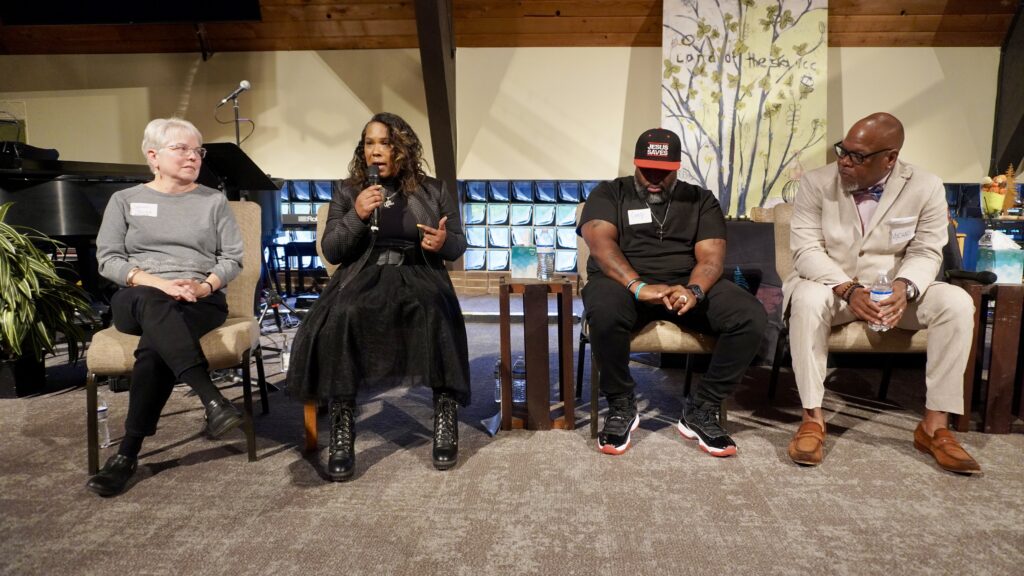
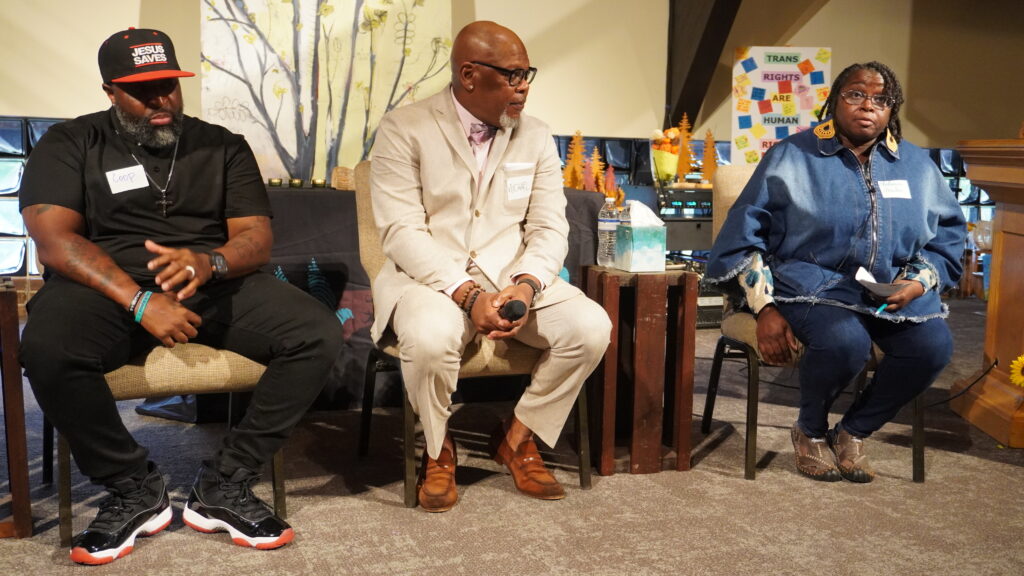
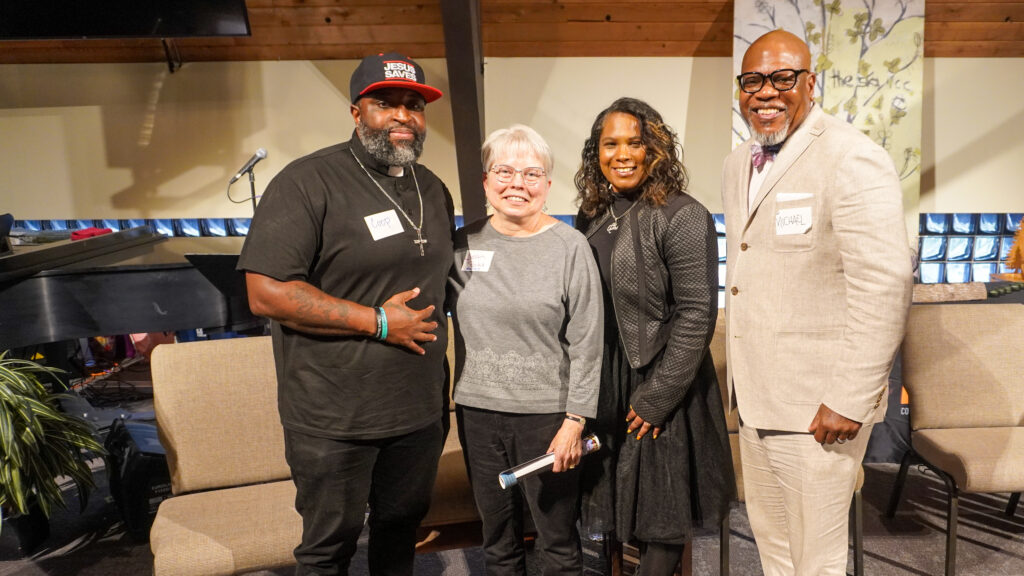
The day continued with a panel discussion moderated by Rev. LaShauna Austria, who framed the death penalty as “the colonizer’s tool,” reminding us that liberation can never come from the machinery of oppression.
Rev. Philip Cooper, of Operation Gateway, shared his experience as a returning citizen and community leader. He spoke about the need to invest in mental health care and to coordinate resources across sectors.
“Mental health care is health care!” he said, prompting the crowd to repeat it with him.
Michael Hayes of Umoja Health, Wellness, and Justice Collective, who survived multiple incarcerations – including two wrongful ones –, now works with school districts, helping young people access mental health care and violence prevention programs.
“Start investing in mental health care in schools,” he said. “That’s where prevention begins.”
Jean Parks, whose sister was murdered in the 1970s, shared her journey from grief to abolitionist advocacy.
“It costs a lot less to keep people out of prison than to put them in,” she said. “We have a choice. We can invest in punishment, or we can invest in people.”
Throughout the conversation, Rev. LaShauna drew the threads together. The death penalty is bound up with every system that marginalizes and harms – mass incarceration, economic injustice, racism, and the criminalization of poverty and mental illness.
“If our state stopped spending millions of dollars on capital trials and appeals,” she asked, “how could we better invest those dollars?”
Panelists offered well-researched, grounded answers: restorative justice. Victim services. Mental health care. Community investment.
“This that joy I have…”
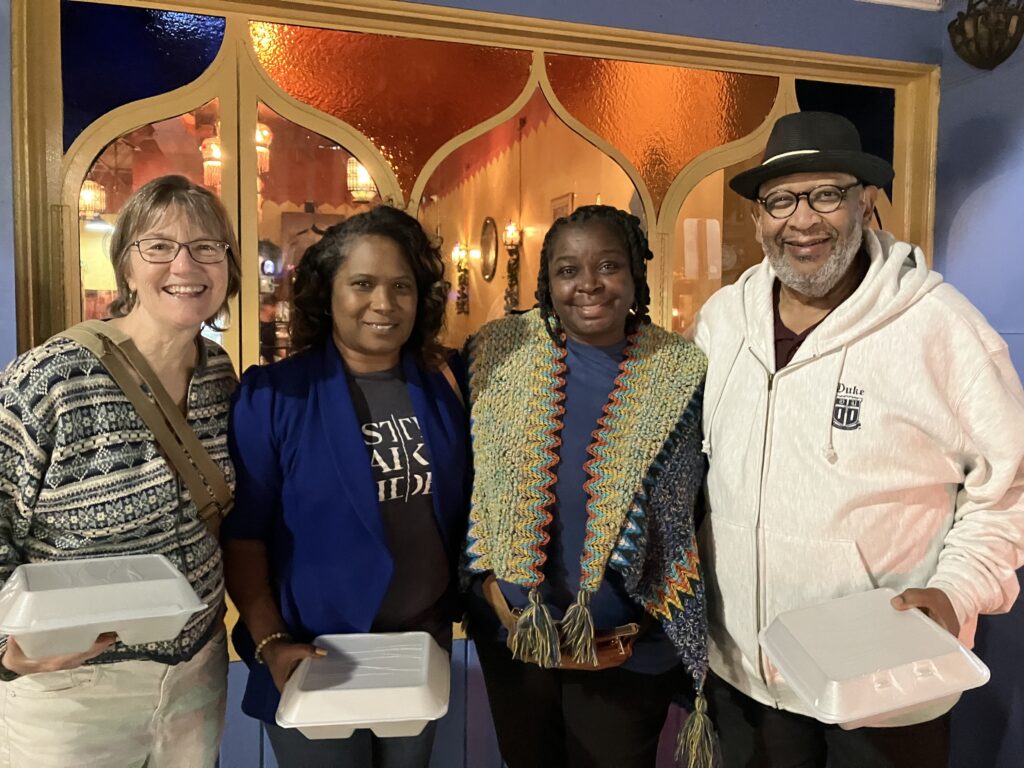
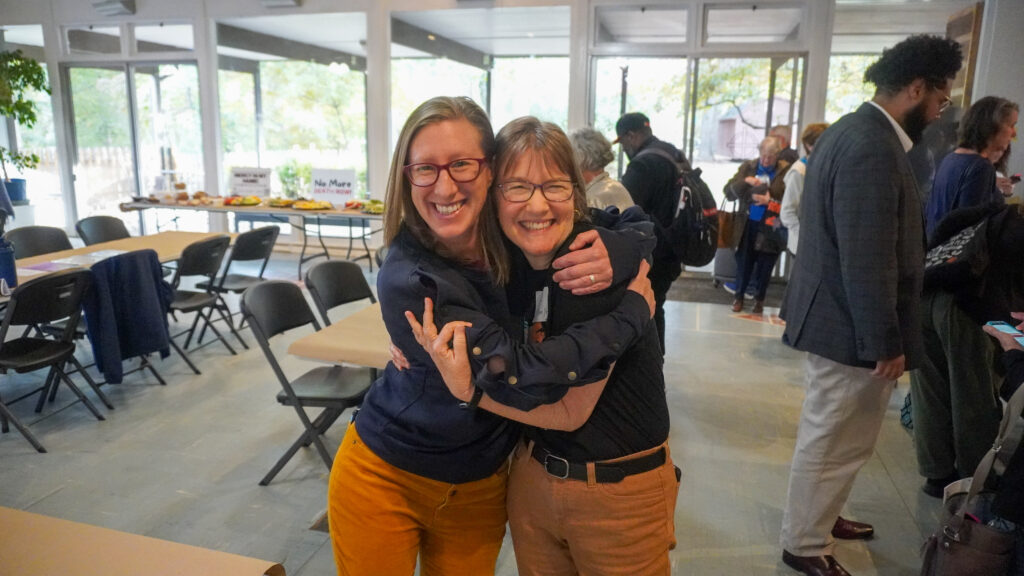
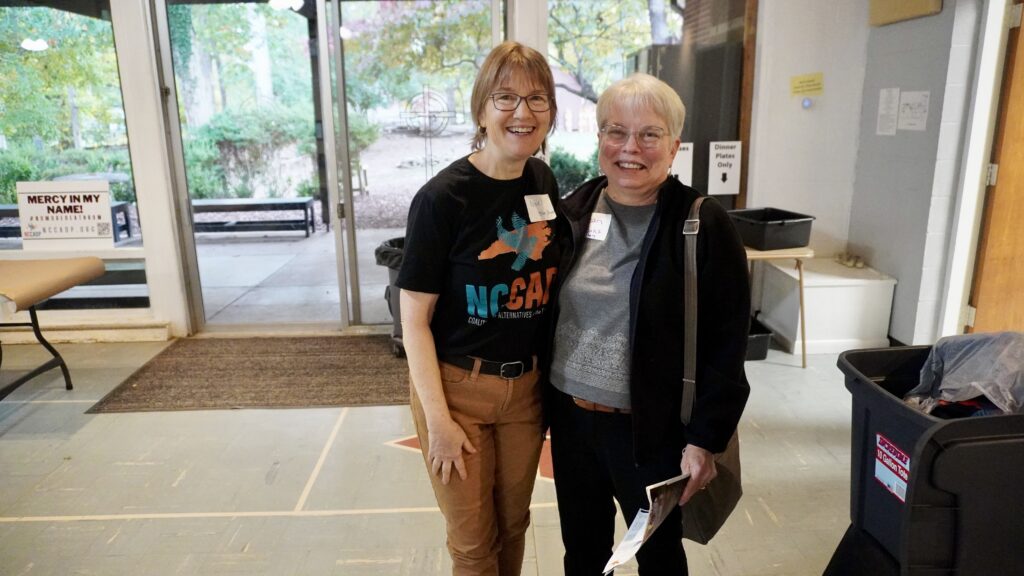
As all the best days do, the evening closed with food, music, and conversation. In the fellowship hall of Land of the Sky United Church of Christ, participants shared a meal prepared by an incredible team of volunteers.
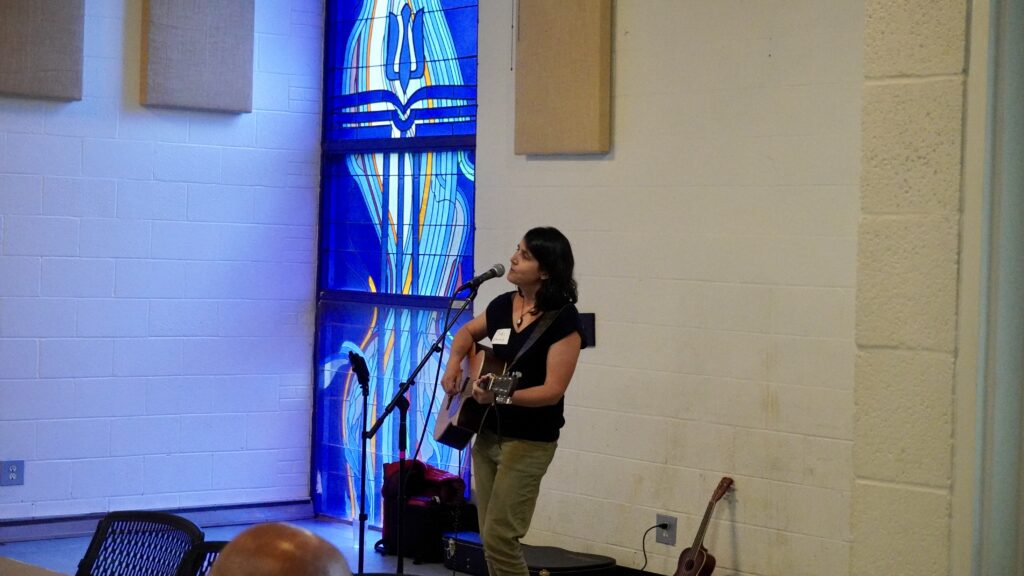
Jodi McLaren led the room in song, and Megan Smith, a member of NCCADP’s Survivor Family Engagement Group, spoke about her experience of losing her father and stepmother to violence. One of the people responsible was sentenced to death, others to life without parole. A death sentence, Megan told the room, made her feel no safer than a life sentence.
Her story was a reminder that the blunt instrument of state-sanctioned murder has never been about protecting public safety. Rather, it is about violent retribution and the false promise of closure.
Megan also invited other murder victim family members and those impacted by the death penalty to join the Survivor Family Engagement Group: “We would love to hear from you and work with you. Our group meets once a month. When things come up politically, we’re able to step in and use our voice. It feels really empowering.” If you or someone you know may be interested in joining this group, please reach out to NCCADP’s Executive Director, Noel Nickle, at noel@nccadp.org.

The evening ended as it began – with community. Jodi led everyone in a circle, singing “This Joy,” a collective declaration that healing is shared work and that joy itself can be an act of resistance.
Gratitude and the road ahead
ABC 13 WLOS covered the event, amplifying its message across Western North Carolina. Noel Nickle emceed the day, with on-site coordination from Eliza Menser and Liv Perkins-Davenport. Volunteers gave their time and energy to make the day seamless – from setup and clean-up to tech support and food service.
We are profoundly grateful to:
- All speakers and panelists for their leadership and vulnerability;
- Land of the Sky United Church of Christ for welcoming us into their space;
- Each and every volunteer who helped make the event possible;
- The sponsors, donors, and sustainers who support this work;
- Everyone who showed up for a world without executions.
This gathering in Asheville showed what’s possible when communities place healing and humanity at the heart of public safety. This is the future North Carolinians deserve – a future we can build together.
As Pastor Dewey Williams reminded us: “When we fight, we win.”